Share This
All posts by Diane
How to Develop More Confidence
Every day offers us a new challenge and an opportunity to see what we are made of.
Some days more than others. Think of all the resources you have at your disposal to rise up to these challenges. You have your intellect, style, wit, humor, strength, resilience, patience. You have friends and colleagues, family members, and other special people in your life. You have your possessions, your resources, your health, your savings, your home.
When you get down to the bottom of things, one of your most valuable resources – which allows you to enrich every other aspect of your life, is the way in which you view yourself and what you believe you are capable of. This one thing plays a monumental role in determining your fate, because it drives your actions and responses to everything that happens to you.
This quality is confidence.
You know it when you see it, don’t you? A confident person walks into a room and doesn’t have to say a thing. They wear their faith in themselves and their abilities like comfortable clothing. They do not need to be arrogant or assuming. They are at ease in their own bodies.
What exactly is confidence? And how do you get it?
Some would say confidence is being able to show others that you know what you are doing, that you have what it takes to succeed, that you are in control. Others speak of confidence from the standpoint of having courage to do things that require a high degree of skill, knowledge, strength, coordination, or that may entail some degree of risk. Still others would say confidence is the ability to inspire trust in others. Merriam Webster defines confidence as “a feeling or consciousness of one’s powers or of reliance on one’s circumstances” and “faith or belief that one will act in a right, proper or effective way.”
Confidence is something that must come from the inside out.
What do I mean by that? Every day we face challenges and opportunities that allow us to exercise confidence. We can do things today that we were unable to do last year, or maybe even last week. When we get to a point where we no longer question our abilities and simply execute the task at hand in a manner that is fitting to the situation, one could say we are acting with confidence.
Exercising confidence does not require that anyone else believe we know what we are doing, or even that they witness us doing anything at all. It requires us to do what must be done at any given time, utilizing the resources at our disposal and calling on our own strengths, ingenuity, and discernment to do it.
It is easy, however, to fall into the trap of trying to gain confidence from the outside in.
We often go about our tasks with an eye on the perceptions of others and allow their reactions to determine our confidence level. A positive response increases our confidence, and a negative one decreases it. When we repeatedly engage in behavior like this, we will subjugate our ability to perform and stunt our inherent talent by interrupting its natural flow.

Imagine yourself standing in a room trying to balance on one foot while holding the other in your hand and looking up at the ceiling. Now add about fifteen to twenty people to the room who are trying to do the same thing. If you worry about whether you look good and imagine that everyone is staring at you, you will lose your balance (and your confidence). If, however, you center yourself and focus on the task at hand, you will find your core strength and a sense of calm, and you will achieve your goal. It may take awhile, but you will get there.
“It is very easy in the world to live by the opinion of the world. It is very easy in solitude to be self-centered. But the finished man is he who in the midst of the crowd keeps with perfect sweetness the independence of solitude.”
~ Ralph Waldo Emerson
This phenomenon becomes more complex when we assign value to others’ perceptions.
The opinion of someone we highly regard may weigh more heavily than someone we don’t. And strangely, getting validation from someone who doesn’t seem to think well of us can have more significance than hearing praise from people who are our biggest fans. Why? I think we tend to focus our attention on that which mirrors our own thinking. Criticism stings the most when it amplifies our own self doubt. And when we find ourselves craving acknowledgement from others, it is likely because we are withholding it from ourselves.
As we go about trying to win approval, we allow others to define our sense of self.
And as a result, we grow ever more unaware of the treasure that sits in our own back yards. We leave our true fortunes to seek things that glitter and fade. The harder we try to win the confidence and validation of others, the further we will get from achieving it and the more deeply buried our inherent riches become.
Rather than acknowledging evidence that is all around us which confirms that we are competent, creative, talented, worthy and capable of achieving great things, we waste our energy focusing on what we believe is lacking. As a result, we pay attention to data that validates our feelings of inadequacy, which leads us to act in ways that sub optimize our potential. This further erodes our confidence and we risk locking ourselves in vicious cycles of deteriorating performance and eroding self assurance.
Confidence is an inside job because we cannot expect others to believe in us if we do not believe in ourselves.
To be truly free, we must become independent of the opinion of others.
This does not mean we stop seeking feedback or valuing input and suggestions. It simply requires that we learn to become unattached to others’ approval and instead draw upon our own inner reserves. When we stop seeking validation, we find our centers again and learn from our own experiences and inner wisdom.
Practice and simple adjustments allow us to find our zone, listen to our intuition and slowly perfect our game. Becoming quietly confident, we lose the need to prove that we are right, defend our honor or value, and impress others. We simply do what is ours to do in any given moment and judge our success on the merits of the work itself.
When we truly go within to discover and unearth our own value, a funny thing happens.
Over time, we will come to be surrounded by people who mirror our own positive assessment of ourselves. Criticism may still come, but it will no longer have the sting it once did. Void of the emotional charge, we can take feedback for what it is – data that helps us to see something we may have missed, so that we can make a course correction if necessary.
No longer basing our value of ourselves on what others think of us, we can refocus the energy we spent seeking validation into helping others recognize their own value. In modeling this behavior, our increased confidence in ourselves engenders confidence both in and from others, and we can truly lead.
When we have confidence in ourselves, we regain a sense of power and faith.
No matter what happens in the uncertain world around us, we know we have what it takes to rise above our challenges and turn them into opportunities. We act in ways that show others they too have the ability to shape the world around them by starting with themselves.
“As soon as you trust yourself, you will know how to live.”
~ Johann Wolfgang von Goethe
This article contains excerpts from my book The Pinocchio Principle: Becoming a Real Leader now available in both ebook and paperback formats on Amazon.
Yoga image courtesy of arztsamui / FreeDigitalPhotos.net.
A Sure Fire Strategy for Overcoming Fear
This week’s post features a video that I initially didn’t equate with getting out of fear. In fact, I originally titled the video From Self Absorbed to Self Empowered. But after writing last week’s post, A New Way to Look at Fear, I realized that this video is actually a demonstration of one of the best ways I know to get out of fear. It’s simple, easy and powerful. I hope you enjoy it. And I encourage you try it for yourself. Let me know how it goes, will you?
A New Way to Look at Fear
One of my favorite places to go on holiday weekends is Prescott, AZ. On one such trip with my mother and daughter we walked through an art festival in the town square. The place was dotted with people and their dogs, meandering from booth to booth, admiring the wares and taking it all in. White tents and tall, willowy trees sheltered artisans and their customers from the bright sun and intense heat.
There was a lot of jewelry, handmade signs with clever quotes, t-shirts (for people and their dogs), hand crafted furniture, blankets, tablecloths, framed photography, bird houses. If you could think of something that could be artfully designed and hand crafted, there was probably a booth for it in the Prescott square that weekend.
Some of my favorite booths were the ones with food in them. Freshly dipped caramel apples rolled in peanuts or toffee, kettle corn popped in large copper drums, homemade tamales, chocolate dipped cheesecake. And, oh, the best freshly squeezed lemonade ever, made with generous portions of sugar and large juicy lemons whose rinds floated in the clear plastic dispensers.
I was standing in a rather long line for one of those lemonades when I became acutely aware of the presence of swarms of bees flying around me and everyone else, hovering over people’s cups and food, and even landing on shoulders, arms, and clothing. People squirmed in their shoes, swatted them away, and some ran out of the line altogether.
Look at all these bees! I said to my daughter. A low, gravelly voice from behind me rose above the clamor. 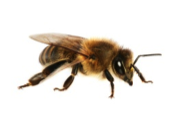 “Don’t be afraid,” it said.
I turned to see an older man with a closely trimmed white beard and long white eyebrows. His eyes twinkled and dimples appeared below his cheeks. I looked at him and smiled.
“Don’t be afraid,” he continued. “Bees only sting when they sense fear.” He rocked back and forth on his feet, with his fingers wrapped comfortably around the straps of his faded overalls. “It’s true!” He insisted.
Hmm. What an interesting thought. Is it true? I don’t know. I wouldn’t doubt it.
It got me thinking about fear in general, and the correlation it often has with unfortunate circumstances. Fear is widely considered to be the effect of an unpleasant and often painful stimulus. But the cause?
Could it be true that fear itself could bring about some of the unfortunate circumstances that we are often most afraid of?
I think so.
When we are afraid, we get consumed with thinking we need to protect ourselves, have the last word, save face. We become far more occupied with getting than giving. We can panic and engage in irrational and even hurtful behavior. A fearful response is often an overly aggressive one – one that can create more problems than it solves, and one that might otherwise be deemed as unnecessary. We say and do things we later regret. And we cut ourselves off from the wisdom and insights we would otherwise be able to tap to constructively resolve our differences and creatively rise up to our challenges. Our solutions tend to be half baked and often unsatisfying – as well as short lived.
But how do you override that somewhat instinctive and often knee jerk, fear filled response to what you believe could hurt you?
“Don’t be afraid,” the white haired man said. Easy for you to say, buddy. He obviously sees bees differently than I do, or at least have in the past.
And maybe that’s the answer.
Maybe it’s about learning to see things differently. Maybe it’s about questioning what we’ve come to believe and learning a different response – one that is more grounded, centered, and thoughtful. Perhaps it’s about trying something we’ve never had the presence of mind to consider.
The woman behind the counter handed me my lemonade and a single bee came along for the ride. It followed us throughout the square, from booth to booth, hovering around the large waxy cup that contained the sweet, refreshing liquid we waited in line for over ten minutes to receive. At one point, it landed on my shirt sleeve. I felt my blood pressure rise and took a deep breath. What if I get stung? I tried not to think about it. It flew away and came back a few seconds later.
We couldn’t help ourselves. We shooed it away with our napkins. It kept flying back. We tried hard to stay brave and calm, but we kept our napkins unfurled and continued to flap them around whenever the bee got too close.
We made it home without any bee stings. But the wheels in my mind are still turning at the thought that there may be some kind of insight or lesson in that experience for me. Have I grasped it? I don’t know.
One thing is for sure. The next time I begin to feel that familiar rush of adrenaline, you can bet I’ll think back to that white-haired man in his frayed overalls, with a large grin on his face and a quiet wisdom in those sparkling eyes. And I’ll do whatever I can to see things from another, less fear provoking perspective.
Four Tips for Tapping Your Reserves in the Most Challenging of Circumstances
Have you ever been faced with a challenge that all but brought you to your knees? One that tested every ounce of grit, determination and courage you had?
Often these types of challenges are not something we volunteer ourselves for (at least not knowingly). And yet, we find ourselves immersed in them with no other choice but to reach deep within to find within the strength we need to persevere and make our way through.
About six and a half years ago, my martial arts practice pushed me to my limits. It was an experience that almost kept me from continuing in my journey — a journey that ultimately led me to be promoted to first degree black belt this time last year. I look back on it now with gratitude for all that I learned. And I recently came across an article I wrote when that test was finished.
I want to share it with you in the hopes that reading it will somehow help you to connect to your own powerful reserves — so that you can find within yourself the strength you need to face anything life throws at you. I hope you enjoy it.
November, 2009
Waiting outside the dojo, I quietly prepared myself, breathing slowly and deeply. I adjusted my mouth guard over my teeth, feeling like a horse trying to acclimate to its first bit. After my name was called, I was ushered into a circle of black belts standing around a plastic red padded floor until I stood face to face with my opponent. Our heads were swallowed up by the protective foam of our sparring gear, exposing only eyes, cheeks, noses and lips. Before me stood one of the most intense sensei’s I had trained with. It was not the first time this man had pushed me out of my comfort zone.
After bowing to each other, we began to spar. I threw a few of the punches I’d practiced every week in karate class and managed to get some kicks in. But for every strike I made, it seemed my sensei threw at least three more. I continued to circle, launching a few more tentative jabs here and there. The black belts surrounding us were shouting encouragement, their voices merging into chords of indistinguishable tones.
And then I felt a sharp blow to my face. I instinctively curled toward my stomach and felt a burst of fluid that was not yet visible. When the blood appeared, the sparring session was stopped and a hand appeared with a wad of Kleenex in it. As I cautiously dabbed at my nose and wiped my eyes, someone asked me if I wanted to continue.
I heard myself say yes. Squinting through the sweat that was dripping from my forehead and feeling my heart beating in my face, I raised my gloved fists higher and took a few more shots.
Before I knew it, I was taken to the ground. I was vaguely aware that there was at least one, maybe two other black belts in the sparring match now. As I grappled on the ground, fatigue set in. I struggled to escape the choke hold, forgetting everything I had learned and feeling like a spider’s prey wriggling and writhing to escape while the grip became tighter. And then, thankfully, that part of the test was over.
I walked into the bathroom to pull myself together, feeling bruised, bloody and beaten. Outside the door were others waiting for their turn to test, friends who through our shared experience somehow became bonded in a way that transcended language. I knew that if any of them had emerged from the dojo looking the way I did, I may have lost my nerve and my courage. So I had to find it in myself once again.
In the moments that followed, I sat exhaustedly pondering the experience I just had and waiting for the next portion of the test while people continued to give me Kleenex and hugs.
“Why didn’t you just quit?” I was asked in the oral part of my test. I stood facing a long table of black belts that stared back at me with inquisitive  eyes. I would be asked that question many times in the coming days by friends and family who thought I was a little nuts to willingly participate in an activity with such a high probability of physical pain.
After a few moments I realized why I had to continue, despite the blood, the tears, and the exhaustion. It was the same reason I kept coming to karate classes all those years, the same reason I left my cushy job to start my own company, the same reason I picked myself up and kept at it after failed marketing attempts as an entrepreneur.
“I wanted to see what I had left in me,” I replied. And though what I had left in me on that momentous Saturday morning landed me in a headlock I could not escape from, I learned a lot about myself and life as well.
We will always be faced with challenges and opportunities. Some of them may feel daunting. They will push us to our edges and summon up every last bit of strength and fortitude we can muster. And we may find ourselves on the ground (literally or figuratively), feeling defeated and fatigued. In those moments, when we look inside ourselves we will find courage we didn’t think we had – even if only to stand up and be knocked down again.
Each time we rise to our challenges, we learn a bit more about how to handle the next one. Having been in the grip of our own fear and experienced the disorienting confusion that panic and adrenaline brings, we can learn to be in the midst of chaos and find our calm.
Here’s what I learned from my sparring experience that I intend to apply to all parts of my life:
- Keep your hands up. Children taking karate are encouraged to see their arms as the bars of a cage. “Keep the tiger in the cage,” they are told. This does not mean that we need to learn to become withdrawn and reserved so that others cannot see or interact with us. Rather, it means that we need to learn to love and protect who we are and deflect the jabs and punches of a society that will at times entice us to act in ways that are not aligned with our true selves.
- Breathe. When we become panicked, our breathing gets shallow and our brains do not get as much oxygen. We literally go out of our minds, unable to access the reserves of wisdom we always possess. Breathing allows us to inspire – to take in spirit, to regain our connection to something bigger than ourselves and allow it to guide and inform us.
- Take responsibility. We are never victims. In life’s most dire circumstances, much can be taken from us, but we will always have the ability to choose the way in which we respond. We can see life as a battle in which someone always seeks to defeat us, or we can choose to experience it as an odyssey made up of a series of epic adventures that allow us to become our own heroes. Just as I signed on for karate and knew that the testing experience would push me to my limit, so too do I sign on for life – knowing that with every challenge is a gift, every seeming adversary a teacher.
- Choose peace. In any conflict, our responses can range from fear and even desire to inflict pain to peace and willingness to practice love. When
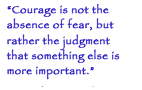 we become too attached to defending ourselves, being right, or winning we stay on the lower rungs of the ladder, engaging in behavior that escalates conflict.
However, when we step up a few rungs, we move from a point of view to a viewing point, one in which we can identify what is important not only for ourselves but others as well. In this manner, we can transform conflict into collaboration.
When we seek to understand what is most important to everyone involved, the energy that was previously fueling fear can be redirected into something that promotes peace. In my sparring match, I stayed on the lower rung, more identified with fear of being attacked than acting in ways that could promote peace. As a result, I cut myself off from the inner wisdom and knowledge that would have allowed me to deflect my opponent’s blows and redirect his force in a way that could have ended the conflict.
Next time, I’ll be that much more prepared. I will know what it feels like to lose my center and choose a different response. And though I may not be able to practice my sparring every day, I can choose to rise up in whatever circumstances I find myself in and help others to find the resilience in themselves to do the same.
Just beyond the borders of what we believe to be our limitations lie vast and unending reserves of strength, courage, ingenuity and love. May you discover and unleash it in yourself and everyone around you.
With much gratitude to The Center for Humane Living for all I have learned about karate and myself.
How to Cross the Brink of Change
Are you at your wits end in your job, career, relationship, life in general? Experiencing delays, frustration, confusion, and even a little fear? Well, you might be closer to achieving something amazing than you think.
This week’s video post continues the play by play in the life of a caterpillar that I started on last week’s post, only this time from the inside of the cocoon (or chrysalis, if you want to be technically correct). I hope you enjoy it!
What the caterpillar calls the end of the world the master calls a butterfly.
– Richard Bach
Are You On the Verge of Transformation?
Do you ever feel like you are in the middle of some kind of transformation, but not yet clear on exactly where you are going and what form things are going to take? Speaking from my own experience, it can be a bit unnerving when you are in the thick of it. You may feel as though you’ll never find your way through.
They say it helps to find inspiration from those who have gone before you. On that note, this week’s video post (which I filmed a few years ago when my daughter was still quite young), features a caterpillar.
I hope you enjoy it.
How to Survive and Thrive in Change and Chaos
We have all experienced times of pressure, anxiety and sudden change.
When jobs are tenuous or organizations are restructuring, it might feel as though life itself is turning upside down. Frustration and turmoil is a common response to this kind of uncertainty and disorientation. It can lead to exhaustion and hopelessness. But consider this as you think about the things in your life and career that may feel as though they are spinning out of control…
What if the only thing standing in your way of perfect peace, true productivity and the satisfaction of living a life of purpose – was your thinking?
I know it may feel as though you are at the mercy of your circumstances. However, even in the worst of situations you have more control than you might realize. One of the key attributes embodied by extraordinary leaders in all walks of life is encapsulated in the word “responsibility” – not just in a moral or ethical sense of being accountable for our actions, but also – and perhaps just as essential in times of change and chaos – remembering that there is wisdom in recognizing that we have the ability to choose our response. And that the response we choose will have a resounding impact on ourselves and everyone around us.
Start with awareness.
The greatest change agents start by recognizing what they have to work with before they can create change that will be sustained. They assess their environment to determine what the best entry point for that change is before they make their move. They don’t waste their time worrying about things that are truly out of their control, like changing the weather. Instead, they focus their attention and energy on those things that they do have the ability to influence and start there.
Extraordinary leaders know that the most powerful and sustainable change must start from within themselves.
Watch your stories.
The thing that fascinates me about a seemingly chaotic state of affairs is not so much what is happening, but the stories we are telling ourselves about what it means — and the impact those stories are having on the way we are responding to it. When we react to things with fear, we end up amplifying that which we are afraid of and adding to the anxiety. Our fears drive us to act in ways that keep us from acting on our intuition and finding the answers that will truly serve us. Sometimes, we end up behaving in ways that make our fictional stories become real.
As an example, when you tell yourself a story about what is happening that leaves you feeling threatened, you may find yourself closing up and treating others with suspicion and mistrust. The way you are behaving toward people may well provoke a response in them that appears to validate your fearful story. However, in this scenario, it is very likely that their behavior is more of a reaction to the actions your story led you to take than anything else.
Our fearful stories are like the viruses we protect our computers from.
These nasty viruses are often embedded in emails that pique our curiosity or rouse our fear. When we unwittingly activate them, they spread often uncontrollably and we risk passing them to the computer of our friends, associates and countless others. The viruses corrupt our systems until they no longer function effectively. Like computer viruses, our stories have a way of spinning us out of control and interfering with our ability to rise up to our challenges to find the opportunity that is always there waiting for us to discover and leverage it.
Our rational minds want answers and security.
They need to figure everything out and almost automatically occupy themselves with trying to sort through data to arrive at conclusions. The problem is that our minds are plugging imaginary variables into the equation that end up further exacerbating the anxiety we are already experiencing. When they are done with one variable, they plug in another and the churning continues, leaving us with an uneasiness that keeps us on edge.
What’s the worst that can happen?
In the grip of this madness, sometimes the best thing you can do is indulge your mind with a variable that will allow it to do its thing. Go ahead and plug in the worst case scenario. If the worst possible thing happened, what would you do? Alloy yourself to sit with that question for awhile. Let the fear move through you and keep asking the question, what would I do that would allow everything to be OK? If you sit long enough with your question, you will arrive at some workable alternatives and reconnect with that part of yourself that is strong, resourceful and resilient.
Armed with the knowledge that you will be OK in the worst of scenarios, you can come back into the present and recognize your fearful thoughts for what they are – fearful thoughts. One of the best pieces of advice I ever got, which I pass along frequently is don’t believe everything you think.
You have everything you need.
In the present moment, devoid of your stories about variables that are truly unknown, you are OK. And when new events begin to unfold, if you stay in the moment and access your inner wisdom, you will know exactly what you need to do – or not to do – to be OK then too. And as you go about your daily life in this way, your calm resolve will permeate your interactions with others and through your example, you will help others to rise up to their challenges in ways that unearth the greatness in themselves as well.
 For more tips on navigating through change and uncertainty, check out my book, The Pinocchio Principle ~ Becoming a Real Leader, available on Amazon.com and BarnesandNoble.com.
How to Navigate Sudden Change
Ever notice that just when you get comfortable, life has a way of shaking things up? Some people seem to enjoy change more than others. Most of us prefer to be the ones doing the changing – it brings newness along with a sense of control – we are at the helms, steadfastly steering our ships. But imagine if you will, that a massive wave summoned by a hurricane has ripped the captain’s wheel right off the ship and you are left clinging to something that no longer has any power. The tighter you grip it, the less energy you have to deal with your circumstances in a way that will truly serve you (and everyone around you as well).
At times like these, we often pray for the storm to pass – for things to revert back to the way they were – or for a specific course of events that we believe would be life’s perfect solution. These solutions are based on what we think we know – which is largely a product of what we have already seen and experienced. And relying upon the patterns and strategies that worked for us in the past is often inadequate for our present and emerging challenges.
The world is changing and so are we.
We tend to strive for comfort and familiarity, even when what’s comfortable isn’t necessarily effective or even satisfying anymore. We wish and pray that the chaos be removed and order be restored. But often life’s little disturbances are exactly what we need to reach our true potential and escape complacency. Perhaps as Eckhardt Tolle wrote in The Power of Now, “…what’s appears to be in the way IS the way.”
Stormy seas (and life’s sudden surprises) have a way of testing our resolve and our resiliency. Pressure brings out our extremes – for better or worse. And fear does funny things to people. At its worst, it produces panic – a physical state that literally disables the brain’s ability to think clearly. At one extreme a person is frozen by fear and at the other he will thrash about like a drowning victim who pulls his rescuers under the water with him. The key to surviving a seeming assault of this kind is learning to relax and stay calmly aware of our surroundings so that we can identify and creatively utilize the resources at our disposal.
One of the most critical resources in our control when all else seems beyond it is our perspective.
The way in which we view things determines the story we tell ourselves about what’s happening, which directly influences the responses we will have. If we believe we are helpless victims at the mercy of something that seeks to destroy us, we will become bitter, resentful and apathetic. In this state our true power remains dormant. We collude with our view of reality to create a condition that validates our doomsday stories and sink even deeper into the abyss. Those who try to rescue us from our self imposed paralysis risk being dragged beneath the current created by our own negativity.
If, however, we view our predicaments as adventures and see them as opportunities to give things all we’ve got, we reach deeply within ourselves and tap reserves of courage, wisdom and ingenuity we never realized we had. In the proverbial belly of the whale we find our inner grit and creatively rise up to life’s challenges in ways that transform us and everyone around us as well. We become the heroes of our own stories.
Regardless of who you are and what you do, there will come a time when the plateau you have been walking upon takes a steep turn in one direction or the other and you will be required to do something that stretches you beyond your usual way of doing things.
Perhaps it will be in your career. The work that fulfilled you at one point in your life may no longer be enough. You might find yourself doing something very well but suddenly devoid of the gusto you once did it with. It could be the company you keep – people who at one time shared your interests and passions but who you suddenly find yourself no longer wanting to spend a lot of time with. Maybe it will be your lifestyle. The objects and material possessions you that once gave you joy could one day feel more like clutter or distractions. These things become like shells that the hermit crab has outgrown. The crab must release its previous home and step bravely and vulnerably into the unknown in order to find something more spacious.
The quest for a new shell and even the new shell itself may feel daunting, clumsy and overwhelming. But the act of letting go of the old to make room for the new allows us to evolve and realize our true potential. Anything less will ultimately become imprisoning. When we allow ourselves room to grow, life’s little and big disturbances are not so daunting. We know there is more to us than meets the eye and finally step into our own greatness. And as we do this for ourselves, we model the way for others to do the same.
For more tips on navigating through change and uncertainty, check out my book, The Pinocchio Principle ~ Becoming a Real Leader, available on Amazon.com and BarnesandNoble.com.
How to double (or triple) your productivity in just ten minutes a day
Do you ever start your day feeling like you are already behind? Even though its morning, you wake up feeling stressed out, overwhelmed and itching to get a jump on things so you can bust through them.
Did you know that when you start your day in that state, the chances that you’ll accomplish much are slim at best?
There is a better way to access your best work that will allow you to not only get more done, but enjoy yourself in the process. And it can take as little as ten minutes a day. Watch this video to find out how.
Want more?
Check out the The Integrated Leader’s Guide to Freedom and Flow, a four week pilot program I am kicking off on May 2.
The program is designed to help high achieving leaders break out of feeling stressed, overwhelmed, and feeling at the mercy of their environments so they can access an optimal state where they can think more clearly, get more done in less time, access their best performance, and feel a greater sense of satisfaction and fulfillment with their work and lives overall.
Spaces are limited to 15 participants, and registration is closing on Friday, April 29. So be sure to act quickly!