Share This
All posts by Diane
How You Can Use Frustration To Improve Your Effectiveness
In the movie Groundhog Day, Bill Murray plays a weatherman named Phil who travels to a small town in Pennsylvania to cover local festivities. It is an assignment he isn’t happy about and despite his eagerness to leave it behind, he gets snowed in and wakes the next day to find he is in some kind of time warp, doomed to relive the day over and over again until he gets it right.
Most of us have experienced the frustration of having to repeatedly relive a situation we would rather not have to experience at all. Often frustration appears to be imposed on us from an unfriendly universe, something we have been unfairly doomed to live through. But more often than we would like to admit, frustration is self imposed. And when frustration is self imposed, it can be even more painful.
But as unpleasant as frustration can be, it comes bearing gifts — gifts that are often overlooked. And today, we will cover three of those gifts — gifts than when embraced can transform your frustration into freedom.
The three gifts of frustration are:
• Fuel
• Insight
• Possibility
Let’s talk about how you can use frustration as fuel.
“I’m so tired of feeling unorganized and scattered all the time,” Bob told me in our last meeting. “I come into the office and there are papers flung all over my desk, half started projects buried in piles with new requests heaped on top of them. But I never seem to have time to go through them because by the time I get there, a line of people waiting to talk to me has already formed outside my door and I have no choice but to spring into action. And my days are full of requests that add new papers, projects and action items to a pile that grows faster than it shrinks.”
Bob was understandably frustrated. He felt like he was pushing a big rock up a hill only to have it roll back down as soon as he got near the top.
“What do you think I should do about it?” he asked me. I knew he wouldn’t like my answer.
“Move into it,” I told him. “Tell me more about how starting your day like that affects the quality of your life.”
He was perplexed. “Why would I want to move into something so awful? Shouldn’t I be figuring out how I can move away from it? Rise above it?”
That is the reaction most of us (including yours truly) have when faced with an unpleasant predicament. But rising above an unpleasant predicament often requires us to change habits or patterns that are ingrained and comfortable. And initiating and sustaining a change like that requires fuel — fuel that will allow us to break through our obstacles and limitations at the very moment when it seems most difficult.
Change occurs when the pain of the current state is greater than the perceived pain of making a change, and the pleasure of making a change is greater than the pleasure (or payoff) of staying the same.
Often we aren’t ready to make a significant change until things are at their worst. Many of us can tolerate an enormous amount of displeasure until things are at their breaking point. And even when the pain has really come to a head, we often make small little adjustments that take the edge off, but don’t really solve the problem.
When you truly move into your frustration, you begin to open your eyes widely to recognize the impact a problem is having on your life. You allow yourself to accept that this pain will continue until you do something about it. And until you are truly ready to do something about it, you will continue to do what you’ve always done and suffer as a result.
The flip side of pain is pleasure. And once you have moved into your pain, you can begin to envision what the pleasure that a lasting solution would bring.
This can be done long before you know what that solution is. And just as you can move into your pain, so too can you move into the pleasure of what life would be like without your problem. This too, serves as fuel that will ultimately allow you to do what it takes to create and implement a lasting solution.
Let’s move onto the second gift of frustration: insight.
Insight is an understanding of the true nature of something. It begins to be cultivated when you move into your frustration and recognize the myriad of ways that it is not serving you. But that is only the beginning. Moving into your frustration illuminates not only the problem, but also the underlying factors that contribute to and exacerbate that problem.
Most of us instinctively move away from pain, firing shots over our shoulder at what we believe to be the antagonist without really recognizing or locking onto a target.
In an attempt to alleviate Bob’s problem, he could have hired an assistant to come into his office and go through the piles on his desk, organize and create file folders for his papers, and straighten everything up. But until Bob identified and addressed the factors that led those piles to accumulate and grow, it would only be a matter of time before he was right back where he started.
To really know what needs to be done to slay the beast, he needed to take a closer look and recognize what it eats, how it grows stronger, and how he might unwittingly be feeding and nurturing it. That’s exactly what moving into the frustration with a spirit of curiosity does.
When Bob got curious about his predicament, he began to notice that he had a tendency to book his appointments back to back starting first thing in the morning and say yes to more things than he could realistically accomplish. He realized that he didn’t have a clear sense of what was truly a priority and that in the absence of that clarity, he was making everything number one — except his own sanity.
The more awareness he cultivated in the presence of his frustration, the more he began to identify and understand what was really causing it — and to recognize that while he may have initially felt like its victim, he was far from powerless in overcoming it. This led Bob to discover and embrace the third gift of frustration.
The third gift of frustration is possibility.
Insight opens the door to possibility. Once you have an understanding of the factors that cause or contribute to a problem, you begin to recognize a multitude of options that can lead to lasting resolution. These possibilities reveal themselves in the presence of curiosity.
“What could I do to regain control of my schedule?” Bob asked himself. In the days and weeks that followed, Bob identified a number of strategies that could potentially work for him. Among them were designating a day to sort through the pile of issues, projects, tasks and commitments that were tugging at the edges of his mind to determine what was of most importance, and what could be delegated, deferred or dropped.
Bob also recognized that he could better deploy his time, energy and resources into projects that were aligned with his priorities if he got into the habit of saying, “That sounds interesting — let me think about it and get back to you,” instead of committing to requests on the spot. And he realized that he needed to carve out time in his schedule on an ongoing basis to plan, prioritize, strategize and execute — and honor that time with the same fervor that he would honor meetings with his most important clients.
Let’s review…
(1) Despite its unpleasant nature, frustration is actually a gift — and something we need to move into rather than away from.
(2) Moving into frustration generates the fuel necessary to initiate and sustain lasting change. It allows us to get to the point where the pain of staying the same is greater than the pain of making a change, and also where the pleasure of making a change is greater than the pleasure (or payoff) of staying the same.
(3) Moving into frustration with awareness and curiosity yields insight. It illuminates not only the problem, but also the underlying factors that contribute to and exacerbate the problem.
(4) Insight opens the door to possibility, which yields a multitude of options that can lead to lasting resolution.
So the next time you feel like you are living the life of Bill Murray’s character in the movie Groundhog Day, remind yourself that frustration comes bearing gifts. Reliving the same experience over and over again isn’t so bad if it ultimately yields fuel, insight and possibility. Move into your discomfort, pay attention, get curious, and connect the dots. And you too will find a way to transform your frustration into freedom.
The Expecto Patronum Method of Working Through Fear
 The sky grew dark and an ominous fog crept over the ground where Harry Potter was standing. He was surrounded by Dementors, ghostly figures with long bony fingers enshrouded in tattered robes. They floated around him and began to descend, attempting to suck the life force from his body.
“Expecto Patronum!” he shouted, as he raised his wand. Suddenly he was enveloped by a bright white light that the Dementors simply could not penetrate.
Though this is a scene from a science fiction movie, it is not unlike what each of us experiences when we come face to face with fear. Fear is present whenever we venture out of our comfort zones and endeavor to stretch ourselves to achieve something significant.
Like Dementors, fear threatens to suck the energy and vitality from our being and keep us from whatever we most want for ourselves. And though none of us likely has a magic wand or a spell that can keep them away, we do have the ability to render these fears powerless and proceed in spite of them.
Today we’ll cover three tools for keeping fear from getting the best of you:
(1) Focus
(2) Presence
(3) Desensitization
Though I have been studying and reflecting on the process of working through fear for the better part of my life, my learning came to a head when I was thrown into an environment that provoked a whole spectrum of fear and anxiety. As a martial artist, after learning and practicing basic blocks, kicks and punches, the time came to take it up a notch and begin to spar.
What does sparring have to do with your life?
What I have learned over the years as I have continued to develop my skill in this area is that sparring is metaphorical for just about any challenge you could possibly be faced with that evokes fear — making a presentation (or any kind of performance), pitching a proposal, going to a job interview, or speaking your mind, just to name a few.
These situations lead you to question whether you have what it takes
And no matter what the challenge is, there is something at stake — your status, your security, your reputation, your comfort, your pride. However, there is one differentiating factor: with sparring there is a pretty high likelihood that you will get punched in the nose. Literally.
While many lessons come from having positive experiences, much of what I learned about working with fear came through trial and error — a lot of error.
My first error allowed me to learn about focus
Focus is determined by what you allow to occupy your mind.
When I first started sparring, my focus was on getting it over with. I was fairly preoccupied with a feeling of inadequacy that led me to temporarily forget much of what I had learned over the previous years. Rather than trusting in what I had the ability to do, I became preoccupied by what I did not want to happen — getting hit.
And as a result, I got hit. Hard.
And then I didn’t want to spar again for a really long time. I took myself out of the game. I allowed the fear to stop me. And my training stagnated. Until the pain of stagnation became greater than the pain of the physical blow.
When I got myself back in the game, my mind shifted from retreat to advance
Instead of fixating on what I didn’t want, I zeroed in on what I did want. It wasn’t about not getting hit. It was about pushing through the fear. It was about applying what I had learned. It was about having more faith in what I did know than what I didn’t. And it was proving to myself that I had it in me to rise above the challenge.
I threw more punches. I closed the gaps. I began to bob and weave. I learned how to lure my opponent in so I had him right where I wanted him.
But what does that have to do with facing fear off the sparring mat?
Everything. No matter what you do, you have the choice to focus either on what you are moving toward or what you are moving away from. When you are fixated on what you want to avoid, you will hedge your bets. You won’t go all out. You’ll watch the clock. And you won’t really be engaged. You’ll cheat yourself out of the joy of the experience.
When you move toward something, you marshal the forces of desire. You ignite passion. You make what you want more important than what you fear. And this gives you the fuel to do what you really want to do — in spite of the fear.
The second tool for moving out of the grip of fear is presence
Fear has you consumed with worrying about the future or fixated on something from the past. It keeps you in your head and prevents you from being immersed in what is happening right in front of you.
When I would try to remember a technique or think too much about how to properly execute anything, I’d miss what was happening and get hit. I had no real concept of what was happening, what was coming at me, or what I needed to do to deflect it. I felt as though I was in a blender, at the mercy of the blades and centrifugal force.
Ironically, being in my head kept me in a state of panic that kept me from thinking clearly. In fact, I became so gripped with panic that I forgot to breathe and ended up exhausting myself almost immediately.
In non-sparring environments, being in your head costs you opportunities
When you are giving a presentation and are so intent on what you prepared that you fail to see that your audience is confused, or bored or irritated, you risk losing them. In a sales setting, being determined to stick to your pitch when you customer has questions that you didn’t plan on can keep you from making the sale.
The irony is that not deviating from what you planned because you are consumed by fear keeps you from being present and often ends up leading to that which you are most afraid of. The antidote? Let go of your preconceived ideas and hold your plans loosely so that you can be present.
When you get out of your head and become present, things slow down
When I immersed myself in what was happening in front of me while sparring, I realized that every time my opponent would throw a punch he left himself wide open. Rather than worrying about getting hit, I began to look for vulnerabilities. And I learned that I could get him to raise his hands to his face if I threw a few high punches, which would allow me to land a couple low ones while he wasn’t expecting it.
I went from jumping around like a cricket without breathing to moving more deliberately and strategically and conserving my energy. Instead of allowing my opponent to back me into a corner, I learned to pivot and use his own force against him.
In any situation, being present leads to better connections and higher performance
You will take in more information. You will breathe more deeply, get more oxygen to your brain and access higher creativity. You’ll be more likely to make whoever you are talking to feel more important, because you’ll be more focused on him and not yourself. You’ll think more quickly on your feet and come up with better solutions on the fly.
These insights led me to realize that often what is more important than preparation is practice, which brings us to the third tool: desensitization.
The more you expose yourself to what you fear, the less impact the fear has
Fear never really goes away. It is a human emotion that is wired into our DNA. While we can’t change the fact that it will be ever present, we can diminish the effect it has on our performance.
Think back to the first time you saw a spider — or anything that scared you
Chances are that back then you got much more worked up about it than you would today. What allows the fear to diminish, is repeatedly being in the presence of what you fear and realizing that you will be okay.
The first time I got punched in the nose, it was horrible. And thought I went to great lengths to keep it from happening again, it did. And when it did, I realized that the memory of it was far worse than the reality.
The more I sparred, the more I began to become confident in my ability to prevent it from happening. And the less my fear kept me from doing what I needed to do.
Many altercations and escalations are the product of untamed fear
The importance of learning to spar is to develop within the martial artist the confidence to handle a physical fight if necessary — in order to prevent a conflict from escalating to the point that requires any force at all.
And the implication for each of us is that becoming confident in the face of fear allows us to rise up to any challenge or opportunity with grace, wisdom and victory. In so doing, we inspire others to follow our lead.
Let’s recap the three tools for keeping fear from getting the best of you
Focus. Occupy your mind with thoughts of what you want to move toward rather than away from. Think about your strengths rather than dwelling on your weaknesses. Make what you really want more important than what you fear, and the force of passion and desire will propel you forward.
Presence. Stay out of your head and in the moment. Resist the temptation to cling to a predetermined plan and pay attention to what is happening right in front of you. Breathe deeply and notice that what is most important in each moment may be different than what you thought it would be. Stay connected to the people around you so they feel valued and attended to.
Desensitization. The more you put yourself in the presence of what you fear, the less impact the fear will have on you. As you develop the confidence to trust in your ability to rise up to any challenge, the fear becomes background noise that diminishes more and more with repeated exposure. When you can act in spite of your fear with grace and wisdom, you will emerge victorious and inspire others to do the same.
Eleanor Roosevelt urged “Do one thing every day that scares you”
What would that be for you? Chances are it is connected to something you really want for yourself. As you focus on what you’re moving toward, stay fully engaged in the game and the joy of playing it, and have the courage to repeatedly put yourself in the presence of your fear, the words of Henry Ford will ring true for you as well:
“One of the greatest discoveries a man makes, one of his great surprises, is to find he can do what he was afraid he couldn’t.”
And you won’t need a wand or a magic spell to make it happen.
How to Transform Overwhelm and Frustration into Enthusiasm and Engagement
Imagine finding yourself face down on the concrete being pummeled by some kind of hard object every thirty seconds or so.
You’re agitated and a little resentful – and you may feel like a bit of a victim.
And then suppose you lift your head and notice that the concrete you are lying on is green. Widening your view, you see that the objects being hurled at you are tennis balls. And they are coming from a machine that is firing them over a net. As you continue to look around, you notice there is a racket within arm’s reach.
And then you remember – ah yes, I signed up to learn how to play tennis.
This image came to me after I collapsed in overwhelm when what felt like a relentless barrage of requests for my time, emails that screamed to be answered, projects that needed to be advanced, tasks that demanded completion, and all manner of life’s little unforeseen chaotic events yammered for my attention.
How would I get it all done?
Well, I’ll tell you one thing. Cowering in fear does not help.
And neither does even the most justified of indignation and resentment.
I realized this when I lifted my head to take a good look at what was in front of me. And I also realized that all these challenges I was facing were related to things I chose to take on and/or really care deeply about, like:
Up leveling my business so that I can make a bigger impact doing what I truly love.
Being more involved and present with my three children – who inevitably are in constant need of something, often simultaneously, usually in three different places.
Honing my martial arts practice – and being more involved in the nonprofit organization that has given me the opportunity to learn it.
Becoming a better writer and speaker.
Being able to do more of what really matters to me in less time.
Getting better at anything is a decision that you make to be in the game.
It’s easy to forget that the game you’re playing is one that you chose for yourself when those balls are coming at you full speed, one after the other. But the simple shift of mind that comes from going to a helpless victim to someone who has willingly stepped onto the court is one that makes all the difference in the world.
Think of anything in life you feel like you “have to” or “should” do. More than likely with that frame of mind, it will feel heavy and cumbersome. But find something about that same activity that you want or care deeply about, and suddenly everything gets a little lighter.
We find reserves we didn’t think we had. We rise up to the occasion. We notice the racket that lies within our grasp and begin to use it to hit some of those balls.
The more you play, the better you get.
I confess. I’ve let a few balls slip here and there. And I’ve hit some in directions that were anything but where I intended them to go. But the less I care about needing to get it perfect, the more I want to play the game.
And the more I play, the more of those balls I’m able to return.
And the more of those balls I’m able to return, the higher my confidence.
And the higher my confidence, the easier and more fun the game gets.
Rest assured, there will be days when it feels like we are being pummeled. But perhaps the reason those balls come at us harder and faster is because we are ready to advance to a whole new level – one that allows us see what we’re really made of. And maybe, just maybe – the only thing we really need to focus on is showing up and being willing to play.
Game on!
Can You Be Too Results Oriented?
We hear the benefits of being results oriented all the time. It is important to have goals, to aim high, and to focus on outcomes. But as we have been told since we were kids, too much of a good thing can hurt you.
This article will focus on three critical areas that will suffer if you are too results oriented:
(1) Your experience,
(2) Your performance, and
(3) Your sustainability.
Let’s start with your experience.
When my kids were young, they loved writing stories. As a family, we’d go on long road trips and by the time we reached our destination, they had woven delightful tales with colorful characters and loads of drama.
But at school, when they were given the assignment to write a story, they were not all that happy. Suddenly someone was making them do it and grading their performance. The writing was no longer an activity they had chosen for themselves. Their attention had shifted from doing the writing for the sheer joy of it to doing it for the benefit of a grade.
What does a child’s writing assignment have to do with your experience?
Most of us chose our professions as a matter of preference, because they were aligned with something we had interest in or a passion for. But when we become more fixated on the paycheck than on the work itself, the work can become a bit of a drudge.
Even smaller activities like projects can become laborious when you put more weight on achieving a desired outcome than on the process of doing the work itself.
But if you stop caring about results, how will you ever achieve anything?
The problem isn’t your desire to achieve results. The difficulty arises when you attach those results to your state of well being. Suddenly whatever you are doing becomes a means to an end. An end you feel you simply must achieve in order to avoid pain and achieve pleasure.
When the stakes become too high, the joy of doing the work itself gets sucked out of the process. And so do you. Your focus is no longer on immersing yourself into the work and enjoying each step, but rather on making sure you can achieve the outcome you believe your happiness depends on.
When you place your happiness on achieving some future state instead of enjoying where you are and what you are doing right now, you will never be truly happy. And your work will not only be less than fulfilling, the results of it will also be less than optimal.
This leads us to the second problem with being too results oriented.
The irony of being too focused on results is that you are less likely to get good results
When you go from pouring your attention and energy into the process to simply achieving an outcome, whatever you are working on is missing one very key ingredient: YOU.
If all you care about is achieving the goal, your mind is on some future state. This means you yourself are not fully present and engaged. And when you are not fully present and engaged, the quality of care and love that you would otherwise pour into your work is simply not there.
The result is crappy products/services and poor performance.
You will not tap into the same level of creativity. You will not make the same connections. You will forget about whoever is the end user or beneficiary of the work you are doing when your focus is more on what you have to gain than anything else.
This is like trying to play tennis by focusing your gaze on where you want the ball to go instead of looking at the ball itself. You will likely miss the shot every time.
And when you don’t get the results you so desperately desire, you will begin to experience difficulty in the third area that suffers when you are too results oriented: sustainability.
What does sustainability have to do with performance and results?
Sustainability is simply your ability to stay with something long enough to experience a return on your investment of time, energy and effort. It’s what allows you to stick with the plan you have outlined that will ultimately allow you to achieve your goals.
Sustainability is important because without it, you never gain momentum
Momentum is what allows you to go from starting something, to making progress, to achieving a desired result, to excelling at achieving a desired result.
When you are too results oriented, you risk falling into the trap of judging your performance based on what you are able to achieve right out of the chute. And most people don’t perform very well when they first start something.
Expecting results without momentum is the curse of the perfectionist
The perfectionist wants to begin everything at the same level of proficiency that a master would achieve. They compare their results to those attained by people who have spent years of their lives practicing. And they fail to recognize that people who are masterful began their crafts making mistakes, looking foolish, and getting less than desirable results.
So they quit. They never allow themselves that crucial period of trying something, getting it wrong, making small adjustments and trying again. And again. And again.
They reason they were never cut out for that kind of work. And they cheat themselves of the sweetness of achieving results they could have enjoyed if they would have just stuck with it.
But you don’t get rewarded for effort — only results, right?
It’s true that most companies don’t reward people a whole lot for the effort they put into something unless they reach their goals. But you will never achieve your goals if you do not apply sustained effort. The effort ends up rewarding you. And the reward is results that are not only high quality and long lasting, but also deeply gratifying.
That brings us to our summary
It is possible to be too results oriented. And when that happens, three primary areas wll suffer:
(1) Your experience. Being too results oriented sucks the joy out of your work and leads to increased levels of stress and anxiety. When you equate a desired outcome with your state of well being, the stakes become too high and you will fail to enjoy the journey that leads to your ultimate destination. Work becomes a grind and the quality of your life will suffer.
(2) Your performance. The irony of being too focused on results is that you are less likely to get good results. When your energy and attention goes to some future state, you will vacate yourself from the present. This negatively impacts your creativity and the special touch only you can bring to your work, resulting in crappy products/services and poor performance.
(3) Your sustainability. When you judge your success based on getting stellar results out of the chute, you will experience frustration and a feeling of inadequacy that may lead you to abandon your efforts altogether. Great results require great sustained effort and momentum. This can only be achieved with repeated practice, and the willingness to make mistakes, learn from them and try again and again.
Should you stop caring about results?
Of course not. It’s true that you need to aim high, get clear on the goals you want to achieve and envision what it will be like when you do. But then you need to shift your primary focus from achieving the result to pouring your heart and mind into the process. Your reward will be not only achieving your desired destination, but also enjoying every step along the way.
What Disney Can Teach You About Rekindling Your Passion at Work
Last weekend, my family and I went to Disneyland, where we spent two days playing at what has become known as “The Happiest Place on Earth”. And there really is something about that place that allows all your troubles to melt away while the kid in you comes alive. It is easy to be in the moment while you’re there – totally present, completely immersed in the experience, and sharing joy with everyone around you – even people you’ve never met.
It got me to thinking.
What is it about Disneyland that is so transformational, and how can we create a similar experience wherever we are?
Now, you might be saying, “Come on, it’s Disneyland! And people are on vacation when they’re there. How can you not be happy in a place where there is beauty everywhere you look and where the whole point is to let go and have fun? And when you are on vacation you’re not pulled in a million different directions and under the same pressure and stress you are every other day – especially at work.”
Yeah, I get that.
But the experiences we have come down to what we allow ourselves to feel and what we are thinking about and believing when we are having them. So, perhaps it is conceivable that we can learn to deliberately respond to situations in ways that would lead us to draw out the same emotion and energy – no matter where we are.
I can’t help but think about the people who were (and still are) responsible for creating and running Disneyland. Their workdays consist of being a part of and contributing to something that evokes the very best in all the millions of people that come into contact with it. And it seems that they wouldn’t be able to do that if they weren’t bringing the very best of who they are to the experience as well – despite the pressure and tension they surely feel along the way.
I believe part of the wonder and magic we experience when we are at Disneyland is the same wonder and magic that the place was infused with from it’s very beginning — starting with the man called Walt Disney and equally shared by every human being he partnered with from the beginning to bring his incredible vision to life and keep making it better and better.
Walt Disney dared to dream and dream big. He worked with people who shared his passion to build on this dream by adding their own unique talent, energy and imagination. They were inspired by the possibility of being a part of something bigger than themselves.
When was the last time you felt inspired in your work? When was the last time you had passion for your career? What is it that allows you to feel a sense of wonder and contribution to something bigger?
If you have lost touch with that, do yourself and everyone around you a favor and take some time to reconnect with it. Each one of us has something deep inside that we are uniquely qualified and put on this earth to create or do. When we are young, the energy of our dreams propels us along our path —sometimes blindly, but it gets us off our duffs and into action. We experience hardships along the way, and will undoubtedly fail again and again.
Life will throw us curve balls and we may find ourselves feeling beaten down and doing what we can to just get by, running from one crisis to another and sometimes going in circles. At some point, we may check out and take an easier path – one that allows us to go numb and somewhat unconscious. It may work for awhile, but over time we begin to feel the misery that comes along with abandoning our dreams and letting our passion take the back seat.
What would it take for you to get excited about what you are doing right now? What is the bigger why of the work you do every day? Who does it serve, and how? If you can’t answer that question, do some digging. When you can connect those dots to a bigger picture, you may find that what you thought was insignificant is really actually quite meaningful and a vital piece of a larger puzzle you are meant to help assemble.
As you recognize your part and the value you provide, perhaps you’ll be inspired to bring a little more of who you are to what you do by playing more fully, being more present, and connecting more deeply with those who rely on you.
Your passion is like a hidden well with unlimited reserves – in the act of tapping it, you will replenish it in such a way that it multiplies. And as you unleash it in your work, you will draw out something extraordinary in every human being that comes into contact with it – just like Walt Disney did (and still does).
Sometimes when we are honest with ourselves, we recognize the ways in which we have boarded up that well and consciously or unconsciously do whatever we can to keep it locked. Something may have happened that led us to doubt our chances of success, or fear the outcome of expressing our greatest ideas or challenging the status quo.
Perhaps we’ve experienced something that led us to harden ourselves out of resentment at a turn of events that was painful – maybe a reorganization, restructuring or layoff. We may have come to the conclusion that the best way to stay safe was to lay low, going through the motions and getting through the day until we could go home and really live.
Such a reaction may yield dividends in the short term. We may feel as though we have beaten a system that seemed to be beating us. Or perhaps we can stay under the radar long enough to avoid what we believe will be more pain. But in the end we are only cheating ourselves and others.
Walt Disney experienced his share of hardship. After his failed attempt to be hired as an artist for his local paper, he took an apprenticeship at an Art Studio and ended up getting laid off. He started two different companies, neither of which were profitable. He lived in his office because he couldn’t afford rent and hardly had enough money to eat.
Before he was able to complete his “Alice’s Wonderland” film, he declared bankruptcy. Imagine how many millions of people would have missed out on his unique genius if he gave into his frustration and fear and played small instead.
It seems that we are at a kind of crossroads where the tension is mounting. The deviations and quick fixes that used to work for us are no longer satisfying. The pain that comes from denying our greatest dreams and visions is beginning to intensify and more and more people are asking how they can create lives of meaning and significance.
Some of the people I talk to believe they need to leave their jobs to do what they really want to do. Others see opportunities where they can make a bigger difference but just don’t know how to start and fear that taking action could be put themselves at risk somehow.
I strongly believe that we can all make a difference right where we are — no matter where we are or who we are — and that we have everything within ourselves that we need to succeed.
I have been so fascinated with the question of how people can tap their inner reserves to reconnect with their passion, wisdom, creativity and unique talent (and how I can do this for myself as well), that I wrote a book about it. It is called The Pinocchio Principle: Becoming the Leader You Were Born to Be and it is now available
Does Your Work Life Need Resuscitating?
I have always been amazed by the number of people who seem to think of work as something of a necessary evil — simply what must be done in order to earn a paycheck. For so many who toil through their workday, the primary goal is to make it to the weekend so they can really live. Going through the motions, working side by side with others whose hearts and minds they seldom truly connect with, they withhold the very parts of themselves that make them come alive.
For some it wasn’t always this way. Many began their careers ignited with passion and op timism, only to find that their flames began to flicker as they encountered obstacle after obstacle that kept them from achieving what they believed would be success. Succumbing to the unwritten rules of the organizations and other environments they found themselves in, which suggested they needed to act or think in a certain way to get ahead, they may have slowly sold out on their dreams and relegated themselves to quiet complacency.
Many of us were not brought up to expect that work would be fun or gratifying in any way – nor should it be. That’s why they call it work, we may have been told. As a result, we may have never really expected much from our careers or professional lives. And as the saying goes, life has a way of living up to our expectations. In just about every corporation, nonprofit or other organization, you will find people in jobs that do not ignite their talents and passions. Some remain dormant in those jobs because they fear that if they pursue their hearts’ desires, they won’t be able to put food on their tables. Many don’t realize that there might be a better alternative.
Most of us have learned how to turn ourselves on and off at will, in an effort to spare ourselves the pain of disappointment or frustration — or to maintain what we have come to believe is a professional demeanor. It is not uncommon to hear people say that they are very different at work than they are at home. Those golden parts of ourselves that we think we are protecting suffer when we do not let them breathe and interact in the very realms that provide us opportunities to learn more about who we are and what we are here to do in the world. We miss the chance to become a part of something greater than ourselves. And the organizations and communities we are a part of miss out on the unique contribution each of us has the potential to make.
We can no longer afford to fragment ourselves in this way, denying the fulfillment of our secret dreams and downplaying the insights we have about what we can do to make life better — for ourselves, and everyone around us. As more and more of us feel the pain that accompanies the denial of our spirits, we start to realize that the time has come for us to bring the totality of who we are to what we do, no matter our vocation, title or role.
We are beginning to awaken to our unique calls to service, creativity and innovation. As we find ways to unleash our distinctive talents and passions at work, we will significantly increase the quality of our own lives, as well as the lives of everyone around us. Corporations that take steps to create environments that allow people to thrive will be met with rich rewards as ingenuity pours forth in ways that lead to increased profit and market share, as well as the creation of self-sustaining cultures that inspire people to sustain success by doing what they do best.
There are people among us who have the ability to snap us out of our trances — our states of quiet desperation —and help us bring more of who we truly are to everything that we do.
They can do this for others because they have done it for themselves.
They are called leaders.
You may be one of them. The Pinocchio Principle is dedicated to allowing you to play a bigger, more significant and meaningful part in the world by unearthing your own leadership in ways that bring about a greater good — and showing others the way to rise through your own example.
I hope you enjoy reading it as much as I have enjoyed writing it.
The Evolution of Confidence
 Every day offers us a new challenge and an opportunity to see what we are made of – some days more than others. Think of all the resources you have at your disposal to rise up to these challenges. You have your intellect, style, wit, humor, strength, resilience, patience. You have friends and colleagues, family members, and other special people in your life. You have your possessions, your resources, your health, your savings, your home. When you get down to the bottom of things, one of your most valuable resources – which allows you to enrich every other aspect of your life, is the way in which you view yourself and what you believe you are capable of. This one thing plays a monumental role in determining your fate, because it drives your actions and responses to everything that happens to you.
This quality is confidence. You know it when you see it, don’t you? A confident person walks into a room and doesn’t have to say a thing. They wear their faith in themselves and their abilities like comfortable clothing. They do not need to be arrogant or assuming. They are at ease in their own bodies.
What exactly is confidence? And how do you get it?
Some would say confidence is being able to show others that you know what you are doing, that you have what it takes to succeed, that you are in control. Others speak of confidence from the standpoint of having courage to do things that require a high degree of skill, knowledge, strength, coordination, or that may entail some degree of risk. Still others would say confidence is the ability to inspire trust in others. Merriam Webster defines confidence as “a feeling or consciousness of one’s powers or of reliance on one’s circumstances” and “faith or belief that one will act in a right, proper or effective way.”
As with anything that is of true value, I believe confidence is something that must come from the inside out. What do I mean by that? Every day we face challenges and opportunities that allow us to exercise confidence. We can do things today that we were unable to do last year, or maybe even last week. When we get to a point where we no longer question our abilities and simply execute the task at hand in a manner that is fitting to the situation, one could say we are acting with confidence.
Exercising confidence does not require that anyone else believe we know what we are doing, or even that they witness us doing anything at all. It requires us to do what must be done at any given time, utilizing the resources at our disposal and calling on our own strengths, ingenuity, and discernment to do it.
It is easy, however, to fall into the trap of trying to gain confidence from the outside in – undertaking our tasks with an eye on the perceptions of others and allowing their reactions to determine our confidence level. A positive response increases our confidence, and a negative one decreases it. When we repeatedly engage in behavior like this, we will subjugate our ability to perform and stunt our inherent talent by interrupting its natural flow.
 Imagine yourself standing in a room trying to balance on one foot while holding the other in your hand and looking up at the ceiling. Now add about fifteen to twenty people to the room who are trying to do the same thing. If you worry about whether you look good and imagine that everyone is staring at you, you will lose your balance (and your confidence). If, however, you center yourself and focus on the task at hand, you will find your core strength and a sense of calm, and you will achieve your goal. It may take awhile, but you will get there.
“It is very easy in the world to live by the opinion of the world. It is very easy in solitude to be self-centered. But the finished man is he who in the midst of the crowd keeps with perfect sweetness the independence of solitude.”
~ Ralph Waldo Emerson
This phenomenon becomes more complex when we assign degrees of value to the perceptions of others. The opinion of someone we highly regard may weigh more heavily than someone we don’t. And strangely, getting validation from someone who doesn’t seem to think well of us can have more significance than hearing praise from people who are our biggest fans. Why? I think we tend to focus our attention on that which mirrors our own thinking. Criticism stings the most when it amplifies our own self doubt. And when we find ourselves craving acknowledgement from others, it is likely because we are withholding it from ourselves.
As we go about trying to win approval, we allow others to define our sense of self and grow ever more unaware of the treasure that sits in our own back yards. We leave our true fortunes to seek things that glitter and fade. The harder we try to win the confidence and validation of others, the further we will get from achieving it and the more deeply buried our inherent riches become.
Rather than acknowledging evidence that is all around us which confirms that we are competent, creative, talented, worthy and capable of achieving great things, we waste our energy focusing on what we believe is lacking. As a result, we pay attention to data that validates our feelings of inadequacy, which leads us to act in ways that sub optimize our potential. This further erodes our confidence and we risk locking ourselves in vicious cycles of deteriorating performance and eroding self assurance.
Confidence is an inside job because we cannot expect others to believe in usif we do not believe in ourselves.
To be truly free, we must become independent of the favorable or unfavorable opinion of others. This does not mean we stop seeking feedback or valuing input and suggestions. It simply requires that we learn to become unattached to others’ approval and instead draw upon our own inner reserves. When we stop seeking validation, we find our centers again and learn from our own experiences and inner wisdom. Practice and simple adjustments allow us to find our zone, listen to our intuition and slowly perfect our game. Becoming quietly confident, we lose the need to prove that we are right, defend our honor or value, and impress others. We simply do what is ours to do in any given moment and judge our success on the merits of the work itself.
When we truly go within to discover and unearth our own value, a funny thing happens. Over time, we will come to be surrounded by people who mirror our own positive assessment of ourselves. Criticism may still come, but it will no longer have the sting it once did. Void of the emotional charge, we can take feedback for what it is – data that helps us to see something we may have missed, so that we can make a course correction if necessary. No longer basing our value of ourselves on what others think of us, we can refocus the energy we spent seeking validation into helping others recognize their own value. In modeling this behavior, our increased confidence in ourselves engenders confidence both in and from others, and we can truly lead.
When we have confidence in ourselves, we regain a sense of power and faith in the world around us, in all its uncertainty. No matter what happens, we know we have what it takes to rise above our challenges and turn them into opportunities. We act in ways that show others they too have the ability to shape the world around them by starting with themselves.
“As soon as you trust yourself, you will know how to live.”
~ Johann Wolfgang von Goethe
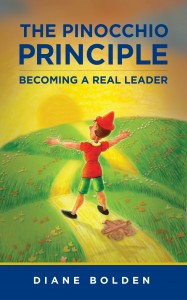 This article contains excerpts from my book The Pinocchio Principle: Becoming a Real Leader now available in both ebook and paperback formats on Amazon.
Waving businessman image courtesy of stockimages / FreeDigitalPhotos.net. Yoga image courtesy of arztsamui / FreeDigitalPhotos.net.
A Question Worth Considering
 We stepped out into the crisp January air, her small, sweet hand wrapped in mine. She smiled with her whole body as we began our walk to the park. Each of my steps was two or three for her. We paused often to smell flowers and watch bugs zig zag across the sidewalk. The sun’s rays danced on the leaves of the elm trees above us and filtered softly onto our shoulders. The birds showered us with song.
It was a brand new day. A brand new year, for that matter. And we were seizing it.
My morning with my three year old niece was a liberating one. It took us twenty glorious minutes to make our way a few hundred yards from the house my husband grew up in to the old elementary school grounds down the street. When we got there, Lucy stretched her arms out like wings and ran joyfully across the playground as the wind playfully tossed her wavy blond locks and almost seemed to lift her off the ground. She was freedom personified. Sheer joy. Exuberance.
And I thought, this is what I want more of in my life.
Maybe it was the week of vacation that preceded our little walk that allowed me to forget about all the thoughts that had furiously competed for my attention before we left for our trip. Perhaps it was being a few hundred miles away from home and all the things that needed to be done – tasks yet to be finished and those yet to come. Or maybe it was the sheer inspiration of my beautiful little companion that allowed me to be fully and completely present, immersing myself in each moment and allowing it to unfold without any interference on my part. I felt alive. Vibrant. Happy.
We tottered on balance beams, skipped across hopscotch squares, and visited a coop of chickens, watching them peck at the ground and contemplating what each bird’s name should be. But the highlight of our little jaunt was the tall, spiraling slide that crowned the jungle gym. Lucy had decided she wanted to ride down on my lap. We got half way up and stopped. She looked up to our destination, and then down from where we had started and said, “That’s high.”
“Yes, it is sweetie,” I replied. “We don’t have to go up there if you don’t want to.”
She looked at me for a moment and then wrinkled her brow with determination and resolve. “I want to slide!”
“OK then. Here we go…” We climbed the last couple of steps and squatted onto the platform. Lucy sat tall on my lap, brimming with courage and delight. “One, two, three!” As we let go and spiraled down the slide, the squeal of her laughter brought a wild and uninhibited smile to my face.
And I thought again, this is what I need more of in my life. Maybe this is what we all need more of in our lives.
I know. It’s easy for a three year old to experience sheer joy and bliss at the very prospect of being alive. They have no responsibilities, no bills to pay, no people depending on them. They have yet to experience heartbreak, disappointment, and disillusionment. And let’s face it – our adult lives are a lot more complicated than a day at the park playing hopscotch and watching bugs and chickens. I still can’t help but think about it.
Now, back at my desk, staring at my Outlook calendar, I can still feel the childlike wonder and euphoria of that day. It begs the question, how can I bring more of that to my life? To my work? To the world?
This question has begun to deepen and grow roots. It has taken on a life of its own. It peeks out from my computer screen and beckons to me. It lands softly in my mind as I drive to and from appointments. It jumps out of file folders and onto my desk. It takes a seat at the table when I meet with my clients. And it brings with it more questions…
What if we could somehow strip our daily activities of the assumptions and heaviness they have accumulated over the years and approach things with the same sense of curiosity and delight that little Lucy did on that beautiful January morning?
Could we rediscover and ignite our passion for living in all the many areas of our lives – including the countless hours we spend at work?
Could we find a way to mute the thoughts that keep us from being totally present with people in our lives so that we could really be with them?
Could we let go of our preconceived ideas of how things are supposed to be and allow them to unfold the way they need to, trusting that we will summon whatever resources are necessary to deal with things as they come?
Could we respond to situations that push us out of our comfort zones with the fortitude and tenacity that Lucy displayed on the towering spiral slide?
Imagine what life would be like if we did… How much more joy we would experience. How creative we could be. How courageous and resilient. How our relationships would deepen and grow. How meaningful our work would become.
I, for one, think it’s a question worth considering. And just maybe, the very attention we put on the question will begin to illuminate the answers we need most.
I’d love to hear your thoughts.
For more on reconnecting with your childlike sense of wonder and joy, check out my book The Pinocchio Principle: Becoming a Real Leader now available in both ebook and paperback formats on Amazon.
Photo courtesy of Jens Schott Knudsen.
Don’t Sell Yourself Out
The story of the Chinese bamboo tree that I wrote about in my last post is one of patience, perseverance and faith. I was moved when I heard it and eager to share with others who would also appreciate and enjoy it. Upon sharing the story with one of my dear friends, she relayed an equally inspiring tale to me. And two weeks later, out of the blue another of my close friends said there was a story she just had to tell me. To my amazement, it was the very same one my first friend shared.
I believe it is no accident when you encounter something numerous times – especially when it has meaning for you. And that is why I want to pass along to you the story I was told.
In the far east, there lived a boy named Ling who loved to garden. His “green thumb” led him to surround himself with plants that he lovingly tended to and enjoyed. One day, he heard that the emperor, who had no sons of his own, was seeking a successor and had asked for all the boys of the village to gather in his courtyard. Ling’s mother encouraged him to attend.
The emperor addressed the young boys, giving each of them a seed. He instructed them all to plant the seeds and return to his palace in a year with what they had grown from this seed. He explained he would judge their results and proceed to pick the next emperor.
Ling took his seed home and potted it. He proceeded to nurture and care for it with as much love as he did all his other plants, tending to it daily. After about three weeks, the other boys began talking about their seeds and the sprouts that had begun to grow. Ling’s pot remained empty. He gave it extra care and nutrients and spent even more time with it. After a few more weeks, he moved it to a sunnier area, and then a few weeks after that back out of the direct sun. Still nothing.
Months went by with still no growth and the other boys began to mock Ling and laugh at him. Some felt sorry for him. Ling was frustrated and confused. He knew how to care for plants. He had done everything he could. And still, nothing had happened with his seed. Soon the year was up and it was time for the boys to reconvene to the palace courtyard.
As Ling approached the courtyard, he couldn’t believe the greenery he saw around him. Boys on all sides of him carried in lush, vibrant plants – some of them flowering, others with long beautiful vines. Hiding in the shadows at the back of the gathering, he clutched his empty pot and felt shame wash over him.
Soon the emperor appeared. He surveyed the boys and their pots, smiling and admiring the prolific green leaves. When his eyes caught sight of Ling and his empty pot, the emperor ordered his guards to bring the boy to the front of the gathering. The others began to point at him and laugh. Ling was terrified.
The emperor silenced the room and asked the young boy his name. Ling replied, feeling his face flush with warmth. He felt like a failure and feared that the emperor might have him executed. But to his great surprise, the emperor took hold of his hand and raising it up announced, “Behold your new emperor. His name is Ling.” He went on to explain that all the seeds he had given the boys had been boiled and as such were incapable of producing any of the trees, plants and flowers that the other boys brought with them.
When I first heard this story, I thought it was simply about honesty. Ling was rewarded because he was the only one who had the courage to be honest. This is a great message in and of itself, but after hearing the story a second time and reflecting on it later, I began to realize that there is much more to this story than the importance of honesty.
 This story speaks to the fear within all of us that what we have is not enough – that who we are is not enough. We are conditioned to believe we have to look as good as or better than the next guy. Many of us spend a good part of our lives comparing ourselves to everyone else and doing whatever we can to stay in the proverbial game. We are constantly tempted to sell ourselves out and just go do or buy or imitate whatever the people around us do or buy or are like. We are led to believe – and often unwittingly propagate the illusion that not doing so is failure and defeat.
It might be the latest gizmo or style of clothing, or the fanciest car. Or it could be a way of doing business – marketing in a manner to generate a feeling of scarcity or urgency, emphasizing profits and growing market share over people and service. It could be a way of behaving within an organization – stomping on others to get ahead, or sucking up to people in power in an effort to rise through the ranks. All with the justification that everyone else seems to be doing it and that playing along is how you survive.
The lengths we go to in an effort to “measure up” and “get ahead” have us creating a lot of flash, but at the cost of substance, sustenance and even sanity. It never seems to be enough, and has us continuing to look over our shoulders and outside of ourselves to continue to keep up appearances. These efforts are almost always short lived. They require tremendous amounts of energy that leave us feeling exhausted and depleted.
Those who are wise can see right through these facades. There is a growing population that is increasingly ready and willing to say NO to this crazy way of living. Some of them are customers who will no longer tolerate empty promises and hype with no follow through, or service that leaves them feeling like an afterthought. Some of them are talent that have had enough with being treated in ways that belittle their creativity and desire for meaning and purpose in their work .
Some of them are entrepreneurs and executives who know there is a better way of doing business and are itching to create workplaces that allow people to come alive and do what they do best in a way that truly serves others. Many of these people are waiting and watching, nurturing ideas and dreams of a better way of living and leading, and gradually they are beginning to act on them.
Though Ling’s pot was empty, his heart was full. He didn’t allow the temptation to fit in and do as everyone else was to taint him. And though he was terrified at what the consequences may have been, he exuded the courage to stand in his truth. The qualities that allowed him to persevere through a year of waiting, wondering, questioning, and listening are the same that will make him a great leader – one that doesn’t rush to the easy solution. One who holds dear the importance of staying grounded and being strong and acting in alignment with a higher truth. One who inspires others to do the same.
Real leadership requires courage to say NO to relegating oneself to a life of complacency with ways of being that don’t ring true – even though it might be scary, and lead us to feel alone and judged and mocked as young Ling did. It requires faith in ourselves – and something bigger than ourselves – which will guide us to find what we seek through the small sweet voice within that has all our answers. And it requires vigilance and dedication to continue to listen to that voice instead of allowing it to be drowned out by the booming voice of ego echoed in the masses that have us believing who we are and what we have to offer is not enough.
Our reward is something that doesn’t come and go with the seasons , or that can ever be taken away from us. It is the cultivation of inner strength and wisdom that will allow us to meet any challenge with grace and to create opportunities that allow ourselves and everyone around us to share in the glory of living and leading inspired lives.
Don’t sell yourself out. You’re worth more than that. And it’s never too late to begin living your truth.
For more on inspired living and leading, check out The Pinocchio Principle: Becoming a Real Leader now available in both ebook and paperback formats on Amazon.
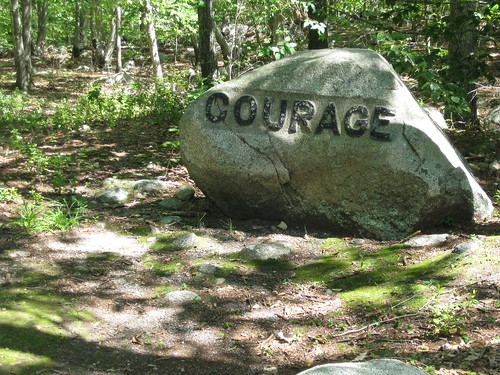
Courage Image by David Bruce. Depressed man image by Master isolated images at FreeDigitalPhotos.net.
Not Seeing Results? Don’t Give Up.
 Do you ever feel like despite your best, most diligent, inspired effort, discipline and patience, you don’t seem to be getting anywhere? Maybe you have a vision that excites you – an idea of how something could be done differently, a creation you’d like to breathe life into, a way of improving your quality of life – or that of others. You plan, you prepare, you do the work. Repeatedly. But despite all that effort and persistence, you have little if anything to show for it.
You might question yourself. Are you doing it right? Are you missing something?
You might get angry and try harder to control the outcome – double down your efforts, research extensively to figure out how to foolproof your plan, do whatever you can to MAKE it happen.
You may take your anger out on others. Why aren’t they cooperating? And how is it that everyone else seems to have it easier than you do?
You may question your vision. Is this really worth investing your time and energy in?
You might feel like quitting and moving onto something easier, more mainstream, with less risk or exposure. You gave it a good run. Maybe it just wasn’t meant to be.
But the idea of throwing in the towel feels even worse than continuing what seems to be a losing battle.
And try as you might, you just can’t shake the hold of that vision. It beckons. It haunts. It enchants – revisiting you in your quiet hours, whispering about what is possible.
What do you do?
 Have you ever heard the story of the Chinese Bamboo tree? It’s quite unusual. A farmer who plants these seeds will water, fertilize and tend to them daily. After a year of care and nurturing, the ground looks the same way it did when the seeds were planted. Another year will pass as the farmer continues his efforts, with no seeming growth at all. A third year of care and feeding will go by. NOTHING. And then another year of watering, fertilizing and patiently waiting. Still nothing. In the fifth year, small sprouts will appear. And in the six weeks that follow, the little shoot will grow up to ninety feet tall.
What we don’t realize about these seeds – and our precious visions – is that while patience, faith and perseverance may not produce tangible signs of progress for quite some time, they work wonders beneath the surface, laying the groundwork for what will follow.
To sustain the towering height these trees grow to, the root system must be deep and vast. We too must have a strong inner foundation to ensure we have what we need before we can share it with others. So many of our efforts are a quest to prove to ourselves that we are worthy. We often mistakenly think that accolades, prestige, wealth and all that comes with success will allow us to feel strong and fulfilled. But that approach is backwards.
The “trappings” of success fade over time and are as easily toppled as a tree with no root system. If instead we start with a strong, grounded feeling of worthiness and appreciation for ourselves, we can extend our gifts to others knowing that we have all we need and that sharing it with others will only make us stronger – in the same way that bamboo continues to grow after it is harvested. This strength is cultivated over time, and often happens during the times of our lives that feel most barren. We endure disappointments, we try something and fail, we learn about who we are and why we are here. This is all growth that happens beneath the surface. And it makes us strong and resilient enough to stand tall, reach high, and do the work we have been inspired to do out of joy rather than necessity.
Visions worth working for often don’t come to fruition right away and timing is not something that can be controlled. When we try desperately to speed things up, we will often experience frustration, and feelings of desperation that may lead to anger and/or withdrawal. Just as we cannot peel rosebuds open or shorten the time it takes for a caterpillar to become a butterfly, we cannot rush the progress and transformation that happens with our visions and our very selves. Sometimes our efforts to speed things up actually delay progress, as when we get too attached to a certain course of action that interferes with the natural progression of things. This is analogous to digging up and replanting seeds that have not yet sprouted.
The “overnight success” we often hear about is more often than not the result of years of dedication, commitment, perseverance and faith that like the growth of the Chinese bamboo tree took several years to come to fruition. As you pursue your grandest dreams and visions, many will tell you that your efforts are in vain, that you do not have what it takes, that you should quit while you are ahead. And you may begin to question yourself as well. But as you weather these storms and continue to believe in and cultivate something that cannot yet be seen, you will ultimately be rewarded with seeing that which you believe. And it will enrich your life – and that of others in ways you may never have anticipated.
For more on bringing your grandest dreams and visions to fruition and laying the foundation necessary to sustain them, check out The Pinocchio Principle: Becoming a Real Leader now available in both ebook and paperback formats on Amazon.
The Desperate Anxiety photo courtesy of Naypong at FreeDigitalPhotos.net.
Bamboo Trees photo courtesy of S P Photography.