Share This
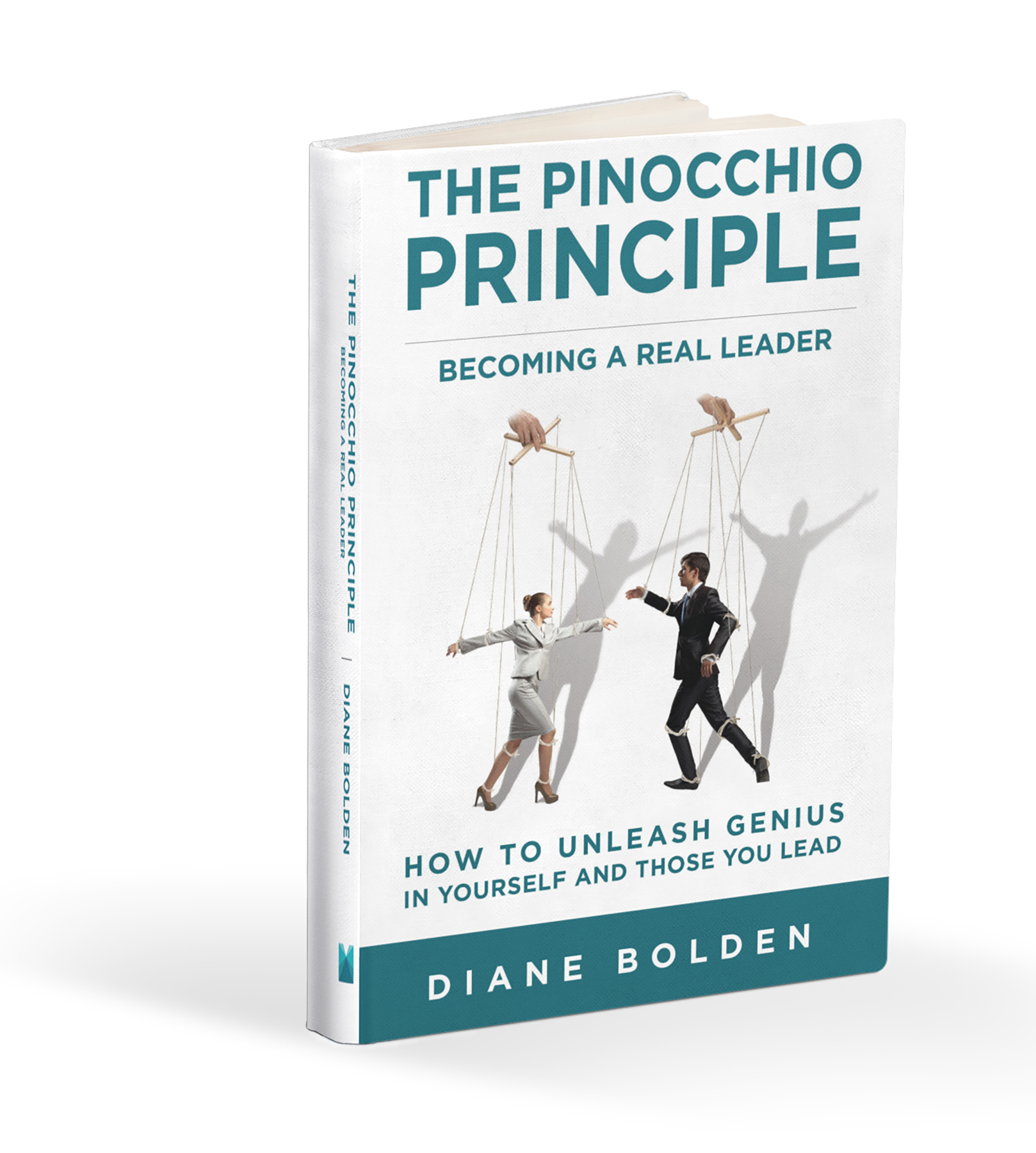
What I Wish I’d Known Before Writing a Book Called “The Pinocchio Principle”
When I tell people I wrote a leadership book called The Pinocchio Principle, they usually assume it’s about honesty.
It’s not.
Or rather — it’s about a different kind of honesty. Not the honesty of telling the truth to others, but the far more difficult honesty of telling the truth to yourself. About who you are. What you want. Where you’ve been performing a version of leadership that looks good from the outside but feels hollow from the inside.
Pinocchio, in the original story, starts out as a puppet — animated but not alive. Capable of movement but controlled by strings he can’t see. And the journey of the story, at its heart, is about what it takes to become real.
That metaphor has never left me. Because I’ve lived it.
How the book began
I didn’t set out to write about Pinocchio. I set out to solve a problem I kept encountering in my work: the gap between how capable leaders appeared and how alive they actually felt.
I had been working in organizational effectiveness and leadership development for over a decade. I’d worked with executives at Fortune 100 companies, facilitated culture change initiatives, designed and taught leadership programs. I had seen every kind of smart, accomplished, well-intentioned leader you can imagine.
And so many of them were exhausted in a way that went deeper than workload. They had achieved what they had worked for — the title, the influence, the results — and found that it didn’t feel the way they thought it would. Something vital was missing.
I recognized that feeling. Because somewhere along the way, I had started living it too.
I was running a consulting practice, raising three kids, trying to do everything well — and I had slowly become a very efficient version of myself who wasn’t sure she was living her own life anymore. I was effective. I was competent. I was, by most external measures, successful.
But I wasn’t what I would call real.
What I discovered
What I came to understand — through my own journey and through the privilege of accompanying hundreds of leaders through theirs — is that the most transformative shift available to any leader isn’t a new strategy or a better system.
It’s a return to themselves.
Not a romanticized, everything-is-easy version of themselves. But the grounded, wise, genuinely engaged version that exists beneath the accumulated weight of expectation, performance, and fear.
I call that version the Genius. And I wrote The Pinocchio Principle as a roadmap for finding it.
The book came out in 2011. In the years since, I have had leaders tell me that reading it gave them permission to want something different. That it named something they had been experiencing but couldn’t articulate. That it started a conversation with themselves they hadn’t known how to begin.
Those conversations are why I do this work. They are, in a very real sense, the whole point.
Why I’m still here
I share all of this not to tell you about a book, but to tell you about a conviction.
I believe the indomitable strength of the human spirit is essential to the future of business — and that it is, right now, largely underutilized. I believe there is a version of leadership that is both more effective and more sustainable than the one most of us were taught. And I believe it begins with the same question Pinocchio was trying to answer:
What does it take to become real?
That question is as alive for me now as it was when I wrote the book. It’s what animates every coaching conversation, every program I design, every piece I write here.
If it’s alive for you too — welcome. You’re in exactly the right place.
Want insights like this in your inbox every week? → Subscribe here.
You can find The Pinocchio Principle: Becoming a Real Leader on Amazon here.
And if you’re ready to go deeper, The Real Leader Academy is where that journey continues.