Share This
Category Archives: Productivity and Effectiveness
Why the Mind Can’t Lead Us into the Future – Without the Heart

Victor Hugo once wrote, “The future belongs to hearts even more than it does to minds.” I believe that’s as true in business as it is anywhere else.
I know plenty of people would argue with me. They’d point to current trends that put profits over people, short-term gain over long-term organizational health. To businesses doing quite well despite practices that look, frankly, inhumane.
But we’re talking about the future here. And the future health of anything requires a heart.
The heart is the engine
The heart is the organ that powers every other organ in the human body. The same is true in organizations. You can have the best strategy, the most incredible IP, the most reliable processes, the most advanced equipment, and the most impressive knowledge in the room – but without the hearts of the people using those things in service of other people, none of it sustains itself over the long haul.
Heart is what differentiates real leadership from management and authority – from planning, organizing, executing, controlling. Leadership that carries us into the future puts people first: encouraging commitment rather than demanding compliance, inspiring people toward something they want to be part of rather than something they do out of obligation or fear.
The heart keeps people engaged long after the mind gives out – it’s what lets people tap into strength they didn’t know they had. It’s what allows someone to get knocked down, get back up, and get back in the game. And it runs on fuel that’s not just sustainable, but renewable.
The heart runs on appreciation, compassion, imagination, love. And here’s the strange thing about that particular fuel: using it creates more of it. It’s the only fuel that doesn’t deplete itself.
That’s exactly the fuel we need right now. Fuel that unites instead of divides. Fuel that asks “what’s possible?” instead of “what’s at stake?” Fuel that gives people a reason to get up again, and a reason to believe they’re capable of more. Fuel that tells people they’re vital and indispensable – not despite their differences, but because of them.
Love gets us past our differences to what we all actually care about, and toward accomplishing it together. It doesn’t try to make any one person the hero. It helps each of us find the hero already in ourselves, and in each other.
Why the mind alone can’t carry us anymore
None of this is a knock on the mind. Our minds are impressive machines. But without the heart calling the shots, the mind alone isn’t enough to carry us into the future. The mind runs on logic – it’s like a computer replaying what we’ve done before, warning us what we stand to lose, suggesting a course based on variables it already knows.
And we’re living at a moment where yesterday’s approaches don’t address today’s challenges. Despite every best practice out there, we’re having to learn to intuit entirely new ways of working, leading, and living. We can’t look to solutions that worked in the past to solve problems that look nothing like the ones we face now.
Leadership driven purely by the mind has leaders believing they need all the answers – to navigate every challenge with unshakeable confidence and a definitive solution, to know exactly what to do and get everyone else to do it without question.
But things are changing too fast, and there’s too much uncertainty, for any one person to have all the answers, or to make decisions that meet the needs of everyone who has a stake in them. When the mind is calling the shots, leaders go looking for certainty in a world that doesn’t have any to offer. That has them clinging to solutions that may not work, or putting enormous pressure on themselves to find ones that will. It inflates their sense of responsibility, and it can trigger the kind of ego-driven response that convinces a leader they need to be the hero – which, paradoxically, tends to produce behavior that looks like anything but leadership.
The leadership that takes us into the future will be powered by the heart.
What the research actually shows
The insight required to meet today’s emerging challenges takes a level of presence – a way of intuiting things – that goes beyond what our heads, our linear way of moving through the world, can offer on their own.
Creative work depends on the heart. Making something that hasn’t existed before requires going outside the bounds of the mind and feeling your way into something new. That matters right now specifically because the problems we’re facing need genuinely new solutions.
The heart tunes into something the head can’t reach. It’s attuned to possibility – it dreams, it envisions, it shows us a way forward when every other way has failed.
This isn’t just a nice metaphor. Research from the HeartMath Institute has found that the heart has its own independent nervous system – at least 40,000 neurons, what they call “the little brain in the heart.” The heart actually sends more signals to the brain than the brain sends to the heart.
Negative states – stress, worry, fear, impatience, indecision – create noise that knocks the brain’s neurons out of sync, showing up as energy drain, mental fog, and difficulty focusing, remembering, or deciding anything at all. Positive states – love, kindness, appreciation, gratitude – do the opposite: they create a calming, coordinated cooperation between the heart, brain, and hormonal system that lets us think clearly, solve problems creatively, and make intelligent choices, while even strengthening our immune systems.
The heart generates the strongest electromagnetic field in the human body – measurable from several feet away, and roughly 100 times stronger than the brain’s. Research shows that people in proximity to each other can actually synchronize this way, a kind of social coherence. My own belief is that the ripple effects of thoughts and actions generated by the heart reach even further than that.
Where this leaves us
Victor Hugo wrote that the future belongs to hearts even more than minds. A century and a half later, the research is starting to catch up to what he already sensed. The heart isn’t the soft, secondary organ we’ve been trained to treat it as in the business world – it’s the one generating the strongest signal in the room, the one capable of synchronizing people around something bigger than any single mind could construct alone.
The leaders who shape what comes next won’t be the ones with the most airtight strategy or the most confident answer. They’ll be the ones willing to lead from the organ that never runs out of fuel.
If you’re ready to build that kind of leadership in yourself – not just understand it, but actually practice it – I’m building something this fall for people who want to go deeper than an article can take them. More on that soon.
What I’ve Come to See About the Leaders Running on Empty
A while back, I wrote about what it takes to become real — the question at the center of The Pinocchio Principle. The distance between how capable a leader appears and how alive they actually feel.
Since then, I’ve been sitting with that question in a slightly different way.
Because in the intervening years, I’ve watched the pattern deepen. The leaders I coach are more accomplished than ever. And more depleted than ever. They’ve read the books. Been through the workshops. Listened to the podcasts. They know what good leadership looks like. And yet they arrive at coaching sessions with the same quiet exhaustion I have been watching for three decades.
Something is running them. And it is not the workload.
I made a video about what that something is — what I’ve come to see beneath the surface of the leaders I work with, and beneath the surface of my own life during the years I was living out the same pattern.
The video is about sixteen minutes long, and it lays out the whole picture: the invisible modus operandi that runs us underneath our conscious awareness, the false beliefs most of us would never consciously choose but are living by anyway, the five movements that make change actually possible, and — most importantly — the picture of what becomes available when you stop running on the wrong fuel and start running on the right one.
I’ve also put all of it down in a manifesto. It’s called The Real Leader Revolution, and it’s meant to be read slowly. You can download it free at RealLeaderRevolution.com.
Why I’m writing this now
I share the video and the manifesto because they feel like the fullest expression yet of the work I’ve been building for thirty years. The Pinocchio Principle named the question. This new work is my current answer.
Not because I have finished figuring it out — I haven’t. But because I’ve watched enough leaders make this shift that I know it is possible. And I know the map exists.
If you have felt yourself running on empty, and no amount of rest is quite fixing it — this is for you.
If you have wondered why what used to work isn’t working anymore, and no framework or strategy seems to reach whatever the actual problem is — this is for you.
If you have started to suspect that the more you’re looking for is buried beneath the very habits and beliefs that got you here — this is for you.
Watch the video. Read the manifesto. Sit with it.
And if any of it lands, I’d love to hear from you.
Diane
P.S. If you’re new here and want to receive more of this kind of writing, subscribe to my email list — I send thoughtful pieces on leadership, mindset, and the inner work of the outer life, roughly once or twice a month.
What Disneyland Reminded Me About Presence (And Why It Matters for Leaders)
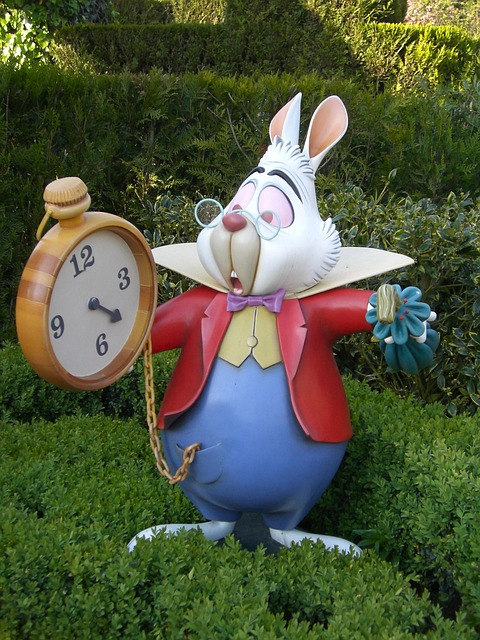
My family spent two days at Disneyland. I spent most of it somewhere else entirely.
Not physically — I was there. I stood in the lines, rode the rides, ate the overpriced food. But mentally, I was somewhere between a client situation I hadn’t fully resolved and a project that was nagging at me. I was going through the motions of being present while my actual attention was somewhere back in Phoenix.
At some point — I think we were waiting for the parade — my youngest grabbed my hand and asked me to look at something. And I realized I had no idea what she had been talking about for the last ten minutes.
I had been nodding. But I hadn’t been there.
Presence isn’t a soft skill
I want to make a case for presence that goes beyond the personal — beyond being a better parent or spouse or friend, as important as those things are. I want to make the case that the ability to be fully present is one of the most powerful and underrated leadership capabilities there is.
When you’re genuinely present with someone — not planning your response, not half-monitoring your phone, not running the background process of everything else you need to do — people feel it. They feel that they matter. They think more clearly. They take more risks. They bring more of themselves to the work.
Conversely, when a leader is visibly absent — technically in the room but not really there — the effect on the people around them is immediate and measurable. Conversations stay shallow. Trust erodes slowly. People learn not to bring the important things.
Your presence, or lack of it, shapes the quality of every interaction you have. And interactions are where leadership actually happens.
What snapped me back
Standing there watching the parade, I made a deliberate decision. I put my phone in my pocket. I let the client situation be unresolved for a few hours. I looked at what my daughter was pointing at.
It was a float. A fairly ordinary float by Disneyland standards. But the way she described it — the specific details she had noticed, the joy she took in explaining it to me — was anything but ordinary.
I had been missing it. Not just the float. Her. The whole trip.
And the thing that I keep coming back to is this: I didn’t get those hours back. They happened with or without my attention. The only question was whether I was going to be in them.
The practice of returning
Full presence all the time isn’t realistic. Our minds are meaning-making machines. They wander. That’s not a flaw to fix — it’s just how minds work.
What is possible is noticing when you’ve gone elsewhere — and choosing to return. Not with self-judgment. Just with intention.
In the middle of your next important conversation, try this: notice where your attention actually is. Not where you think it should be. Where it is. And if it’s somewhere other than the person in front of you — gently, deliberately, bring it back.
That act of returning is presence. It’s available to you in every meeting, every one-on-one, every conversation that matters.
And it matters more than most of what we spend our leadership energy on.
Want insights like this in your inbox every week? → Subscribe here.
I explore presence and what it means to lead from your fullest self in my book The Pinocchio Principle: Becoming a Real Leader.
Why Losing Your Passion at Work Is a Leadership Problem (Not a Personal One)
A third of your time on this planet is spent at work.
Let that land for a moment.
Not a third of your workday. A third of your life. Which means if your work feels like a grind – if you’re pushing through it, white-knuckling your way from one obligation to the next, surviving instead of thriving – that’s not just a professional inconvenience. That is the texture of a significant portion of your life.
I’m not going to pretend that work is always meant to feel blissful. Every meaningful endeavor has its hard days, its tedious stretches, its moments of doubt. That’s different from the slow erosion of passion that I see happening in so many high-achieving leaders.
And I want to make a case for why that erosion isn’t just a personal problem – a matter of attitude or perspective or self-care that you can fix with a long weekend. It is a leadership problem. And it has consequences that ripple far beyond you.
The cost you aren’t calculating
Here’s what most leaders don’t realize when they make peace with feeling depleted: the energy you bring to your work is not self-contained.
When you’re running on fumes, everyone around you feels it. Your direct reports feel it in how you show up in one-on-ones: the half-presence, the clipped responses, the sense that you’d rather be somewhere else. Your peers feel it in how you engage in meetings – whether you’re genuinely curious and generative, or just getting through the agenda. Your organization feels it in the quality of your thinking, your decisions, the kind of problems you’re willing to sit with.
Leadership is a transmission, not a transaction. What you carry inside yourself is what you transmit to the people around you. And a depleted leader, however accomplished and competent, transmits depletion.
I’ve seen this play out in organizations again and again. A team whose leader has lost their spark begins to lose theirs. The culture quietly dims. People start doing the minimum required to stay out of trouble rather than bringing their best. Nobody named it as a problem. Nobody pointed to the leader. But the source was there.
Why it happens to the best ones
Losing your passion at work doesn’t happen to lazy or uncommitted people. It happens to exactly the opposite kind of person.
It happens to the leaders who care deeply and have been pouring themselves out for so long that the well has run dry. The ones who made success their identity and then discovered that achieving it didn’t feel the way they expected. The ones who kept saying yes to things that didn’t align with who they really are, because they were so good at executing that the requests kept coming and they felt responsible for saying yes.
This is part of something I call the Curse of Competence. The better you are at something, the more of it you’re asked to do – whether or not it’s what lights you up.
Over time, you can find yourself at the top of a ladder that’s leaning against the wrong wall. Impressive by every external measure. Quietly lost on the inside.
What reigniting actually looks like
I want to be clear about what I’m not suggesting here. I’m not suggesting you quit your job, blow up your career, or make any dramatic external changes. In my experience, the most profound shifts happen from the inside out – in how you relate to what you’re doing before you change what you’re doing.
What I’ve seen work, again and again, is this: when leaders reconnect with why their work matters – not the metrics, not the deliverables, but the genuine human impact – something shifts. When they start bringing more of who they actually are to what they do, rather than the polished, managed version they’ve learned to present, something opens up.
There’s a part of every leader I’ve worked with that is wiser, more creative, and more energized than the version that shows up exhausted and going through the motions. And when that part gets activated – when you stop performing leadership and start being it – the effect on the people around you is immediate and unmistakable.
That’s not idealism. I’ve watched it happen in boardrooms, in hospitals, in classrooms, and in startup teams. It is available to you.
The question I’d ask you
If you set aside what you’re supposed to feel about your work – what you’ve decided is reasonable or realistic or acceptable for someone at your level – what is the honest answer to this question:
Does your work feed you? Or does it deplete you?
If the honest answer is the latter, that’s worth paying attention to. Not to spiral into crisis, but to get curious. Because the version of you that is genuinely energized, engaged, and lit up by what you do doesn’t just feel better – it leads better. It makes better decisions. It draws out the best in the people around it.
And the world needs that version of you more than it needs the depleted one.
If this landed for you, I explore the journey from depletion to what I call your Authentic Genius in my book The Pinocchio Principle: Becoming a Real Leader.
And if you’re ready for a more structured journey, The Real Leader Academy offers programs specifically designed to help high-achieving leaders reconnect with what makes their leadership most powerful — and most sustainable. → RealLeaderAcademy.com
Want insights like this in your inbox every week? → Subscribe here.
The Surprising Secret to Overcoming Inertia (It Has Nothing to Do with Willpower)
I want to tell you about something I discovered one morning while doing yoga in my cold house.
I’d been putting off my practice for days — weeks, if I’m honest. Every morning I’d wake up with good intentions, feel the temperature in the room, and decide that I’d start tomorrow. The conditions weren’t right. I needed to feel ready.
One morning I forced myself to get on the mat anyway.
I did a few slow, stiff movements. Everything felt hard. My body was resistant. My mind was making a compelling case that this was pointless. But I kept going. And somewhere in the middle of it, something shifted. My muscles warmed up. My breath deepened. The things that had felt impossible five minutes earlier started happening on their own.
The room hadn’t changed. The temperature was the same. The conditions were exactly as uninviting as they’d been when I’d been talking myself out of it for weeks.
I had changed.
And I thought: isn’t this always how it goes?
The physics of getting unstuck
There’s a principle in physics that states an object at rest tends to stay at rest — and an object in motion tends to stay in motion. We usually think of inertia as the problem (the thing keeping us stuck on the couch), but the same principle that keeps us still is the one that keeps us moving once we start.
The mistake most people make when they’re trying to overcome inertia is waiting for the right conditions before they begin. They’re waiting for clarity, or motivation, or the perfect moment, or enough time, or the right mood. They think that feeling ready is the prerequisite for starting.
It isn’t.
Readiness is a result of beginning. Not a condition for it.
What this looks like in real leadership
I work with executives who have important projects sitting in a drawer — things they know matter, things they genuinely want to do — that have been waiting for the right moment for months. Sometimes years.
The reason is rarely laziness. It’s usually that the project feels big, and starting feels risky, and not starting feels safer than starting badly.
But here’s what I’ve observed: the leaders who make the most meaningful progress are rarely the ones who waited until everything was perfectly aligned. They’re the ones who took a small, imperfect action and let that action create the momentum for the next one.
They got warm.
The question worth asking
When I’m stuck on something — a conversation I’ve been avoiding, a piece of work I keep circling around, a decision I can’t seem to make — I’ve learned to ask myself a different question than “What should I do?”
Instead, I ask: What’s the smallest action I could take right now that would get me into motion?
Not the perfect action. Not the complete action. Just the one that would move the needle from “still” to “in motion.”
Sometimes it’s writing one paragraph. Sometimes it’s making one phone call. Sometimes it’s simply opening the document and reading what’s there.
The moment you take that action, the game changes. Because now you’re in motion. And motion has its own momentum.
One small thing
Think about something you’ve been wanting to move forward on — a project, a conversation, a change you’ve been contemplating. You know the one.
Now ask yourself: what’s the smallest action I could take on it today? Not to finish it. Not to get it right. Just to get warm.
Then take that action. Before you read another article or have another meeting or check your phone again.
The environment won’t change. But you will.
I explore this idea, and the deeper patterns that keep high-achieving leaders stuck, in my book: The Pinocchio Principle: Becoming a Real Leader.
Want insights like this in your inbox every week? → Subscribe here.
Why Strategic Thinking Isn’t Enough (and What to Do Instead)
Many executives understand the importance of being more strategic. Far fewer know how to actually practice it in the middle of real work.
Because strategy isn’t just a way of thinking. It’s a way of operating.
And if you don’t intentionally change how you operate, you’ll default right back into the pull of the urgent, the familiar, and the predefined.
Here’s what I see consistently in organizations:
Plans are created.
Best practices are adopted.
Processes are followed.
And then execution becomes the priority – often at the expense of questioning whether the plan still makes sense.
But in a shifting environment, a plan is only as good as your willingness to reevaluate it.
If the route you’re taking isn’t aligned with your desired destination, moving faster won’t help.
And relying on your plan to tell you where to go next won’t either.
Strategic leadership requires something different – something more intentional.
Here are five ways to start putting it into practice:
1. Make space to think (and protect it).
If you don’t create time to reflect, integrate, and assess, it simply won’t happen. Even a small, consistent block of time can help you recalibrate and ensure your actions align with your priorities.
2. Focus as much on the questions as the answers.
Instead of jumping to solutions, ask
-
-
- “Are we solving the right problem?”
- “What might we be missing?”
- “Is this a symptom of something deeper?”Better questions lead to better strategy
-
3. Connect the top and the front line.
Insight doesn’t live at the top or the bottom. It emerges when both perspectives come together. Create space for real dialogue around what’s actually happening on the ground.
4. Invite (and use) dissent.
When people feel safe challenging the current direction, blind spots shrink. When they don’t, risk multiplies – quietly.
5. Use discernment, not just information.
Not every best practice is best for you. Before implementing ideas, ask “Does this actually fit our context, or are we borrowing someone else’s solution?”
At the end of the day, strategy isn’t about having the right answers.
It’s about staying connected to what’s actually happening, being willing to adjust course,
and creating the conditions for better thinking to emerge.
That’s what allows leaders to move from executing plans… to shaping the future.
How To Become a More Strategic Leader
One of the major challenges executives struggle to overcome is sacrificing the strategic for the operational. If you are falling into this trap, understanding and working through your resistance is the first step to freedom.
Operational is clean. It has defined edges and finite solutions. You can check the boxes and feel a sense of closure and control with an operational approach.
Strategic on the other hand is often messy. It involves stepping into uncertainty. There is usually no one right answer. It pushes you out of your comfort zone. And it requires that you slow down instead of speeding up, something that flies in the face of what we’ve been conditioned to do.
To avoid this discomfort, many executives prefer being busy to being strategic. It provides the illusion of being productive and a burst of adrenaline that is a nice (yet ultimately unsatisfying and addictive) placebo for real progress.
But busyness isn’t going to help you hit the target necessary to advance your business. Because until you slow down long enough to assess your environment and allow your intuitive mind to partner with your rational mind, you may not even realize what your true target is, let alone how to get there.
Malcolm Gladwell echoed the wisdom of Albert Einstein his iconic book Blink: The Power of Thinking Without Thinking. He wrote, “The key to good decision making is not knowledge. It is understanding. We are swimming in the former. We are desperately lacking in the latter.”
Knowledge is the product of absorbing information. Understanding is the product of insight. And insight comes from the integration of information with experience, from slowing down long enough to practice reflection and discernment. That’s an important key to successfully navigating the changing landscape of “business as usual”.
We live in an age of information. You can find an abundance of resources – articles, books, dissertations, webinars, workshops, best practices, etc. on any given topic. This information tends to be descriptive of what worked in the past to address challenges faced by people and organizations whose situations are rarely identical to our emerging challenges and opportunities.
Acting on information without discernment is like taking someone else’s prescription given for a diagnosis that you aren’t entirely certain matches your own.
Yet all too often we move full speed ahead with seeming solutions that don’t really address the underlying problems (and could make the problem worse). Ask yourself how many times you’ve overlooked or disregarded inklings that told you something is just not right.
To keep this pattern from hijacking your effectiveness, recognize and honor the importance of slowing down when you feel compelled to speed up. Take some time to check in with yourself and reflect on the changing nature of your environment. When you zoom out to see more of the big picture with an inquiry into what’s most important, you will likely recognize things you would have otherwise missed – and receive the insight necessary to know what needs to happen next.
To strategically blaze a trail into the future you must be willing to break away from the constraints of your past (including those you have unwittingly placed on yourself).
Do You Dare to Dream?
As children, most of us received mixed messages. You may have been encouraged to follow your heart and give life to your dreams in addition to being conditioned to be practical, hedge your bets, and take the safest route. Over time, many of us have allowed the roar of public opinion – that often tells us our dreams are frivolous, selfish, and unlikely to come to fruition – to silence that small still voice within.
But those among us who have risen against their odds have learned to reverse that process and believe in themselves and their dreams despite the overwhelming evidence around them that would suggest that success is improbable.
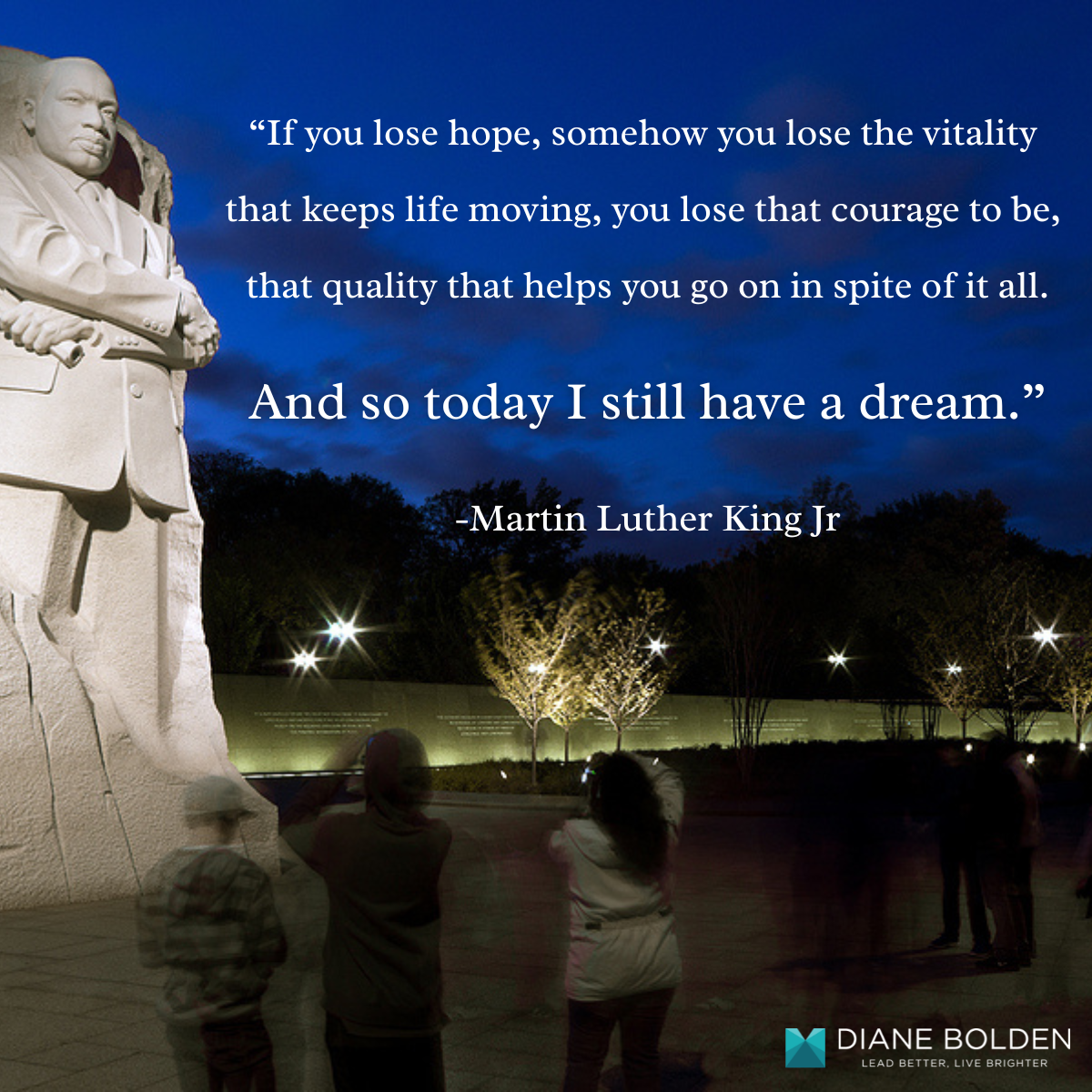
Listen closely to the silent whispers of your heart that beckon you to think bigger and act bolder – and to bust out of old paradigms that feel stale or stagnant.
Do what you can to gain clarity on what they are telling you.
And then take action.
For more on taking steps to bridge the gap between where you are and where you want to be – and to receive updates on an upcoming webinar that’ll help you make the most of 2026, download my special report, “Why Real Leaders Don’t Set Goals (and what they do instead)”.
Why overwhelm can become a self-fulfilling prophecy – and how to break the vicious cycle
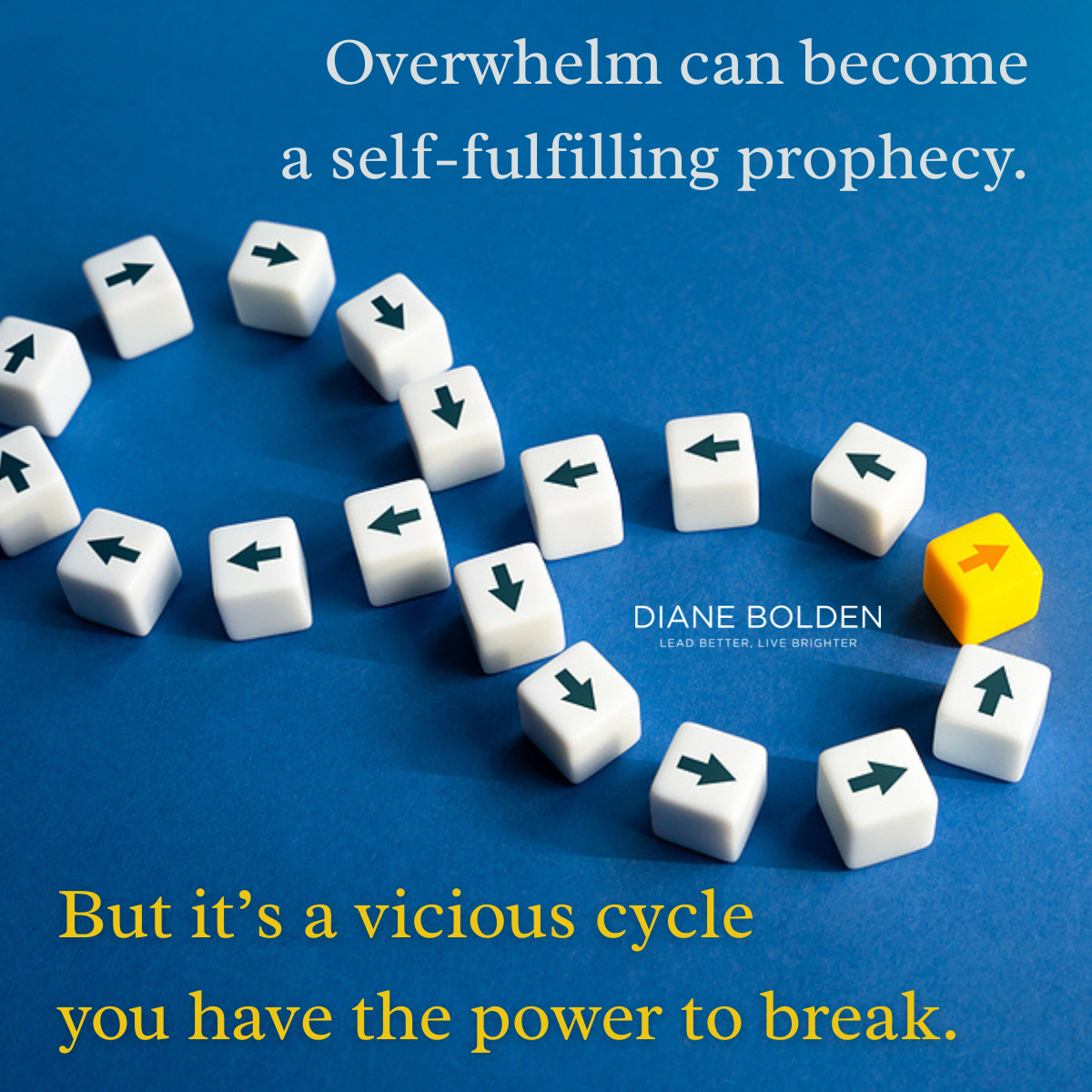
When you feel heavy and bogged down, everything you do becomes harder and more cumbersome.
You may think the way you feel is a result of your experiences, and that’s true — the more you have to do, the more overwhelmed you’ll feel. But the reverse also applies — the more overwhelmed you feel, the more you are likely to act in ways that exacerbate it. You might procrastinate, overcomplicate things, or waste energy resisting and worrying.
If you focus on evidence suggesting you’ll never rise above the way you are feeling, you’ll trap yourself in vicious circles where you’ll continue to see what you want to rise above and feel the frustration of being unable to break free.
In fact, your frame of mind with everything you do has a direct effect on whether the experience of doing it will be exhilarating and satisfying or frustrating and heavy.
The stories we tell ourselves have a way of coming true. The way out of self-imposed traps is to start not with our experiences, but our thoughts.
The fundamental shift must come not in what you do, or even how you do it, but what you are thinking, believing and allowing yourself to feel about what you are doing.
To that end, setting an intention or statement of your desired experience can be very powerful. If you want greater freedom and joy, more meaning and satisfaction, and heightened effectiveness, you must align your thoughts around enjoying those experiences before you even start.
And you need to become diligently aware of the degree to which your thoughts stay aligned with your overarching intention. When they drift, you can return to them, remember what you really want, and align yourself with the state you wish to be in again.
In this way, you can break the vicious cycle of allowing your experiences to bring you down in ways that result in more lousy experiences — and begin anew. Your actions align with your thoughts, and you’ll find yourself coming up with creative ways to simplify, get focused on what is most important, and get it done while enjoying yourself in the process – and sharing your joy with everyone around you.
Looking for a better way to lighten your load? Check out UnleashtheExtraordinary.com.
Here’s to your success!
Diane
Want to do more? Start by doing less.
Want to Do More? Start by Doing Less
We are a goal driven society that is conditioned to seek more.
 Our egos desire more money, more fame and prestige, and more stuff. But a deeper part of ourselves longs for more peace, more meaning, and more purpose in our lives. We want to move beyond our previous realizations of what we’ve already accomplished to master newer, better ways of doing things – whether that be what we create in our lives or in our organizations – and as leaders what we can inspire others to do as well.
What if you started with less instead of more?
Just for a moment, consider what you need to let go of to create the space for something new to come in.
You can take your cues from nature. We are officially in the first week of fall – a time of letting go and preparing for regeneration. Trees shed their leaves, and the energy of plants is directed toward developing a strong root system that’ll help it make it through the winter.
As the days will grow shorter and we spend more time in the dark, it’s fitting to reflect on things you may not be able to see but feel welling up within you.
What are you holding onto that has run its course?
- What are the old, outmoded ways of doing things that no longer bring you energy?
- What things have you acquired that you no longer need?
- What beliefs are you holding onto that are no longer true for you?
In moments that you feel constricted, anxious, or tired ask what you can let go of. Don’t be afraid of the answer. Though it may be uncomfortable because it introduces an element of the unknown, following these insights will always lead to freedom and liberation.
Your computer can only handle so much data, and the same is true of you.
If you don’t delete old emails and files and continue to add new programs without uninstalling old ones, you’ll find that it becomes sluggish and unresponsive. Just as freeing up space allows your computer to process things more quickly, so too will clearing your own personal space (whether of things or thoughts) allow you to access new levels of clarity and creativity.
Space brings freedom.
You’ll breathe easier, be more present in every action and interaction you partake of and bring more of who you really are to what you do. And you’ll open the space of possibility that allows something to come in that may surprise and delight you.
Any work you do on yourself will serve as a form of leadership for others who, like you, seek their own answers and could benefit from your example of unearthing what is possible and allowing it to take form in new and unexpected ways.
Discerning what is and isn’t working and up leveling your game becomes easier and more fun when you have support. When you are ready to go deeper, check out UnleashtheExtraordinary.com.