Share This
All posts by Diane
From Frustration to Fruition: What to Do When Nothing Goes Your Way
Do you ever find yourself in a place where, despite your best efforts, nothing seems to be working out the way you want it to? 
Maybe you have an amazing idea that you just can’t seem to get off the ground. Perhaps you have made progress toward a goal and suddenly feel stymied and blocked or unable to gain the resources or support you need to move forward. You might be navigating some kind of transition that has left you wondering whether that next thing for you is ever going to materialize.
When obstacles seem to be coming from all directions and you just keep running into walls, it’s easy to lose hope and become consumed with frustration.
Sometimes it seems that the only options are to throw in the towel or buckle down and try harder. We are conditioned as a society to do the latter, and sometimes that is what it takes to bust through the barriers that confront us. But when we continue to run into setback after setback, it may serve us better to stop for awhile and survey the territory before we take action again — as we may find that what we thought was a frustrating delay is actually integral to getting us where we want to go.
Have you ever had a customer that wanted something that required a great deal of preparation but didn’t want to take the time to build the necessary foundation? If you proceeded as directed, in time the solution could go up in smoke leaving that customer worse off than they were before — or in the very best case, less than satisfied. But the customer wasn’t interested in hearing about why the delays were necessary and instead kept pushing and pushing for results.
Sometimes when we force things to happen, we are like that customer who doesn’t know what he doesn’t know and insists on powering up the engines before they are finished being built. He creates so much noise and distraction that it makes it difficult to focus on what truly needs to happen in order to get back on course. That’s what our frustration and anxiety does to us when we get caught up in it.
There is a part of you that knows exactly what you need to do to succeed in any given area – a part of you that has knowledge of a bigger picture and all the moving parts necessary to bring your grandest goals and visions to fruition.
While the part of you that is like the impatient customer that wants what he wants, this bigger part of you knows intuitively that things are happening in just the right way to yield the best results. The bigger part of you can only communicate to you in nonlinear ways — through feelings and flashes of insight that leave your logical mind wanting more details. And it only communicates in the present moment.
To tap this bigger part of yourself, you must learn to become attuned to what is going on in this moment, trusting that in the midst of frustrating delays and setbacks there may be something right in front of you that needs your attention. If you do not give it your attention you may continue to experience even more resistance and frustration. But if you move into it, you will find exactly what you need in order to move forward.
When I was writing my book, The Pinocchio Principle: Becoming a Real Leader, I hit a wall and experienced the dreaded writer’s block. I powered through it, forcing myself to write in spite of my lack of inspiration. Before long I realized that I simply couldn’t continue and put the manuscript away for awhile. In the months that followed, I had a number of experiences that were critical to writing the book. When my inspiration was renewed and it was time to return to my writing, I ended up throwing away everything I made myself write under my own duress, as it was flat, mechanical and uninspired. I replaced it with stories about the previous months’ experiences. As I wrote, the words seemed to fly onto the page and I was back in my flow again.
You too may be in a state where before you are ready to move onto the next phase of your greatest vision, goal or initiative, you must experience something that will give you just what you need to succeed. So when you feel that frustration, see if you can look at your situation with eyes that see beyond what appears to be limitation and perceive the gifts it is bringing you. It could be the very springboard you need to get you back in your game.
And if you’d like to learn more about how to ride the waves of life’s challenges and setbacks with greater effectiveness and less stress, consider enrolling in The Pinocchio Principle Unleashed: The Real Leader’s Guide to Accessing the Freedom & Flow of Your Authentic Genius. This 13-week leadership development program is designed to help high achieving professionals bring out their very best performance in a way that fills them up rather than depleting them – and allows them to make a bigger impact doing meaningful, inspiring work while leading others to do the same.
Though the fall session is now full, you can join the waiting list (with no obligation) to get first dibs on spring session seats before registration opens to the public.
Why What Used to Work May Now Be Working Against You (and what to do instead)

Imagine finding yourself in a dark room…It’s a room that was once lit but has since dimmed.
And you have been doing everything you can to turn that light back on. You’ve even gone so far as to build a contraption that allows you to generate electricity through your own manual effort, sort of like a giant hamster wheel.
The problem is you have to run continuously to produce the smallest splinter of light. And you find yourself pushing harder and faster to get that light to grow so that more of the room is illuminated once again.
Off in the distance, there is another room that glows brightly and warmly beckons to you. The radiance coming through the doorway of that space is pure and beautiful and you can almost feel its glow. But despite the draw of that warmly lit room, you stay right where you are. Instead of getting off the crazy hamster wheel that requires constant exertion and toil, you just keep running faster and faster.
And you are becoming exhausted.
This metaphor came to me in a moment of reflection. I had noticed a theme that I’ve seen echoed among several of my executive coaching clients – and in my own life as well, from time to time.
What used to work well no longer produces results. And that’s a problem. What was once easy and energizing begins to feel cumbersome and draining. And rather than moving you forward, in some cases it actually thwarts your progress.
But when it’s all you know, it can be difficult to let it go. You worked so hard to perfect those ways of being, of working, of relating. And it paid dividends in the past. You might have thought to yourself, “If I could just double down, and put a little more effort into it, a little more discipline, I could turn it all around,” right?
That’s what many of my clients thought. Maybe you can relate…
For some, the work they did won them a promotion. Their intense operational focus and ability to dig in and get results merited them an increased scope and elevated role. They became responsible for leading and empowering others to do the work they once focused the majority of their effort on. They were being called to make a bigger, more strategic impact, but their fierce and intense focus on operational details was preventing them from making that leap.
For others, it was work that once excited them but was no longer stimulating. They could do it in their sleep. Sure, they were good at it, but it was becoming a boring, tedious grind. It was harder to get out of bed in the morning. There was nothing to look forward to. And in their quiet moments, they dreamt of doing something bigger, bolder and more impactful.
Some even had ideas and projects they longed to pursue or propose. But they just couldn’t get themselves to break out of the ruts they were in, and/or doubted whether they really had what it took to do anything different.
And for many others, it was about working in a way that was simply not sustainable. They had a tendency to take on more than most, prioritize everything equally and live in constant fear of letting people down. So they continued running a race that was increasingly difficult to keep up with, let alone win. The stress and pressure of their environment was high, but small in comparison to the anxiety they heaped upon themselves.
Regardless of which group you find yourself in, there is a better way not far off in the distance. At some level you are probably aware that something has to give… You dream of feeling energized again, of being unencumbered and inspired and engaged in meaningful and fulfilling work. But you can’t get to that new place without being willing to leave the old one.
You can choose to stay in the dark, dreary room because it’s comfortable. It may no longer be satisfying, or even pleasant, but it’s familiar. Do you ever shy away from the light that is beckoning you to leave that space because you are afraid of what you’ll see or whether you’ll be able to handle it?
We all do that from time to time, even though…
The light reveals new possibilities for growth, significance and satisfaction. It not only illuminates the challenges and opportunities, but also your strengths – including some you may not have realized you have. And it ushers in new vitality, new energy and new clarity. When you summon the courage to leave your dark, dull room and follow the light, you’ll be filled with vigor and joy, and you’ll find your enthusiasm renewed, your passion reignited, even if you don’t believe that yet.
The light of new possibilities brings both freedom and flow. No more running like hell without getting anywhere. No more banging your head against a wall only to end up with throbbing pain. No more feelings of being trapped by your circumstances. Once you summon the courage to follow the light into new possibilities and ways of working, you’ll experience a momentum that propels you forward in a sustainable way.
I know this because I have experienced it firsthand myself. And over the last twenty plus years I have helped hundreds of executives just like you experience it too. I can tell you that there is simply nothing like it. And it has to be experienced to be believed.
That light that beckons to you is a call to step into something bigger and more satisfying. It invites you to release old, outworn ways of working that no longer serve you and step into your personal and professional best – to unleash your greatness, to make a bigger impact and a bigger contribution. And it brings with it not only new levels of performance and effectiveness, but also fulfillment that enhances your life both on and off the job.
The sad reality is, some of us stay in our dark rooms longer than others. But there is always a way out. Making that move requires resolve and determination.
It starts with a conscious decision and a commitment to yourself. You don’t have to have it all figured out. All you need to do is give yourself permission to be curious about it. Once you begin to entertain the idea that there is a better way, you are already on the road to finding it.
You can ask yourself, “What would it look like if things weren’t so hard? What small shifts could I make that would allow me to enjoy my work (and my life) more — without sacrificing my performance?”
Your reticular activating system will kick in and help you find the answers to your questions. You’ll notice things that previously escaped your attention and find yourself drawn to resources, people, and potential solutions. You’ll tap into your own wisdom and begin to discern what you must do next – what small changes you can make that could end up having the biggest impact.
And then you’ll need to summon the courage to act on those insights.
“The first step toward success is taken when you refuse to be a captive of the environment in which you first find yourself.” – Mark Caine
When you answer this vital call to realize more of your true potential, magic happens. You can make a bigger impact doing meaningful work without sacrificing who you truly are. Best of all you’ll enjoy your life more. You become a shining example and a far more effective leader to others who will learn to make the same improvements in their own lives and careers.
The process can be unnerving. It requires you to let go of something you know in order to move into something you don’t. And though the rewards of making that move are profound, it isn’t always easy.
Having someone to guide and support you through the process can really help. I created The Pinocchio Principle Unleashed: The Real Leader’s Guide to Accessing the Freedom & Flow of Your Authentic Genius to assist high achieving executives just like you in making that vital leap with professional high level support and guidance, so you can move through it very quickly, with courage and grace.
The program is a distillation of the most impactful approaches and techniques that have helped my clients over the last twenty plus years to successfully affect their own personal and professional transformations. These are powerful methodologies I repeatedly utilize in my own life as well.
I’ll be personally guiding an intimate group of executives through this process over the next thirteen weeks utilizing a powerful blend of online training (that you’ll have lifetime access to), small group mastermind meetings and one-on-one coaching support.
What differentiates this program from all the others out there is that it isn’t about blindly following a recipe for success that attempts to make you someone you are not. The program is designed to help you move more deeply into who you truly are, so that you can connect with your own wisdom and allow it to guide you in ways that are authentic and natural to you, and lead you to your own personal uniqueness and strengths.
You’ll learn to leverage your experiences in ways that bring clarity and focus into your life, and experience lightness as you begin to let go of things you’ve been making yourself do all these years that have weighed you down and created unnecessary pressure and anxiety. All this while enjoying unprecedented levels of performance and energy that is sustainable – because it comes from the inside out.
Whether you decide to join me, or opt to go it alone, I encourage you with all my heart to exercise the courage to answer your own personal and professional call to greatness. Make the decision now to step out of that dimly lit room and into the light of possibility, expansion and growth.
If you’d like to chat about The Pinocchio Principle Unleashed program and get answers to any questions you may have about it, you can click here to schedule a call directly with me. But don’t wait too long. The fall session will be kicking off on Wednesday, September 22 and there are only a few seats remaining. To maximize interaction and individualized support, registration is capped at 8 to 10 people. Click here for more information or to save your seat.
Does your organization sponsor professional development? To assist you in getting approval to use corporate funds for your registration in the program, download the business case for participating in the program.
Lightening Your Load: Mind Over Matter

Have you ever noticed that your experience directly reflects your state of mind? When your mind is cluttered, your surroundings have a way of mirroring that. Feelings of being scattered are often accompanied by piles of unfinished business everywhere you look or lists and notes of things to do that seem to multiply.
When you feel heavy and bogged down, everything you do will feel harder and more cumbersome.
You may think that the way you feel is a result of your experiences, and that is true — the more you have to do, the more overwhelmed you will feel. But the reverse also applies — the more overwhelmed you feel, the more you are likely to approach things in a way that draws them out — perhaps by procrastinating, making things more complicated than they need to be, or using more energy to resist and worry than it would take to actually get things done. If you become fixated on evidence that suggests you can never rise above the way you are feeling, you’ll trap yourself in vicious circles where you will continue to see that which you long to rise above and feel the frustration of not being able to break free.
In fact, your frame of mind with everything you do will have a direct effect on whether the experience of doing it will be exhilarating and satisfying or frustrating and heavy.
The stories we tell ourselves have a way of coming true – “There’s just way too much to do and not enough time to do it. I’m too busy to do anything fun, to take time out for my family, friends or myself, to ever get beyond the day to day and into those things I dream about…” The way out of the traps we set for ourselves is to start not with our experiences, but our thoughts.
One day a while back, I turned into my driveway and caught sight of the hedges that needed trimming. “Wouldn’t it be fun to drop everything and go cut those right now – to just get out there and work in the yard for awhile?” I found myself thinking. And then I laughed as I realized that this task that seemed so enjoyable compared to the list of things on my plate at that moment was one of the very things I was dreading a few weekends ago. The task itself hadn’t changed, just the way I was thinking about it.
And it hit me that perhaps there was a way to transform all the things I needed to do that day — which were really bringing me down — into experiences that could be lighter and simpler — and maybe even fun. The key had to be in the way that I approached them – in what I was believing about them, and what I was focusing on as I did them. As I became aware of my attitude toward the tasks at hand, I realized that I was more fixated on checking the box than I was on enjoying the experience. And I was also swept up in the belief that the work ahead of me was going to be hard, onerous and complicated.
What if all that changed? What if instead of believing I had to get everything done perfectly, I just played at things, took myself a little less seriously, and lightened up a bit? And what if instead of believing I needed to get it ALL done, I just focused on what was most important — most aligned with the highest priorities in my day and in my life? And what if instead of driving solely toward the outcome, I allowed myself to be fully present in every moment that led up to it? Hmm.
Marcel Proust once said, “The real voyage of discovery consists not in seeking new landscapes, but in having new eyes.” And I have also heard it said that when you change the way you look at things, the things you look at change.
The fundamental shift must come not in what you do, or even how you do it, but what you are thinking, believing and allowing yourself to feel about what you are doing.
To this end, setting an intention or statement of our desired experience can be very powerful. If what you want is greater freedom and joy, more meaning and satisfaction and heightened effectiveness, you must align your thoughts around enjoying those experiences before you even start. And you need to become diligently aware of the degree to which your thoughts stay aligned with your overarching intention. When they drift, you can come back to them, remember what you really want, and align yourself with the state you wish to be in once again.
In this way, you can break the vicious cycle of allowing your experiences to bring you down in ways that result in more lousy experiences — and begin anew. You consciously align your thoughts with what you most want, rather than letting them denigrate into the negative emotional states you seek to rise above. Your actions align with your thoughts, and you’ll find yourself coming up with creative ways to simplify, get focused on what is most important and get it done while enjoying yourself in the process – and sharing your joy with everyone around you.
Looking for a better way to lighten your load?
Check out the The Pinocchio Principle Unleashed: The Real Leader’s Guide to Accessing the Freedom & Flow of Your Authentic Genius, an exclusive 13-week leadership development program designed to help high achieving (and often overextended) leaders minimize pressure and stress so they can access their best work — and enjoy their lives more both on and off the job.
Registration for the fall session is now open! The program will kick off on Wednesday 9/22 and go through early December. To maximize individualized support and interaction, enrollment is limited to 8-10 people. Click here for more information or to reserve your seat.
Bust Out of Your Box: How to Move Beyond Life’s Most Stubborn Obstacles
One day when my youngest son was eight years old, he came home from summer camp with a riddle.
“Mom, pretend you are in a box that is sealed shut – air tight – with no doors and no windows.” OK,” I replied, picturing walls on all sides of me.
“How do you get out?” he asked.
I offered some lame solutions, each of which compelled him to roll his eyes and shake his head. When I saw that he could no longer take it I said, “I give up. How do you get out?”
“You stop pretending!” he said with a wide grin spreading across his face.

This little riddle has profound implications for all of us.
Because we have a way of creating our own boxes every day of our lives. Sometimes we do it when we wake up with preconceived ideas of how our day is going to be.
We do it when we make a judgment of whether or not we believe people will come through for us, or whether we will be able to come through for ourselves.
We create boxes that keep us walled off from our greatest potential and the myriad of possibilities that exist all around us when we believe that the chances of achieving something are less than optimal.
We are often told that being truly creative requires that we “think outside of the box.”
And I believe this is true. Perhaps we can also increase our creativity and effectiveness by recognizing the ways in which we create our own boxes to begin with so that we can prevent them from reigning us in altogether.
Anytime you believe an assumption, you’ll tend to act in ways that validate it.
If you believe you are not capable of doing something – speaking in public, taking a stand, initiating a conversation with someone, pursuing some kind of opportunity – with the belief that you don’t have what it takes to succeed, you’ll behave in ways that make that assumption true.
As the saying goes, “you can’t win if you don’t play.”
You may believe you cannot do something because there is no evidence that suggests you can. But the lack of evidence is a direct result of believing something about yourself that is based completely in conjecture.
Many times the only real evidence we have is actually a lack of evidence.
Your beliefs of what is possible also have a direct impact your ability to find solutions to problems and challenges.
You won’t be motivated to find answers to problems you don’t believe are solvable. And though there may be potential solutions all around you, with that mindset you likely will not see them at all.
But when you move beyond a belief that something is not possible, you’ll have access to a whole new field of possibilities you never would have otherwise entertained.
We are all to prone to “believe it when we see it”, but perhaps in reality a good portion of what we see is actually a product of what we are believing.
Your beliefs can impact people around you too.
When you believe an assumption about others that suggests they are not capable of achieving something, you may well act in ways that can bring out their insecurities and doubts, thus inhibiting their performance. It is not uncommon for people to accomplish amazing feats in front of some audiences and become all thumbs in front of others.
And sometimes other people’s beliefs about us have a way of boxing us in.
But there is a way out of that trap.
If you find yourself intimidated by others who may have doubts about your abilities, you need to be aware of the fact that their doubts are not what is inhibiting you at all. Their doubts are only triggering the stories of inadequacy you may (even unknowingly) have about yourself – and that is what gets in the way of your ability to do any given task.
When you begin to pay attention to what it is you are believing, you can question the validity of your assumptions and take steps to disengage yourself from beliefs that keep you reigned in.
The key is not to simply get rid of your assumptions.
What you really need to do is replace your limiting beliefs with empowering truths.
Rather than focusing on what’s going wrong, you can focus on what’s going right and build on that. Instead of beating yourself up for your seeming shortcomings, you can appreciate your strengths and the progress you have made and go from there. You can move from the improbable to the possible and look to the talent you and others possess that will help you to achieve it.
Action follows thought.
Your doubts are like the walls of a box that keep you from seeing and acting on the array of possibilities all around you. The truth about who you are and what you are capable of dissolves those walls and allows you to bust out of your box so that you can experience life as it is truly meant to be lived – unencumbered, limitless, and free.
So, if you find yourself in a box, remember the advice of an eight year old boy – and STOP PRETENDING.
For more on busting out of your box and experiencing the freedom, potential and possibility that lies beyond your self-imposed limitations, consider enrolling in The Pinocchio Principle Unleashed: The Real Leader’s Guide to Accessing the Freedom & Flow of Your Unique Genius.
Registration for the fall session will begin soon. Join the waiting list to get first dibs on the limited seats when they become available.
What is Your Personal and Professional Blueprint?

Have you ever driven by a construction site and wondered what was being built?
You may have seen people working diligently, each focused on their own specific task. Maybe there were steel girders, half constructed walls, and unidentifiable objects at various stages of completion.
Upon first glance, it likely appears chaotic and messy.
But amidst the sawdust and cement blocks, something pulls it all together. Though we may not know exactly what the larger plan is, over time the construction starts to take shape and we begin to recognize a room here, and another there. Soon we can start to surmise the purpose and function of each room.
As the walls are plastered and paint is applied, the appearance becomes neater.
And suddenly, it is completed in all its glory – a stunning compilation of raw materials, sweat, and focused action.
Perhaps we too build things in this way. It is nice to know in advance exactly what we are building. But at times things may feel chaotic, disconnected and random. We have some experiences that uplift us and others that disappoint. Often we are without an explanation of why certain events and experiences are taking place.
But maybe underneath it all, there is a larger plan at work.
One that will reveal itself over time. As we undertake each new experience, another wall is constructed and a new room is being built.
What if we were willing to experience our lives with the same wonder and curiosity with which we look upon that building undergoing construction? And what if we were able to engender that same enthusiasm and optimism in everyone around us?
Are you willing to entertain the thought that somewhere within you there is a perfect blueprint of everything your life and your leadership will bring about?
And can you delight in the mystery of its gradual unfolding?
“A rock pile ceases to be a rock pile the moment a single man contemplates it, bearing within him the image of a cathedral.”
-Antoine de Saint-Exupery
Blueprint image by Pete from Pixabay.
Construction image by Free-Photos from Pixabay
Three Missing Links for Transforming Vision to Reality (and how to leverage them)

Orison Marden Swett once said, “There are powers inside of you which, if you could discover and use, would make of you everything you ever dreamed or imagined you could become.”
James Allen published a beautiful book in 1901 called “As a Man Thinketh”, in which he wrote “Dream lofty dreams, and as you dream, so shall you become. Your Vision is the promise of what you shall one day be; your ideal is the prophecy of what you shall at last unveil.”
Henry David Thoreau told us “If one advances confidently in the direction of his dreams, and endeavors to live the life which he has imagined, he will meet with success unexpected in common hours.”
And Napoleon Hill proclaimed, “What the mind of man can conceive and believe, it can achieve.”
These quotes speak to our ability to create that which we most desire.
It is not some kind of magic or special power. And it is not something we must rely on others for. It is an innate gift that we gradually learn to utilize as we become more and more aligned with what is most true within us.
This gift is quite simply the strength of the feeling we generate when we identify with something so strongly that we take it to be real. With continual and unwavering belief, whatever we hold in our minds and our hearts in this way becomes our reality.
I began reading about the power of positive thinking and visualization as a teenager.
I was enthralled by stories of athletes who imagined themselves sinking those critical shots and performed at game time exactly as they rehearsed in their minds. I used positive affirmations about the person I was becoming and the wonderful things coming into my life. I created large vision boards for myself that featured pictures or symbols that represented things or experiences I longed for. I envisioned movies in my head in which I performed anything from sports to public speaking powerfully and passionately and with great success.
Some of these visions and dreams have come true over the years. And others have not.
After reflecting at length on what differentiated the dreams and visions that came to fruition from those that didn’t, I have come to the conclusion that there are three significant factors.
Alignment with a Higher Purpose
One is quite simply that some of the things my mind (and ego) believed I needed to have were not in the best interests of my spirit, aligned with my true purpose, or in service to something greater than myself. Believe me, I have had many occasions to thank God for unanswered prayers that I originally believed would have been the best thing that could have happened.
Don’t push the river.
The energy you would otherwise expend trying to make something happen, or lamenting over something that fell through can be much better directed. Our willingness to let go is buffered by a strong faith that things are happening in a way that will serve our highest interest. In retrospect, we often see how things fell together in a way that helped us get where we are now – though at the time it just felt frustrating and disappointing. Cultivating this faith helps us to recognize and act on new and different opportunities that are much more aligned with our true purpose in life.
Passionate Detachment
The second factor often present when things didn’t play out the way I envisioned was my fervent attachment to needing something happen exactly the way (or at just the time) I thought it should – or attachment to anything in particular. While it is true that we need to be passionate about our visions and dreams, it is important to remain willing to let go of the details and trust that something bigger than ourselves will step in to collaborate with us.
This higher intelligence, to which I believe we are all innately connected, is capable of orchestrating things far more magnificently than we could ever attempt to do. It is important that we are willing, but when we step over the line and become too willful our thoughts and actions have a way of throwing a monkey wrench in things.
The urgency in our desire can have us acting out of desperation rather than trust.
As a result, instead of identifying with that which we most want, we embody the state of not having it and trying fervently to do anything to change that. Taking our current state to be more real than what we truly desire, the power of thought works perfectly to deliver what our minds have been fixated on – leaving us in a state of want, working madly to make everything happen the way we think it should.
Try practicing passionate detachment.
We must learn to give ourselves to our visions and dreams while allowing for divine timing, unforeseen incidents and the hand of providence, which often enables things to happen in ways that exceed our wildest expectations. I like to call this state passionate detachment.
“Destiny grants us our wishes, but in its own way, in order to give us something beyond our wishes.”
~ Johann Wolfgang von Goethe
Embodiment of Your Vision
You can dream great dreams, but if they lack feeling and passion, they fall as flat as the set of a five act play after the audience has left the final performance. We must go beyond simply watching the movies we create in our minds that have us sinking that shot, mesmerizing that audience, or jumping for joy at our victories. Rather than seeing ourselves up there on the screen of our minds, we must see from the eyes of the person in the movie.
Feeling is as important as seeing, because it leads to proper action.
We must experience in our minds and our bodies the feelings associated with that which we desire most – the elation of victory, the liberating release of having completed something we were unsure or afraid of, and the sweet satisfaction and joy that accompanies success.
Similarly, it is not enough to create a visual wish list or a series of affirmations or declarations about the things we would like to have, achieve or experience. We need to look upon these things as gifts that have already been given to us and feel the gratitude welling up in our hearts for having received them. Only then will we be compelled to truly ACT in ways that bring it about.
Practice grateful certainty.
The state of grateful certainty we need to give ourselves to is similar to the way you may feel after ordering something via the internet. After clicking the purchase button and entering your shipping address and credit card information, you can have reasonable certainty that what you ordered is on its way. With this assurance, you identify with the state of already having owned that which you just bought – even though you do not yet physically possess it. It is this same state of graceful anticipation, gratitude, and faith that those who seem to magically attract exactly what they want into their lives have learned to enter into time and time again.
Do you have some secret dream of becoming more than you currently are?
Of tapping into the vast field of potential that lies waiting for you to discover it? See if you can see through the eyes of someone who has already realized your dream, and enjoy each moment as though you are reliving the memory of its beautiful unfolding. Allow your vision to inform your action, and trust that as you give yourself fully to living your dream, you simply cannot fail.
This process is just one of the many techniques taught in The Pinocchio Principle Unleashed: The Real Leader’s Guide to Accessing the Freedom & Flow of Your Unique Genius. Though the spring group session is now full, you can join the waiting list to be notified of the next session.
Image by fancycrave1 from Pixabay
Ten Tips for Taking the Tyranny Out of Your To Do Lists
My recent post, Don’t Let Your To Do List Keep You From Living Your Best Life, was born of a growing awareness that a fixation on to-do lists and time management systems can actually work against you if you’re not careful. That being said, with or without to-do lists, there is never a shortage of things that need tending to.
So how do you get stuff done without becoming trapped in your system? Here are ten tips for how not to be a slave to your to-do list:
- 1) Write things down to get them out of your head, but don’t let them become set in stone. You are just freeing up brain space so that you can take a look at the gook in there and sort through it. Think of your list more as a collection of options than an inventory of things that all have to be done. Challenge yourself on whether these tasks (a) really need to get done at all (b) really need to get done now and (c) really need to be done by you. The more often you engage this filter, the more your to-do list will become an accurate of a reflection what you really, honestly need to do.
- 2) Don’t allow your list to be something that hangs over your head and haunts you. Procrastination is largely a function of avoiding a decision we think will be painful. But the resistance this procrastination reinforces and feeds ultimately becomes more painful than anything it could protect you from. So, make some decisions about the things you will commit yourself to, and those you will give yourself permission to delegate, defer, or dump.
- 3) Schedule some time each day to do something you really love – even if it is only twenty minutes or a half-hour. Dedicate yourself fully to it – do whatever you can not to let anything interfere with it. This little gift you give yourself will make you feel good throughout your whole day, and the energy you gain by doing something that feeds you will help you to get more of the mundane things done in less time and with less effort.
- 4) If there is something that must be done by a certain time, designate a block of time to work on it. This is especially helpful with big projects that can (and often need to be) broken down into smaller steps. Even a half-hour here and there will allow you to make progress. When you put it in your calendar you can be certain that you will get to it, and it will not weigh heavy on your mind and suck up energy that you can use to do other things.
- 5) Remember that little things expand. So designate blocks of time to tend to the little things that you think will only take a few minutes but often end up taking three or four times longer than you anticipated. These little things expand for many reasons – sometimes we just underestimate how long they will take, but other times we linger over them and allow them to become avoidance mechanisms that keep us from doing what’s really important (and nurturing for ourselves and others). This could be anything from checking email to scheduling meetings to going through a pile of papers. When you set limits on how much time you will designate for these things, you’ll be surprised at how quickly you can get through them.
- 6) Allow for flexibility so that you can listen to your intuition on what to do in each moment. As you go to undertake a task, pay attention to how you feel about it. If a wall goes up as you sit down to do something and you just can’t seem to make any progress or if you keep running into obstacles, it may be an indication that it just isn’t the best time for you to work on it. You may want to designate another time to work on that thing and in its place, do something you have more energy around. Often when you come back to what you were snagged on, you will find that things flow much better.
- 7) Don’t let things sit for too long. If it can be done (or delegated) in the time it takes you to write it down or find another time to do it – and you are not in the middle of something more important, just take care of it quickly. This nugget applies to little things – like dropping someone a quick note or filing something in its proper place instead of putting it in a pile you have to sort through later.
- 8) Reflect and celebrate. At the end of the day, spend some time reflecting on what brought you most satisfaction, rather than all the things you have yet to do. Celebrate the progress you are making and the degree to which you really brought your whole self to whatever it is you did that day.
- 9) Be sure to zoom out and not just in. Taking care of your to-do list involves a lot of keeping your head down. So, make sure you take some time to look up and out every once in a while. Check-in with yourself on the bigger picture of what you most want to create, achieve and become and let that vision guide your actions. Doing this regularly will keep you from getting caught in the weeds and allow you to have a bigger, more strategic impact.
- 10) Rest in the knowing that you will get done that which is most important. You no longer need to run that loop in your head that has you worried that something will fall through the cracks. You have it handled, so you can devote your full attention to whatever you choose to do in each moment.
To-do lists are only a small part of moving the needle and making the impact you are capable of. For more tips on achieving and sustaining the success you desire, download my special report: Why Real Leaders Don’t Set Goals (and what they do instead).
Don’t Let Your To Do List Keep You From Living Your Best Life
 When I used to sit down to eat meals as a kid, I would save the food I loved the most for last. I wanted to get all the other stuff out of the way – those squishy potatoes, the chewy meat, the cooked carrots. What I really wanted to savor was the green beans. So I would grin and bear the other stuff – and often by the time I got to those delightfully garlicky green beans, I was full.
One day I noticed that for years, I have had a tendency to approach my life that way. There are never a shortage of “shoulds” that hang over my head. Run this errand or that, take care of such and such, schedule time with so and so, close the loop on any number of things. And more often than I like to admit, I have lived in constant fear that one or more of these things would fall through the cracks – causing me to let someone down, or show up unprepared, or drop the ball on something altogether. So I learned to make lists that would allow all these things that swirled around my head to land somewhere.
Making lists was a good thing in many ways. It did free up space for me and keep me organized. The trouble was that the lists became like that food on my dish that I felt like I had to endure before I could let myself enjoy the really good stuff. And just when I thought I made some headway and was close to experiencing the sweetness of what I really wanted to do, something else would land on my plate.
What I really wanted to do is play. Not the kind of play that people do when they are avoiding something and just want to escape. I wanted to create. I wanted to write. I wanted to think outside the box. I wanted to do something that scares me just because I can. I wanted to push my limits. I wanted to tap the well that has my biggest, grandest most precious ideas and visions. And I wanted to make them real.
I have to admit – it did unnerve me a little because what I wanted to do was totally unchartered. There were no predetermined answers. It wasn’t finite. It hadn’t been done before – at least not by me. It wasn’t something I could check the box on and be done with.
And I worried that I may not have what it takes. I feared that once I allowed myself to stand in that space that I may not know what to do, or that even if I did I might get it wrong. The thought of it made me feel a little naked, exposed, vulnerable.
But I wanted it anyway.
And then I saw that though I was admittedly afraid of failing, of faltering, of being in a space where I had no idea of what I was doing, it seemed that what I had been even more afraid of was my own joy.
Because the drudge of a to do list, while not necessarily all that gratifying, was familiar and held the illusion of allowing me to be productive, and responsible and a good girl – the kind that eats everything on her plate. And I traded that for the pleasure of relishing my green beans while I was still able to enjoy them.
I thought I was making progress when I did away with my to do list altogether. I busted it to pieces. Instead of having a master list that I let run my life, I decided to identify the things that I thought really needed to get done and then I just scheduled time to do them. But then I noticed that I still didn’t have any time on there to do the things I really wanted to do. There were no green beans at all.
What I was trying to do was not do away with my to do list as much as trying to get through my to do list more efficiently. I was eating faster and playing games with myself to make getting through the meat and potatoes a little less onerous, so I could distract myself from realizing that I still wasn’t getting what I really wanted.
Maybe you can relate? Do you feel like you are running in circles and even getting a lot done, but still unsatisfied and wanting more? Longing to do strategic, move the needle kind of work, but stuck in the weeds of the operational day to day check the boxes stuff?
Are you telling yourself that you can’t have what you really want until you “get through” a whole host of things you don’t really want to do? And feeling used up and unfulfilled at the end of the day?
Does it all really need to get done?
When I took a closer, more honest look at my to do list – with the help of a friend who really challenged me on what I thought HAD to get done right away, I realized that I was clinging to things that no one was really going to care all that much about if they didn’t get done. Some of them didn’t need to happen in the next few days or weeks. And others really didn’t need to happen at all. I gave myself permission to hit delete on a few – whew! I moved others out a bit. And in their place, I designated time to write and create.
I gotta tell you, now that I’ve been doing it for awhile, it feels darn good. It’s nurturing. It feeds me. And I have a feeling doing these things is more related to my true purpose on earth than checking those boxes ever could.
So I challenge you – what is it that has been calling to you lately? What juicy thing on your plate have you not let yourself enjoy? Take a look at the things you are making yourself do first (or instead), and do an honest assessment of what really needs to get done to allow you to live the life you really want to live.
You might think letting go of things on your to do list is irresponsible. That it’ll get you into trouble. I used to think that too. But what I’ve found is that it is far more negligent for me to hold back on the things my heart most wants to do – the work I am most invested in – the calls that beckon me to see what I’m really made of and bring more of myself into the world.
And I would venture to say the same is true for you.
If you’re interested in more on how to lead your best life – in a way that allows you to experience extraordinary results with less effort and more joy, I encourage you to check out The Pinocchio Principle Unleashed: The Real Leader’s Guide to Accessing the Freedom & Flow of Your Unique Genius. Though the spring group session is now full, you can join the waiting list to be notified of the next session.
Also – there is now an Executive Track available that blends the program with ongoing 1:1 coaching for an individualized and custom tailored experience. If you have questions or would like to discuss which version of the program is right for you, you can click here to schedule a call directly with me.
It’s Time to Live Your Dream
“If one advances confidently in the direction of his dreams, and endeavors to life the life which he imagined, he will meet with a success unexpected in common hours.”
~ Henry David Thoreau

Over the history of time, there have been among us people who dared to dream big and ended up creating something magnificent as a result. What they had in common was not their station in life, their family inheritance or even necessarily a solid education. Many rose up despite odds that would suggest their lives would be quite ordinary, or insignificant, perhaps growing up amidst gangs and violence and poverty to become leaders whose life stories would inspire millions of others from all backgrounds and circumstances.
What differentiates these people from the rest? And what can we all learn from them?
“Nothing happens unless first a dream.” ~ Carl Sandburg
People who do amazing things in the world often have a dream that they lovingly nurture and protect. From somewhere in the depths of their being, they know they are capable of greatness – not because they were born into it or are particularly more gifted than everyone else, but simply because it is their birthright – as it is for all of us.
Each one of us has the ability to create something extraordinary. We all have different talents and strengths, diverse styles and passions – along with a unique combination of experiences (for better or worse) that allows us to discover and apply them to create something bigger than ourselves. We may not know exactly what form it will take, but if we pay attention to the whispers and yearnings of our hearts, we begin to make out the shape of something that beckons to us.
As children, most of us received mixed messages. We may have been encouraged to follow our hearts and give life to our dreams, in addition to being conditioned to be practical, hedge our bets and take the safest route. Over time, many of us have allowed the roar of public opinion – that often tells us our dreams are frivolous, selfish and unlikely to come to fruition – to silence that small still voice within. But those among us who have risen against their odds have learned to reverse that process and believe in themselves and their dreams despite the overwhelming evidence around them that would suggest that success is improbable.
“If you lose hope, somehow you lose the vitality that keeps life moving, you lost that courage to be, that quality that helps you go on in spite of it all. And so today I still have a dream.” ~ Martin Luther King
The beginning of each year brings with it the question of what you will focus your time, energy and resources into accomplishing. It is an optimal time to reacquaint yourself with your dreams and visions, your purpose and values, and the question of how you can become a living example of that which you most admire. You may be quite sure of what it is you would like to create, do, have or become. Or perhaps you have only small pieces of a bigger puzzle that has not yet come together.
The power of your dream will be bolstered by the degree to which your vision expands beyond your own interests to those of others around you. Spend some time contemplating where you feel most drawn and why. When you land on something that will allow your gifts to align with those of others to accomplish complementary goals, you will join forces with something much greater than yourself. It will lift you up when your energy is low and sustain you through moments of doubt and fear.
Perhaps the whispers of our heart and the calls to greatness that we feel within our souls are essential components of a larger, collective plan that we each play a vital part in. As we rise up to play these parts fully and wholeheartedly, we can revel in the beauty of its mysterious unfolding. In the process, we will discover ourselves to be greater than we thought we were and use each moment of our lives to create something extraordinary for ourselves and others.
“Behind every great achievement is a dreamer of great dreams.”
~ Robert K. Greenleaf
The above article contains excerpts from my book, The Pinocchio Principle: Becoming a Real Leader – How to Unleash Genius in Yourself and Those You Lead, available on Amazon.com and BarnesandNoble.com. 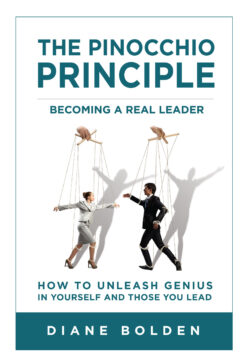
Three Tips for Leading Through Uncertainty

In the midst of change, challenge and uncertainty as massive as what are collectively facing, every one of us is being called upon to exercise a very important kind of leadership. Whether you are at the helm of an organization, a team, a community or a family, people are likely looking to you for strength and guidance – at a time when you, yourself are seeking it as well.
In times of uncertainty, it is more important than ever
to hold fast to the conviction that each one of us has what it takes to rise above anything life may bring us.
This is what the greatest leaders have done throughout history. It’s easy to lead when things are stable and successful. It’s when all chaos breaks loose and the chances of survival are slim that the world’s heroes have inspired people to remember who they are and rise up to their most daunting challenges.
Here are three things to remember to help you summon true leadership in yourself and others:
(1) Nothing will come your way that you cannot handle.
If you want proof, consider the fact that you are still here. Think back to the last struggle or setback you faced. What did you do? How did you get through it? What did you learn? In retrospect, what would you tell yourself in order to help you get through that? And what will you tell yourself now?
Sometimes it helps to think of the worst-case scenario. What would you do? Really. What would you do? If you sit with that question and allow yourself to remain calm, you will find an answer.
Because when you get quiet, you summon that which is timeless within you – that which will not change with the uncertainty, but rather grow stronger in the face of it – your inner strength, resilience, creativity and ingenuity.
Benjamin Franklin said it well many years ago: “To be thrown upon one’s own resources, is to be cast into the very lap of fortune; four our faculties then undergo a development and display an energy of which they were previously unsusceptible.”
Getting connected to your core strength is essential and must be done before you can provide any real inspiration and motivation to others. Your confidence will emanate at a level that people will feel – before you even say a word.
(2) Once you have reconnected with your own inner reserves, help others reconnect with theirs.
Extraordinary leaders connect with people at a deeper level. They see not only what each person they lead has done in the past, but also what they are capable of in the future.
In times of chaos and uncertainty, people need to be reminded of their strengths because trying times tend to lead us to doubt ourselves and forget how very capable and strong we really are.
Think about the people who look to you for guidance and support. What has each of them done in the past that has impressed you? What are their natural talents – the things they are so good at that they make look easy? What do they tend to do that has a positive impact on themselves and everyone around them?
Maybe it is a sense of humor. Perhaps it is an ability to foresee obstacles no one anticipated and create a plan for overcoming them. Maybe it is an ability to think outside the box, a dogged determination to make things work, or a natural tendency to partner with others.
What is it that gives you faith that no matter what happens, this person will rise above it? Speak to it with sincere appreciation and encouragement. Help that person to embody those qualities once again.
When you focus on the positive attributes in others, you help them recognize they have greatness within and catalyze their potential. This is what is needed most in times of change, challenge and uncertainty.
(3) Keep people’s focus (including your own) on possibilities rather than frustrations.
As with everything in life, whatever you focus on has a way of becoming amplified. When you allow yourself to become consumed with fear and doubt, your brain has a way of finding things that feed those states. As a result, you’ll find there seems to be even more to be afraid of or frustrated by.
This phenomenon often happens without your conscious awareness, and it is a vicious cycle that can keep you falling deeper and deeper into despair.
Reversing this cycle requires a conscious effort.
When you notice you are feeling upset by a certain thought, the first step is to become aware of the thought that has caused the reaction and deliberately choose another one to focus on. There is always something positive or hopeful to focus on. Sometimes finding it takes a bit of work, but that effort will be met with rich rewards.
A man named Ambrose Redmoon once said “Courage is not the absence of fear, but rather the judgment that something else is more important.”
So, figure out what is more important – more worthy of your attention and energy and focus on that. As you do, your innate talents and strengths will rise to the occasion.
As you shift your attention from obstacles to opportunities and put your energy on what is possible, you’ll see solutions that previously evaded you and recognize that you are capable of far more than you initially realized. And when you act from this frame of reference, you’ll inspire others to do the same.
Regardless of your title, position or role, you have an opportunity to practice REAL leadership at a time when people around you need it the most. Don’t underestimate the impact you can have on yourself and others. Remember:
(1) Nothing will come your way that you cannot handle.
(2) Once you have reconnected with your own inner reserves, help others reconnect with theirs.
(3) Keep people’s focus (including your own) on possibilities rather than frustrations.
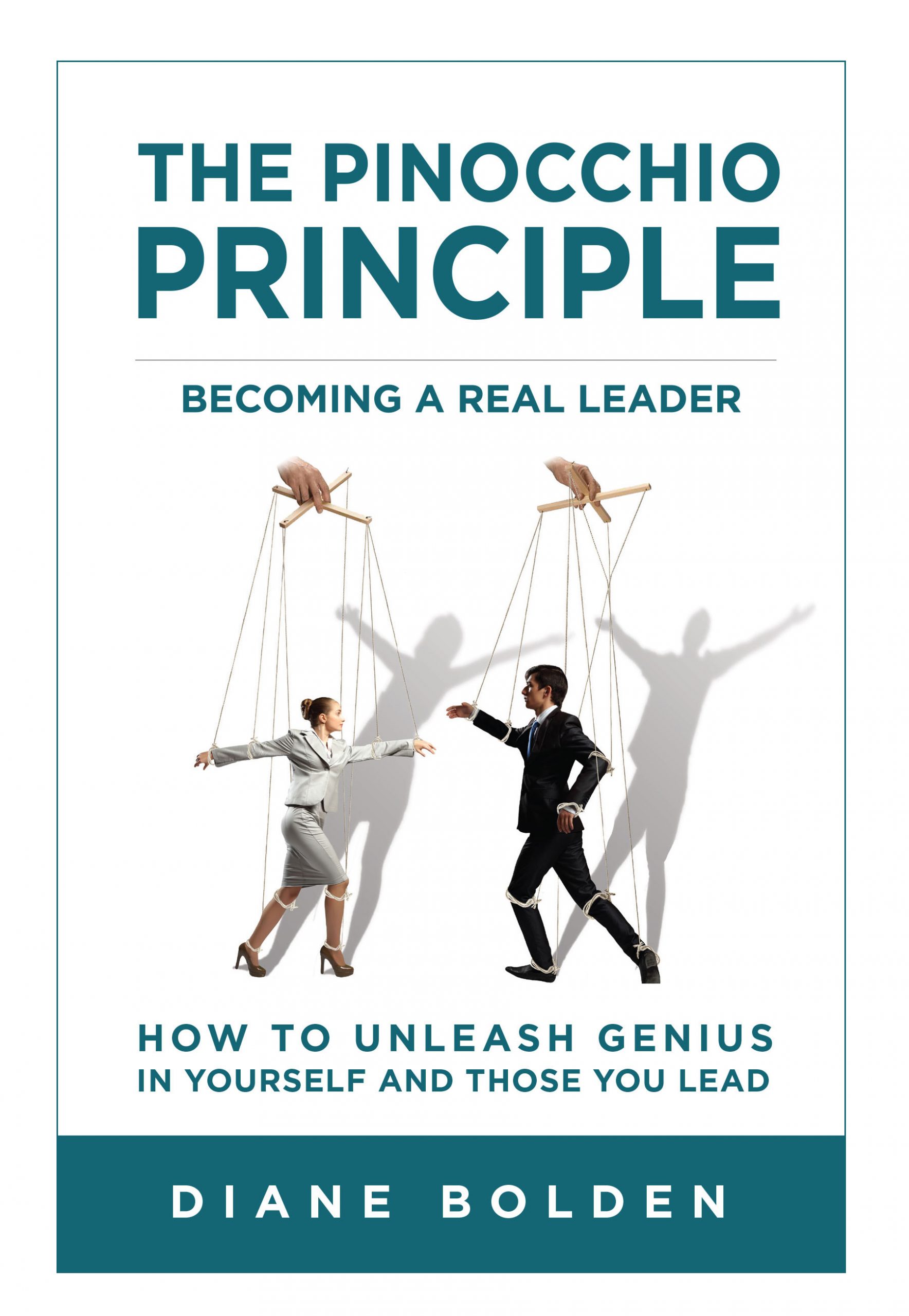 For more tips on navigating through change and uncertainty, check out my book, The Pinocchio Principle: Becoming a Real Leader – How to Unleash Genius in Yourself and Those You Lead, available on Amazon.com and BarnesandNoble.com.