Share This
All posts by Diane
Five Tips for Finding Your Way Through Uncertainty
 Have you ever found yourself lost in unfamiliar territory, all your best laid plans gone awry, without a clue what to do next? Maybe it’s a project that leads you to feel like you’re in over your head, or a new job or other life change that you haven’t quite acclimated to. It’s unnerving and humbling. And yet, it seems to be a common occurrence for those who muster up the courage to venture out of their comfort zone. I had an experience recently that gave me greater insight into how to better handle life’s inevitable curve balls that I hope will help you as much as it helped me.
Over the summer, our family had the good fortune to travel to Edinburgh, Scotland. It was the first time any of us had ever been there, and we were enchanted by the rolling hills of the countryside, the quaint cobblestoned streets, and the charm of the various pubs, restaurants and shops that line the “Royal Mile,” which leads to the large stone walls of the stunning Edinburgh castle.

The cars there look a bit different than they do here in America. In addition to the notable absence of sports utility vehicles, all of them have steering wheels on the right side. And they all drive on the left side of the road, instead of the right. My husband, whose 6 foot 5 frame barely fit in the Fiat we rented, was courageous enough to brave the narrow streets, some of which barely accommodate two cars traveling in different directions. Additionally, he was patient enough to withstand the nervous mutterings of his anxious wife who sat in what would normally be the driver’s seat with her foot pressed into the floor and her hands gripping the dashboard. To say I have a whole new respect for him would be an understatement.
He and my oldest son made arrangements to golf at St. Andrews while I and our other two kids slept in and had a leisurely breakfast. And then there was a decision to be made. In the few hours before my husband and son would be back, we could lounge around the hotel or strike out and do some sightseeing. While the lazy (and wimpy) part of me wanted to lay in bed and read a book, the more adventurous and curious side was egged on by the pleas of my other two children who quickly bored of the prospect of sitting around in a quiet room. And I figured if my husband can brave driving on the Edinburgh streets, the least I could do is venture out of the hotel.
So after getting some very brief and imprecise directions from the hotel concierge, we walked to the edge of the parking lot and waited there for a bus to take us into town. Getting home, it was said, would be as easy as waiting at the stop across the street from the one we would get off at, for another bus which arrive every fifteen minutes.
We had a great time, wandering through shops, taking in the sights, eating handmade candies and nuts from the street vendors and shopping for trinkets, until we realized it was time to head back. And that was when we discovered that finding the bus that would return us to our hotel was not nearly as easy as we thought it would be. Contrary to what the hotel concierge said, the bus we needed was not across the street from where we were dropped off.
We learned there was more than one bus line, each with its own collection of stops, and each with a distinctly numbered route that led to a different part of town. Unfortunately, though the local town folk were very kind and eager to help, we didn’t know enough to even ask the right questions and ended up parting ways with people who became almost as frustrated as we were with our lack of information.
And though our situation could have been easily remedied by simply hailing a cab, my stubborn determination to make it work the way I envisioned it should led us to spend the next hour and a half piecing together clues and running around chasing buses to find the blasted bus stop.
The good news is that we eventually did find it. And after waiting for what felt like a really long time, we were delighted when the bus with the number we needed began to approach… and flabbergasted when it continued to drive on without even slowing down.
What?! How could…? We sat looking at each other in disbelief, our jaws dropping. The local who was sitting beside us at the bus stop was amused. “Did yeh want the bus to stop for yeh?” he asked, with a Scottish clip.
I stuffed down my irritation and mustered a smile. Wasn’t it obvious? “Uh, yeah.”
“Aye. Yeh need to flag it down.” Now there was a piece of information that would have been good to know before we left the hotel.
Fifteen minutes later we jumped up and down waving our arms to ensure that driver of the next bus saw us. And once we boarded it, we mused over what a debacle our little trip became.
Here are the insights I gained from that little experience that I believe can easily be translated into many of the unnerving situations we often find ourselves in – and that I am actually in the process of applying in my own life as well.
- Preconceived ideas and plans can greatly hinder your progress if you become too attached to them. Just as my insistence on finding the illusive bus stop instead of hailing a cab cost us over an hour of frustration and needless searching, so too can clinging to what you think needs to happen keep you from missing an alternate route that may be far more aligned with getting you what you really want. We need to stay open and present to the best possible solutions given the changing situations we find ourselves in – and allow ourselves to utilize information that may not have been available in advance.
- If in the midst of uncertainty, you see through the eyes of an adventurer instead of a victim, you can save yourself the agony of frustration and may even enjoy the navigating the challenge you are faced with. As we rode the bus home, we mused over the humor of the situation, how silly we must have looked chasing buses down the busy city streets, and how much of our time exploring we didn’t allow ourselves to really enjoy because we were so irritated and afraid we would never make it back. I’m not sure what the worst case scenario would have been, but I’m certain it didn’t merit the angst I experienced. And when I stop to think about it, I find that is true of almost any challenge or obstacle I have faced.
- Beware of your assumptions. Of course we assumed the bus would stop for us, the way buses do here in America. The thought never even occurred to us that we would have to actually do something to get the attention of the driver. But we were in a foreign country, with different customs and norms. And our assumptions were incorrect. How often is that true of something new you’ve tried – expecting it work just like everything else you’ve done and then finding yourself in a playing field where all the rules are different and nothing is the way you thought it would be? We need to approach our explorations and endeavors with a beginner’s mind and be willing to ask the “stupid” questions. We also have to be patient (with ourselves and others) when we don’t even know enough to recognize what the “stupid” questions are. It’s all a process.
- Never be afraid to ask for what you need. Having to flag that bus down hit me at a metaphorical level as well as a literal one. It reminded me that it is often not enough to simply show up and wait for things to happen. Sometimes we need to ask for what we need or want – the sale, the support, the promotion, the resources, whatever the case may be. Having just published the ebook version of The Pinocchio Principle: Becoming a Real Leader and in the throes of promoting it, I am finally learning to reach out to my networks to ask them to help me spread the word – something I didn’t really do when the paperback version came out three years ago. Why? I don’t know. Sometimes it takes awhile to learn even the most obvious lessons.
- Give yourself a break and acknowledge your courage. Yes, if I would have made the decision to stay in that hotel room laying around, I wouldn’t have had to endure the frustration and irritation I experienced that day – and would have saved my kids from that angst as well. But we also would have missed out on all the great things we did and saw that day. And we wouldn’t have learned the valuable life lessons that come from striking out and trying something new and not getting it perfect out of the gate. Things rarely go just the way you want them to when you are in a whole new arena, but the more you allow yourself to venture into unchartered territory and embrace the mystery, the more resilient, resourceful, and confident you become.
 I’ve written extensively about the art of navigating through uncertainty, learning to listen to and trust your intuition to guide your way, and getting out of your comfort zone to live the life of your dreams in The Pinocchio Principle: Becoming a Real Leader. You can get your copy today – in paperback or as an ebook at Amazon.com. And please spread the word to anyone else who would benefit!
Image courtesy of Stuart Miles at FreeDigitalPhotos.net
What is a REAL Leader?
Often when I tell people that I wrote a book called The Pinocchio Principle: Becoming a Real Leader, they assume it must have something to do with ethics. It’s understandable, since the first thing most of us think of when we hear “Pinocchio” is a puppet whose nose grew when he lied. Pinocchio could easily be used as a metaphor for people who lie through their teeth while their proverbial noses grow. I can see why some might think The Pinocchio Principle is a commentary on the importance of honesty in leadership. And while being truthful to oneself and others is a vital part of being a “real” leader, the reason I picked Pinocchio as a metaphor goes much deeper than his nose.
Pinocchio is the story of a puppet who longs to become REAL. Like Pinocchio, at our core we too have a burning desire to become real, to bring into creation the greatness that resides somewhere within us. We are born with these impulses — to give form to our distinctive blends of talent, energy, passion and style. We come into the world equipped with far more than we are immediately able to utilize or even comprehend. And though these rich parts of ourselves are always there, they have a way of becoming latent over time.
There are people among us who have found ways to tap that well, drawing forth bits of the magic we are all capable of. These are the people we love to watch and be around — who do what they do so well that it is an art. As they tap their inner reserves and unleash their own greatness, they inspire each of us to do the same. In this way, they are true leaders.
In Walt Disney’s rendition of Pinocchio, the puppet encounters a blue fairy who tells him, “When you prove yourself to be brave, truthful, and unselfish, Pinocchio, then you will become a real boy.” One could imagine what Pinocchio might have been thinking upon hearing these words. What are these things this fairy speaks of? How do I get them? What must I do? How long will it take? Where do I start? With the promise of a dream fulfilled, he endeavors to do whatever is necessary. And the odyssey begins. The twists and turns it takes are trials we can all relate to, and challenges that I believe are a part of our human experience.
The qualities that the Blue Fairy encourages Pinocchio to demonstrate are not things he must acquire. They are attributes he already possesses. But in order to activate them, he must endure a series of events that allow him to realize these qualities are there and to exercise them accordingly. In order to return to himself — his true self — Pinocchio must endure a journey of trials and tribulations that first lure him away from himself. And the same kind of drama seems to unfold in one way or another for each of us.
Every one of us has within us an animating genius, which yearns to take different forms depending on who we are. Real leaders could be defined as those whose animating genius longs to create something for the greatest good, which is ultimately accomplished for, with and through others. It has a keen ability to look around, see possibilities and utilize resources in a way that brings something into existence that benefits others, whether that is a family, a community, a non-profit organization, a corporation, or the world at large. To accomplish this, leaders have the distinct charge of working with others in a way that brings out their best — that allows those we can impact to find the animating genius within them and apply it in service of accomplishing a common goal.
 Many of us associate the primary meaning of “to lead” as directing something on a given course, or being in charge, and this can be one of the functions of leadership. But the essence of leadership is much more than this. The Merriam Webster Dictionary has the following entry as the first definition listed for the word “lead”: “a: to guide on a way especially by going in advance.” If one of the essential functions of a leader is to bring out the best in others, this definition would suggest that to do this, he or she must first bring out the best in themselves. This, in and of itself, is the very same odyssey our friend Pinocchio finds himself on: to discover and liberate within himself what is real— divinely inspired genius — and to courageously apply it in a way that is truthful and unselfish.
The Pinocchio Principle was written as a roadmap to help people bring to fruition their greatest dreams and visions and better navigate through the perils and possibilities along the way. Reading it will help you better differentiate what is true within yourself from the conditioning that would have you acting in ways that are inauthentic and self-defeating. You will learn methods for gaining clarity on your unique call to leadership and leveraging your experiences to prepare for something bigger. Navigational tools explored within the book will help you determine the extent to which you are on or off course and the direction you need to take next on your journey to becoming a real leader.
As you begin to recognize and prevent assumptions and beliefs that keep you from your greatest work, you will learn to utilize ego in service to spirit. With this vital partnership, the elusive promises of Pleasure Island that divert you from your truest fulfillment are easier to recognize and work through. And facing your greatest fears in the belly of the whale becomes a transformational experience that will reunite you with your own determination, courage and heroism. In the end, you will rediscover the power that lies within us all to create and live our dreams. You will also find ways to return to the quiet places within yourself that nurture and inform your greatest visions.
The ultimate odyssey is always that of self-discovery. Every challenge, every opportunity gives us a chance to learn more about who we really are and to utilize our inherent gifts in service to something greater than ourselves. When we give ourselves completely to the journey and find meaning in each step along the way, we will truly live. And through our example and the unique contributions we all have to make in the world, we will truly lead.
Click here to preview or order your ebook version of The Pinocchio Principle: Becoming a Real Leader for Kindle. Don’t have a Kindle? No worries. Anybody can read Kindle books—even without a Kindle device—with the FREE Kindle app for smartphones and tablets. Click here if you prefer paperback.
A portion of the proceeds from The Pinocchio Principle goes to the Center for Humane Living, a remarkable organization whose vision is to inspire all people to live peaceful and compassionate lives while implementing a fully humanitarian agenda.
Bringing Life to Work
I’m delighted to announce that my book, The Pinocchio Principle: Becoming a Real Leader is now available as an ebook on the Amazon Kindle store! Today’s post on bringing life back into work is an excerpt from the Preface. I hope you enjoy it.
The Pinocchio Principle: Becoming a Real Leader
Preface
I have always been amazed by the number of people who seem to think of work as something of a necessary evil — simply what must be done in order to earn a paycheck. For so many who toil through their workday, the primary goal is to make it to the weekend so they can really live. Going through the motions, working side by side with others whose hearts and minds they seldom truly connect with, they withhold the very parts of themselves that make them come alive.
 For some it wasn’t always this way. Many began their careers ignited with passion and optimism, only to find that their flames began to flicker as they encountered obstacle after obstacle that kept them from achieving what they believed would be success. Succumbing to the unwritten rules of the organizations and other environments they found themselves in, which suggested they needed to act or think in a certain way to get ahead, they may have slowly sold out on their dreams and relegated themselves to quiet complacency.
Many of us were not brought up to expect that work would be fun or gratifying in any way – nor should it be. That’s why they call it work, we may have been told. As a result, we may have never really expected much from our careers or professional lives. And as the saying goes, life has a way of living up to our expectations. In just about every corporation, nonprofit or other organization, you will find people in jobs that do not ignite their talents and passions. Some remain dormant in those jobs because they fear that if they pursue their hearts’ desires, they won’t be able to put food on their tables. Many don’t realize that there might be a better alternative.
Most of us have learned how to turn ourselves on and off at will, in an effort to spare ourselves the pain of disappointment or frustration — or to maintain what we have come to believe is a professional demeanor. It is not uncommon to hear people say that they are very different at work than they are at home. Those golden parts of ourselves that we think we are protecting suffer when we do not let them breathe and interact in the very realms that provide us opportunities to learn more about who we are and what we are here to do in the world. We miss the chance to become a part of something greater than ourselves. And the organizations and communities we are a part of miss out on the unique contribution each of us has the potential to make.
We can no longer afford to fragment ourselves in this way, denying the fulfillment of our secret dreams and downplaying the insights we have about what we can do to make life better — for ourselves, and everyone around us. As more and more of us feel the pain that accompanies the denial of our spirits, we start to realize that the time has come for us to bring the totality of who we are to what we do, no matter our vocation, title or role.
For, in the end, it is impossible to have a great life unless it is a meaningful life. And it is very difficult to have a meaningful life without meaningful work.
~ Jim Collins, American business consultant, author and lecturer
We are beginning to awaken to our unique calls to service, creativity and innovation. As we find ways to unleash our distinctive talents and passions at work, we will significantly increase the quality of our own lives, as well as the lives of everyone around us. Corporations that take steps to create environments that allow people to thrive will be met with rich rewards as ingenuity pours forth in ways that lead to increased profit and market share, as well as the creation of self-sustaining cultures that inspire people to sustain success by doing what they do best.
There are people among us who have the ability to snap us out of our trances — our states of quiet desperation —and help us bring more of who we truly are to everything that we do.
They can do this for others because they have done it for themselves.
They are called leaders.
You may be one of them. The Pinocchio Principle is dedicated to allowing you to play a bigger, more significant and meaningful part in the world by unearthing your own leadership in ways that bring about a greater good — and showing others the way to rise through your own example.
I hope you enjoy reading it as much as I have enjoyed writing it.
“It is never too late to be what you might have been.”
~ George Eliot, English novelist, 1819-1880
Click here to look inside and preview more or to order your ebook version of The Pinocchio Principle: Becoming a Real Leader for Kindle. Don’t have a Kindle? No worries. Anybody can read Kindle books—even without a Kindle device—with the FREE Kindle app for smartphones and tablets.
Help me spread the word! Please pass this news on to anyone you think might benefit.
Image courtesy of Danilo Rizzuti at FreeDigitalPhotos.net
A Salute to Conscious Leaders
 I’m working with a few leaders in both large and small organizations – who are passionate about creating inspired workplaces.
They aren’t sure how to do it. They aren’t sure people will respond favorably. They aren’t sure it will work at all.
They want to break the unspoken, unwritten rules of organizations that say…
…that the version of yourself you bring to work is different than who you are at home
…that work is a place where you do what your boss says and don’t ask a lot of questions
…that you have to suck it up when what you are tasked to do doesn’t really jive with who you are
…that you have to keep your head down and just make it through the day, the week, the month, the year and collect your paycheck regularly enough to feed your family and make ends meet.
These leaders inspire me. They have come to a place where they know there has to be more to life than just going through the motions, getting through the day, doing what’s required, going home and turning on the TV until the next day comes. They want more for themselves and they want more for their people.
And a couple of them are in organizations that have some pretty traditional structures and old paradigms. Not intentionally designed to limit people, but born of cultures that despite the latest management trends and empowerment classes on possibility thinking and shared vision still reward command and control, lead to power plays and foster the idea that if you don’t watch your back you could get stabbed.
One of my clients was discouraged by his boss from getting too close to his subordinates because it could cause him to lose his “edge” with them. He was told he may not be viewed as a leader if his people know too much about him and see him as a real person with fears and dreams and idiosyncrasies and humor.
But he knows that isn’t the kind of leadership that will allow him to do what he wants to do in the organization he leads. He knows that won’t light people up. He knows that won’t foster trust. He knows that isn’t what makes people go the extra mile when they are already tired and beaten. And he’s sick of playing that game.
So he’s trying something new. He’s sharing more of himself. More of his vision. More of his hopes and concerns and experiences for better or worse. He is encouraging dialogue. He’s asking what people think and sticking around long enough to hear (and really listen to) what they have to say. He is helping them find ways to breathe life into their greatest ideas and visions. And he is learning to get out of the way and trade the illusion of control for embracing possibilities that lead people (including himself) to enter into and navigate through uncertainty.
Another of my clients is getting ready to engage his leadership team in ways that they aren’t used to. He wants to roll out a whole new paradigm of doing things. And he is quite aware that words like “increasing shareholder value,” “fostering excellence” and “exceeding customer expectations” – while good concepts, tend to make people’s eyes glaze over and dismiss what is being said as the latest corporate speak, rah rah, Dilbert like rant.
He realizes that he needs to get very clear about what he sees as possible for his organization and all the people in it. He needs to be able to distinguish what they are moving away from and moving toward and find out what they think is important and what it will take in order to get them there. He wants to encourage dissention and constructive disagreement.
He knows that if they don’t voice their concerns and questions and hesitations to him, they will do it with each other in a way that could invoke fear and resistance and squash the seeds of possibility as they begin to germinate and grow. He knows that a silent room doesn’t mean everyone agrees. He has the courage to delve underneath the surface to find out what’s really going on – even, and perhaps especially if it means they don’t agree with anything he is saying.
Another client heads up an organization that is already known as the very best at what they do. They have customers lining up at the door. They have been recognized in their community as the go to for what they do. They are well respected in their industry. And yet, they are burned out. They are overwhelmed and just trying to make it through the day.
My client feels things are falling through the cracks and important details are getting overlooked. He has run around fixing things as they break, preventing undesirable consequences and instituting practices that keep the organization profitable, efficient and effective. But his partners haven’t embraced them – in fact, in some cases they even harbor resentment.
He wants to create an inspired workplace. And he knows he cannot do it singlehandedly. But he realizes his partners aren’t inspired – and that no amount of talking at them will get them there. So he is slowing down and beginning to have authentic conversations with each of them. He wants to connect with them as people, to see what they believe in, what they are passionate about, what they want to create together, and what they think needs to be done in order to make it fly.
He is opening himself up to their criticism, their doubts, their worries and also hoping to hear about their dreams. He doesn’t know if it is going to work. He isn’t sure how to begin these conversations, or whether people will really engage with him. But he is willing to do it anyway.
And this is the essence of true leadership. Some call it conscious leadership. It is the ability to authentically engage with people in the workplace in a way that promotes shared value, meaning and purpose and leads them to work together in service to something greater than themselves. It requires courage, patience, faith, trust, intuition, and self awareness.
And I salute them.
Are you a conscious leader? Would you like to be?
I am dedicated to helping people lead consciously and partner with others in their organizations to do things they never realized were possible. I am passionate about working with people to bring their whole selves to what they do and to transcend the idea that work is a place where you pass the time until you get to go home and “really” live. My clients inspire me and I’m and honored to partner with them in their efforts. I now have a few openings. If you are interested in working one on one with me, visit https://dianebolden.com/coaching.html to learn more. When you are ready to move forward, contact me to schedule a complimentary coaching call.
My book, The PInocchio Principle: Becoming a Real Leader will soon be launched in ebook format on Amazon! Stay tuned for more details, or check out the paperback version.
Image courtesy of Stuart Miles at FreeDigitalPhotos.net
How to Stay Confident Around People Who Intimidate You
 In my last post Do Some People Intimidate You?, I wrote about the phenomenon that grips most of us at one time or another, leading us to feel inadequate, uneasy and temporarily inept in the presence of certain people. As I wrote in that article, through there are a number of circumstances that can trigger it, the root of all intimidation lies in what you are believing about yourself in any given moment. This leads us to question,
What can you do about it when it happens?
And better yet, how can you prevent it altogether?
Well, the interesting thing about intimidation is that the root of it is also the remedy. When you find yourself going down Intimidation Street, you can stop and redirect yourself down a more positive path simply by becoming aware of and eventually changing your thoughts.
I admit that this is much easier said than done. However, as with so many things in life, it gets better and better with practice. Here are three ways to redirect your negative thoughts about yourself to something more positive:
(1) Think of someone in your life in whose presence you feel really good about yourself – someone who leads you to believe you could do anything. Go ahead and try it right now. See if you can place yourself in that person’s presence and feel the way you do when you are together. You might find that you are sitting up straighter and holding your head higher just at the thought. Know that when you are with that person, you are the same you that you are when you are with people who intimidate you. See if you can envision being in the presence of someone who intimidates you while you are feeling the way you feel when you are around someone you feel loved and admired by. Imagine how much easier it would be to interact with others while you are in this state. Practice this in your mind often.
The next time you are around someone who intimidates you, use the exact same process. Treat every interaction as an opportunity to build this muscle for yourself. And before you know it, you will find that your behavior will become more consistently confident and self assured. You may also notice that the things that used to send you into a tailspin no longer really bother you.
(2) The next time you find yourself feeling intimidated, notice what you are believing. Then ask yourself if it is really true. This may be difficult to do when you are standing in front of someone, so if it’s easier you can wait until the moment has passed. You may find when you reflect on the situation that you felt the way you did when you were a kid and realize that those feelings are no longer relevant. You may be believing that there is something you need to do or be to win someone’s affection or approval when in reality you just need to relax and be yourself and let go of needing so much to be liked by others. You may be believing that the other person is thinking something negative about you that is purely conjecture you are poisoning your mind with.
When you notice and begin to challenge your assumptions, they lose their hold on you. It’s kind of like being in a haunted house after the lights have been switched on. You can go back there when it’s dark again, but it’ll never scare you the way it might have before.
(3) See if you can shift your focus from what you think you need to what you can give. As I mentioned before, we get intimidated when we feel we are lacking in some way. And then we tend to act in ways that will allow us to get what we think we need to feel better. Often that comes in the form of someone’s approval or affection. Think of what kinds of things you think you need from others in order to feel more confident. Is it a smile? Is it a compliment? Is it someone paying attention to you? A little appreciation or support?
See if you can find a way to give to someone whatever you believe you need. And do it in such a way that you are not expecting anything in return other than to be of service to another human being. In other words, don’t give to get. Give because it makes you feel good. When you do this, you will find yourself reconnected with the reserves that you are most in need of. Because when you give something – even if it is something you think you don’t have – you realize that by the very nature of giving it to others, you become an abundant supply.
“Those who bring sunshine to others cannot keep it from themselves.” – Anonymous
If you would like to learn more about building confidence, being authentic, and moving beyond old patterns that keep you from fully enjoying your life, check out my new video program, On the Road to Real, or pick up a copy of or my book, The Pinocchio Principle: Becoming the Leader You Were Born to Be, available at Amazon.com or BarnesandNoble.com. If you are interested in working one on one with me, visit https://dianebolden.com/coaching.html to learn more. When you are ready to move forward, contact me to schedule a complimentary coaching call.
Do Some People Intimidate You?
 Most of us have people in our lives that for whatever reason lead us to temporarily lose access to our fully functioning brains. You may find that in their presence, words suddenly escape you. Or worse, they seem to pour out of you like diarrhea or projectile vomit, leaving you to feel even more uneasy. Perhaps you unexpectedly develop a stutter. Maybe you become unusually clumsy, or suddenly fixated on how large your nose (or some other part of your body) feels.
These are the kind of things that happen when we are intimidated by someone. People intimidate us for a number of reasons. Intimidation can be triggered by someone with an explosive temper, or a person who tends to be critical of you. It could come on when you are around someone you really want to be liked by. And sometimes it happens when you are in the presence of people who seem to have all the things in life that you do not, from stunning physical attributes to lavish material possessions to prestigious job titles. But there is one common denominator present when you find yourself intimidated by another person and believe it or not, it has very little to do with any of the previous factors I mentioned.
The root of all intimidation lies in what you are believing about yourself in any given moment.
It is easy to conclude that the problem exists somewhere out there – the way someone looks at you, or responds (or doesn’t respond) to you. And you might even think – if so and so wasn’t in my life, I would be so much more confident and self assured. But the problem isn’t other people – not even people who may intentionally be trying to tear you down a notch. You may think their hurtful messages are to blame. But the trouble isn’t hearing hurtful messages from others. That wouldn’t explain why people are intimidated by those they envy or really want to be liked by – who may never actually say anything at all.
The reason people intimidate us is that in their presence we are telling ourselves that we are simply not good enough, attractive enough, rich enough, powerful enough, articulate enough, smart enough, skinny enough, athletic enough – or ENOUGH altogether. And worse, we are believing it.
When you believe you are inadequate in any way, you will inadvertently cut yourself off from your brilliance. Sometimes it’s just a little kink in the hose that still allows a small portion of your competence or grace or talent to come through. And other times it’s just an all out blockage. It’s not that all those wonderful things about you have gone away. You just temporarily have trouble accessing them. And then you may panic and find that things get even worse.
So how do you remove the blockage?
What can you do to avoid becoming intimidated and losing confidence?
If these questions are on your mind, stay tuned for my next post, How to Stay Confident Around People Who Intimidate You, or check out my new video program, On the Road to Real.
Image courtesy of Marcus74id at FreeDigitalPhotos.net.
How to Change a Habit That is Hurting You, Part 5
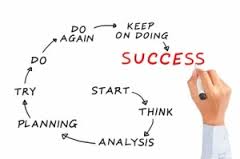 My last four posts, How to Change a Habit That is Hurting You, Part I, Part II, Part III and Part IV were about the first four steps for changing a habit that is hurting you:
(1) Make a decision, a declaration and a commitment to yourself.
(2) Surround yourself with reminders of what you are moving toward.
(3) Notice how often you engage in the behavior you want to change and what the impact is when you do.
(4) Examine and challenge your assumptions.
Now that you have identified the thinking that has been driving the habit you want to rise above, you can change your thoughts and consciously approach things in a whole new way. And this leads us to step five…
(5) Envision and practice a new way of doing things.
The focus of steps one through four is on dismantling an old, ingrained behavior. Step five is about substituting a new behavior for the old one – one that will truly serve you. And it is a good idea to have something to substitute your old habit with, so that instead of just focusing on moving away from something, you can put your energy and attention on what you are moving toward and the positive impact that will make in your life.
Chances are you already know what you’d like to do as an alternative. If not, you can ask yourself the question, “What would be a better way of handling situations like the ones that have been causing me trouble?” When you ask a question, your subconscious mind gets busy finding the answer for you. You may learn by watching or seeking mentoring from people around you who are masterful in the areas you strive to improve in. You may find yourself drawn to articles, books, workshops or other resources that will help you. You might journal about it and find yourself writing about the answer.
Once you have an idea of what you’d like to do differently, it is important to practice as often as you can, both physically and mentally. When you are engaging in step three, reviewing the events of a situation where you may have fallen back into an old pattern, you can ask yourself what you could have done differently and then play the movie in your mind that has you acting in the new way and experiencing how good it would feel. Research has shown that mentally rehearsing in this way allows the brain to create the same neural pathways that are formed through physical rehearsal.
It is important to be patient and kind with yourself as you learn a new behavior. It will probably be somewhat uncomfortable or at the very least unnatural at first. You will likely not be very good at it right away. And you may find it tempting to say “the heck with it” and revert back to your old behavior as a result. But stick with it. With consistent practice it will get easier and it will come more naturally, until finally the new behavior is so engrained that you won’t have to think about it all that much.
In review, here are the five steps for changing a habit that is hurting you:
(1) Make a decision, a declaration and a commitment to yourself.
(2) Surround yourself with reminders of what you are moving toward.
(3) Notice how often you engage in the behavior you want to change and what the impact is when you do.
(4) Examine and challenge your assumptions.
(5) Envision and practice a new way of doing things.
These steps don’t have to happen in a linear sequence. Sometimes you will be at step three for awhile, noticing how often you are falling into old patterns (and experiencing the pain of them) before you are ready to move to step one, making a commitment to change. Sometimes they happen simultaneously - like when you reflect on your behavior (step three) and then envision what you could do differently next time (step five). Often when you begin the practice in step five, you begin to become aware of limiting assumptions you can challenge with step four.
You can accelerate your progress with each of these steps by working with a coach. A good coach can not only help you get really clear on your desired results but also assist you in identifying thoughts, behaviors and habits getting in your way that you may not even be aware of. Working with a coach can help you to stay accountable to yourself while being supported through change that can be uncomfortable. And a good coach can help you to identify alternate ways of doing things that are aligned with your natural strengths. Coaching also allows you the opportunity to try out new behaviors in a safe environment, while getting honest, constructive feedback that your colleagues, friends and family may be hesitant to share.
 If you are interested in learning more about coaching, visit https://dianebolden.com/coaching.html or contact me to schedule a complimentary coaching call. And if you are more of a “do it yourselfer”, check out my new video program, On the Road to Real or my book, The Pinocchio Principle: Becoming the Leader You Were Born to Be, available at Amazon.com or BarnesandNoble.com.
Image courtesy of pakorn at FreeDigitalPhotos.net
How to Change a Habit That is Hurting You, Part 4
My last three posts How to Change a Habit That is Hurting You, Part I, Part II and Part III, were about the first three steps for changing a habit that is hurting you:
(1) Make a decision, a declaration and a commitment to yourself.
(2) Surround yourself with reminders of what you are moving toward.
(3) Notice how often you engage in the behavior you want to change and what the impact is when you do.
The next step will help you identify the root of the habit you want to change so that you can work with the real source of the issue instead of simply addressing symptoms that will eventually return.
 STEP FOUR: Examine and challenge your assumptions.
Sometimes even though you recognize a behavior that isn’t serving you and you also realize how very much it is hurting you, you still feel compelled to engage in it. Usually this is because your behavior is linked to a limiting assumption or belief. Just as we can engage in behaviors that do not serve us, we can also engage in ways of thinking that are equally hurtful. Action follows thought and assumptions are thoughts that are like the strings on puppets, controlling their every move. When these assumptions are unexamined, they propel us to engage in actions without thinking.
When you examine the assumptions that are linked to a behavior you are trying to change, you may find that though the assumptions are very compelling, they are not very logical and in some cases may be downright erroneous. An assumption underneath an explosion of anger might be something like, “If I don’t get the upper hand here, I’m going to get run over.” An assumption that keeps people from taking bold action could be something like “I don’t have what it takes to do what I really want to do,” or “If I try and fail I’ll be worse off than I am now.”
What most of us don’t realize is that assumptions like these tend to get us into more trouble than they prevent. They also have us acting in ways that reinforce the assumption. In the first case, acting out of a desire to keep from being run over often leads people to run over others and be blinded to constructive alternatives that don’t have them going to extremes. As a result, others respond in ways that are equally aggressive, thus confirming the belief that they have to look out for themselves above all else.
In the second case, if you assume that you aren’t capable of doing what you really want to do, you’ll act with hesitation (if at all), and your wavering will keep you from doing the work you are truly capable of or cause you to make things much harder than they need to be. You may look to your lack of results as confirmation that your assumption was correct, but the real problem is the impact the assumption itself had on your ability to act with confidence.
Identifying these assumptions can be tricky because they often are so engrained that we don’t even realize they are operating. But if you stop to reflect on what it is you are believing about the situation, yourself or others you can begin to become aware of them. Here are some questions that can help shed light on the thinking that could be sabotaging your best efforts:
– What am I believing right now about the situation, myself, or others?
– Is it really true? Can I be absolutely, positively sure that it is true?
– When I believe that thought, how do I tend to act? How do I feel? Is it working for me?
– Who would I be and what could I do without that thought?
– What can I believe that is more true than what I used to believe and will also help me do what I really want to do?
Click here for step five of How to Change a Habit That is Hurting You.
Image courtesy of David Castillo Dominici at FreeDigitalPhotos.net
How to Change a Habit That is Hurting You, Part 3
My last two posts, How to Change a Habit That is Hurting You, Part I and Part II were about the first two steps for changing a habit that is hurting you:
(1) Make a decision, a declaration and a commitment to yourself.
(2) Surround yourself with reminders of what you are moving toward.
Maybe you are making some progress. Or perhaps you have fallen back into the old behavior. If so, don’t worry about it – it is virtually inevitable and actually a vital part of the process of moving beyond an old habit. Step three allows you to use what you would otherwise see as a step backwards to further enhance your forward progress.
 STEP THREE: Notice how often you engage in the behavior you want to change and what the impact is when you do.
This is a rather painful thing to do, because it tends to lead people to beat themselves up. You already know what the habit is you want to change. You already know how it is hurting you. And yet chances are that you are still doing it more often than you’d like – almost as though you cannot help yourself. You might just feel trapped and powerless. You aren’t.
You are simply observing the effect of being on autopilot. As I said in Are Your Habits Hurting You?, your habits become defaults that allow to you do things without a whole lot of thought or effort. And this is a good thing when it is a behavior that is serving you, like driving your car to work in the morning without having to pay all that much attention to all the steps involved in executing the task. But when those engrained habits lead you to knee jerk reactions that have you regretting your actions later, you have to slow things down so that you are more conscious of what it is you are doing and where it is getting you.
The good news is that initially, you don’t have to be totally aware of those knee jerk reactions in the moment. You can replay the events in your mind later and recognize the moments that you were in the grip of an automatic response. You can notice what your triggers were and begin to become more aware of what sets those behaviors off. And you can begin to envision strategies for interrupting those patterns, like taking a breath, stepping away for a moment, and getting realigned with your true intention and desire.
It is also important to become aware of the impact of those behaviors. So in addition to reviewing the sequence of events in your head that led you to engage in a problematic habit, pay attention to how you felt afterward. Recognize how it might have impacted the rest of your day, or week. Become aware of how your action may have affected the people you care about, and also how it made you feel about yourself. Move into the pain associated with the behavior you seek to rise above. Because the more pain you associate with it, the stronger your commitment will be to rise above it.
The more often you take a moment to mentally review your actions – maybe at the end of the day when you are driving home from work, the faster you will begin to catch yourself engaging in old behaviors that aren’t serving you. You will find that over time, you’ll go from realizing it hours or days later to recognizing it moments after it happened, to catching yourself in the act, and eventually to keeping yourself from doing it at all.
Click here for step four of How to Change a Habit That is Hurting You.
Image courtesy of farconville at FreeDigitalPhotos.net
How to Change a Habit That Is Hurting You, Part 2
 My last post, How to Change a Habit That Is Hurting You, Part 1 was about the first step for changing a habit that is hurting you: make a decision, a declaration and a commitment to yourself. Today, we’ll tackle step two.
STEP TWO: Surround yourself with reminders of what you are moving toward.
Though you may not have already experienced the pleasure you will gain by moving beyond your old habit and engaging in something new, your mind can help you to imagine it and make it real for you. It does this in much the same way that it can also magnify your fears and come up with all kinds of scenarios that have you shaking in your boots. Take control of your mind in advance. Envision the change you are making and what you imagine it will bring you.
If you are trying to get control of your temper, imagine what it will feel like to be able to calmly engage in discussion with someone without losing your head. Envision yourself shaking hands with people and leaving meetings feeling as though you have strengthened relationships rather than damaged them. See if you can find a symbol or image that helps you to move into that feeling whenever you look at it. And put that visual reminder somewhere where you will see it often.
Maybe you are wanting to break the habit of staying in your comfort zone rather than taking the bold actions you dream about – like writing a book, creating a new program or product, or looking for a new job. Envision what acting on your dream will give you and see if you can experience it in your mind as though it has already happened. Find pictures that evoke those feelings for you and get you excited and motivated to take steps to make it happen. Look at them every day, several times a day and feel those feelings when you do.
When you feel as though you are getting sucked back into old behaviors you are trying to leave behind, or when you are discouraged about your progress use your reminders to bring you back to your intention and recommit to yourself.
Click here for step three of How to Change a Habit That is Hurting You.
Image courtesy of Stuart Miles at FreeDigitalPhotos.net