Share This
Category Archives: Pinocchio Principle
Clearing the Way for Success

What is it that you are longing to create in the coming year? And what do you need to let go of in order to allow it to fully take root? Are you willing to entertain the thought that it may come in a form that is unfamiliar to you? Are you clearing the way for success?
Every year, we are encouraged to set New Year’s resolutions. We are a goal driven society that is conditioned to seek more. Our egos desire more money, more fame and prestige, and more stuff. A deeper part of ourselves longs for more peace, more meaning, and more purpose in our lives. We want to move beyond our previous realizations of what we’ve already accomplished to master newer, better ways of doing things – whether that be what we create in our lives or in our organizations – and as leaders what we are able to inspire others to do as well.
Though it is tempting to occupy ourselves with thoughts of how we can go about achieving all of this and what we need to do more of, perhaps what we really need to start with is what we need to do less of – what we need to let go of in order to create the space for something new to come in. We are constantly evolving as human beings – and as communities of human beings. It is so easy to look to the past to define who we are through the things we’ve already done – goals we’ve achieved, titles we’ve acquired, creations we have built. Our previous experiences coagulate to form an identity that is easy to confuse with our true nature.
The fact of the matter is, you are not your accomplishments, your creations, or the sum total of the various roles you play in your life – manager, director, vice president, mother, father, friend, son, daughter, etc. You are much, much more than that. Your potential is limitless.
And yet, we limit ourselves by these definitions. They filter the experiences we allow ourselves to have and compel us to define the form that our deepest longings should take. In order to be happy, we reason – we must get that promotion, achieve this or that particular goal, hit that target. So we continue to go through the motions, doing the kinds of things we’ve always done – on a sort of auto pilot. Some of this may bring satisfaction, and some may bring a growing source of discontentment. We need to attune ourselves to that which brings us the most of what we truly desire and open ourselves to the possibility that what we really want may need to come in a form that has previously been undefined for us. In short, we must allow ourselves to surrender what we think we know to open up to the mystery that is unfolding in each of our lives.
Easier said than done, right? How exactly do you go about letting go of the known when it is all you know?
We can take our cues from nature. Snakes and other reptiles shed their skin, trees drop their leaves, and caterpillars create cocoons in which their forms entirely dissolve before recreating themselves in the form of butterflies. Even a fish in a bowl cannot stay in water that contains its excrement – the waste must either be emptied and replaced with new water, or absorbed by something else that will remove it from the fish’s environment. Without engaging in these renewing processes, these creatures will die. And so it is of us. Many of us are already walking around encased in layers of old, dead stuff that needs to be released.
What are you holding onto in your life that has run its course? What are the old outmoded ways of doing things that no longer bring you energy? What are the things you’ve acquired that you no longer need? What beliefs are you holding onto that are no longer true for you?
Pay attention to the times that you feel constricted, anxious, or tired and in those moments ask what you can let go of. Don’t be afraid of the answer. Though it may frighten you because it introduces an element of the unknown, following these insights will always lead to freedom and liberation.
Your computer can only handle so much data. If you do not delete old emails and get rid of files that have been accumulating over the years, and if you continue to add new programs without deleting old ones, you will find that it becomes sluggish and unresponsive. Just as freeing up space allows your computer to process things more quickly, so too will clearing your own personal space (whether of things or thoughts) allow you to access new levels of clarity and creativity. You will breathe easier, be more present in every action and interaction you partake of, and bring more of who you really are to what you do. And you will open up the space of possibility that will allow something to come in that may surprise and delight you. Rather than being something you slave away for, it will simply emerge and reveal itself to you.
And of course, any work you do on yourself will serve as a form of leadership for others who, like you, seek their own answers and could benefit from your example of unearthing what is possible and allowing it to take form in new and unexpected ways.
The above article is an excerpt from my book, The Pinocchio Principle: Becoming a Real Leader. The Pinocchio Principle is a roadmap to help you integrate your head with your heart, utilize your intuition, challenge your limits and move out of your comfort zone to unearth your greatest work while inspiring others to do the same.
Implications for Real Leaders
The Real Leader Revolution is bringing to a head the need for businesses to better tap the power and potential that exists within the people who are the lifeblood of their organizations. This energy, when properly catalyzed and harnessed, will create the kind of value that earns loyal customers, increased market share and strong, sustainable profitability.
To find out more about how you can unleash this talent, energy and potential in your own organization (starting with yourself), sign up below to receive your copy of The Real Leader Revolution Manifesto as soon as it is released.
Real Leader Revolution
Harness the Power of Possibility in Your Work and Your Life

“All our dreams can come true, if we have the courage to pursue them.”
Over the holidays, I had the delightful experience of traveling to Disneyland with family.
Every time I go there, it is like stepping into an alternate reality—one where the stresses and anxieties of the week before simply dissolve and the child in me emerges.
I am mesmerized by every intricate detail so carefully attended to by the multitude of people that make Disneyland what it is—from the enchanting castles and belly-dropping rides, to the perfectly manicured gardens and the warm smiles and tireless energy of every cast member.
And I can’t help but revel in a deliciously goose-bump-building thought.
All the wonder, delight and magic of this place—as well as everything that is associated with it (the movies, cartoons, storybooks and associated media)—ALL OF THIS began with a single thought in the mind of a man who took action to make it real.
I don’t know a lot about Walt Disney, but I imagine he was gripped by an idea—a dream that captured his heart and burst inside of him until he was compelled to gather the people and resources to make it happen.
This guy had a vision that couldn’t help but be embraced by others.
It spoke to their hearts and their spirits, and allowed them to be a part of something that does the same for everyone who encounters it. Disneyland is the “happiest place on earth” because it brings out the best in everyone who experiences it. It unleashes the magic each of us carries somewhere deep within us, and the most traditional of fairy tales are about that very subject. Even the performers on the various stages throughout the park sing refrains about looking within to find our heroes. What an amazing creation!
We all get inspirations from time to time. And the more we act on them the more we seem to receive them.
Ideas are a dime a dozen. When was the last time you got one that gave you goose bumps? And what did you do to take it to the next level of creation? Were you overwhelmed, thinking it was too big, or unrealistic to actually achieve? Perhaps it is too big for one person. But what if you were able to create a vision like Walt Disney did, that resonated in the very core of people who would gladly partner with you to make it real?
You have something inside of you that is waiting to be unleashed into the world.
The very act of doing it will rock your world, and that of others as well. Maybe it isn’t a multimillion dollar theme park, or a screenplay, or an organization. But whatever it is will carry the unique essence of you—who you are—and the compilation of everything each of your individual experiences has prepared you for. And if you bring it forward with the intention of making the world a better place, you will.
Who are you to deny that you are meant for greatness?
The beginning of every new year brings with it questions of what we most want to create in our lives and our work. If you are interested in strategies for better connecting with your vision and taking steps to bring it to fruition in a way that feeds and fulfills you, stay tuned for more information on my upcoming online course and group intensive, The Real Leader’s Guide to Freedom and Flow, or click here to get on the waiting list and get first priority (with no obligation) at the limited spots that will soon be available.
What is a REAL Leader?
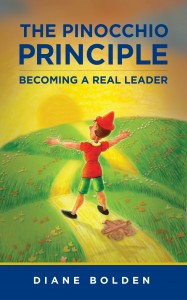 Often when I tell people that I wrote a book called The Pinocchio Principle: Becoming a Real Leader, they assume it must have something to do with ethics. It’s understandable, since the first thing most of us think of when we hear “Pinocchio” is a puppet whose nose grew when he lied. Pinocchio could easily be used as a metaphor for people who lie through their teeth while their proverbial noses grow. I can see why some might think The Pinocchio Principle is a commentary on the importance of honesty in leadership. And while being truthful to oneself and others is a vital part of being a “real” leader, the reason I picked Pinocchio as a metaphor goes much deeper than his nose.
Pinocchio is the story of a puppet who longs to become REAL. Like Pinocchio, at our core we too have a burning desire to become real, to bring into creation the greatness that resides somewhere within us. We are born with these impulses — to give form to our distinctive blends of talent, energy, passion and style. We come into the world equipped with far more than we are immediately able to utilize or even comprehend. And though these rich parts of ourselves are always there, they have a way of becoming latent over time.
There are people among us who have found ways to tap that well, drawing forth bits of the magic we are all capable of. These are the people we love to watch and be around — who do what they do so well that it is an art. As they tap their inner reserves and unleash their own greatness, they inspire each of us to do the same. In this way, they are true leaders.
In Walt Disney’s rendition of Pinocchio, the puppet encounters a blue fairy who tells him, “When you prove yourself to be brave, truthful, and unselfish, Pinocchio, then you will become a real boy.” One could imagine what Pinocchio might have been thinking upon hearing these words. What are these things this fairy speaks of? How do I get them? What must I do? How long will it take? Where do I start? With the promise of a dream fulfilled, he endeavors to do whatever is necessary. And the odyssey begins. The twists and turns it takes are trials we can all relate to, and challenges that I believe are a part of our human experience.
The qualities that the Blue Fairy encourages Pinocchio to demonstrate are not things he must acquire. They are attributes he already possesses. But in order to activate them, he must endure a series of events that allow him to realize these qualities are there and to exercise them accordingly. In order to return to himself — his true self — Pinocchio must endure a journey of trials and tribulations that first lure him away from himself. And the same kind of drama seems to unfold in one way or another for each of us.
Every one of us has within us an animating genius, which yearns to take different forms depending on who we are. Real leaders could be defined as those whose animating genius longs to create something for the greatest good, which is ultimately accomplished for, with and through others. It has a keen ability to look around, see possibilities and utilize resources in a way that brings something into existence that benefits others, whether that is a family, a community, a non-profit organization, a corporation, or the world at large. To accomplish this, leaders have the distinct charge of working with others in a way that brings out their best — that allows those we can impact to find the animating genius within them and apply it in service of accomplishing a common goal.
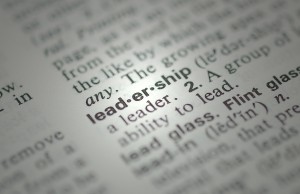 Many of us associate the primary meaning of “to lead” as directing something on a given course, or being in charge, and this can be one of the functions of leadership. But the essence of leadership is much more than this. The Merriam Webster Dictionary has the following entry as the first definition listed for the word “lead”: “a: to guide on a way especially by going in advance.” If one of the essential functions of a leader is to bring out the best in others, this definition would suggest that to do this, he or she must first bring out the best in themselves. This, in and of itself, is the very same odyssey our friend Pinocchio finds himself on: to discover and liberate within himself what is real— divinely inspired genius — and to courageously apply it in a way that is truthful and unselfish.
The Pinocchio Principle was written as a roadmap to help people bring to fruition their greatest dreams and visions and better navigate through the perils and possibilities along the way. Reading it will help you better differentiate what is true within yourself from the conditioning that would have you acting in ways that are inauthentic and self-defeating. You will learn methods for gaining clarity on your unique call to leadership and leveraging your experiences to prepare for something bigger. Navigational tools explored within the book will help you determine the extent to which you are on or off course and the direction you need to take next on your journey to becoming a real leader.
As you begin to recognize and prevent assumptions and beliefs that keep you from your greatest work, you will learn to utilize ego in service to spirit. With this vital partnership, the elusive promises of Pleasure Island that divert you from your truest fulfillment are easier to recognize and work through. And facing your greatest fears in the belly of the whale becomes a transformational experience that will reunite you with your own determination, courage and heroism. In the end, you will rediscover the power that lies within us all to create and live our dreams. You will also find ways to return to the quiet places within yourself that nurture and inform your greatest visions.
The ultimate odyssey is always that of self-discovery. Every challenge, every opportunity gives us a chance to learn more about who we really are and to utilize our inherent gifts in service to something greater than ourselves. When we give ourselves completely to the journey and find meaning in each step along the way, we will truly live. And through our example and the unique contributions we all have to make in the world, we will truly lead.
Click here to preview or order your ebook version of The Pinocchio Principle: Becoming a Real Leader for Kindle. Don’t have a Kindle? No worries. Anybody can read Kindle books—even without a Kindle device—with the FREE Kindle app for smartphones and tablets. Click here if you prefer paperback.
A portion of the proceeds from The Pinocchio Principle goes to the Center for Humane Living, a remarkable organization whose vision is to inspire all people to live peaceful and compassionate lives while implementing a fully humanitarian agenda.
Bringing Life to Work
I’m delighted to announce that my book, The Pinocchio Principle: Becoming a Real Leader is now available as an ebook on the Amazon Kindle store! Today’s post on bringing life back into work is an excerpt from the Preface. I hope you enjoy it.
The Pinocchio Principle: Becoming a Real Leader
Preface
I have always been amazed by the number of people who seem to think of work as something of a necessary evil — simply what must be done in order to earn a paycheck. For so many who toil through their workday, the primary goal is to make it to the weekend so they can really live. Going through the motions, working side by side with others whose hearts and minds they seldom truly connect with, they withhold the very parts of themselves that make them come alive.
 For some it wasn’t always this way. Many began their careers ignited with passion and optimism, only to find that their flames began to flicker as they encountered obstacle after obstacle that kept them from achieving what they believed would be success. Succumbing to the unwritten rules of the organizations and other environments they found themselves in, which suggested they needed to act or think in a certain way to get ahead, they may have slowly sold out on their dreams and relegated themselves to quiet complacency.
Many of us were not brought up to expect that work would be fun or gratifying in any way – nor should it be. That’s why they call it work, we may have been told. As a result, we may have never really expected much from our careers or professional lives. And as the saying goes, life has a way of living up to our expectations. In just about every corporation, nonprofit or other organization, you will find people in jobs that do not ignite their talents and passions. Some remain dormant in those jobs because they fear that if they pursue their hearts’ desires, they won’t be able to put food on their tables. Many don’t realize that there might be a better alternative.
Most of us have learned how to turn ourselves on and off at will, in an effort to spare ourselves the pain of disappointment or frustration — or to maintain what we have come to believe is a professional demeanor. It is not uncommon to hear people say that they are very different at work than they are at home. Those golden parts of ourselves that we think we are protecting suffer when we do not let them breathe and interact in the very realms that provide us opportunities to learn more about who we are and what we are here to do in the world. We miss the chance to become a part of something greater than ourselves. And the organizations and communities we are a part of miss out on the unique contribution each of us has the potential to make.
We can no longer afford to fragment ourselves in this way, denying the fulfillment of our secret dreams and downplaying the insights we have about what we can do to make life better — for ourselves, and everyone around us. As more and more of us feel the pain that accompanies the denial of our spirits, we start to realize that the time has come for us to bring the totality of who we are to what we do, no matter our vocation, title or role.
For, in the end, it is impossible to have a great life unless it is a meaningful life. And it is very difficult to have a meaningful life without meaningful work.
~ Jim Collins, American business consultant, author and lecturer
We are beginning to awaken to our unique calls to service, creativity and innovation. As we find ways to unleash our distinctive talents and passions at work, we will significantly increase the quality of our own lives, as well as the lives of everyone around us. Corporations that take steps to create environments that allow people to thrive will be met with rich rewards as ingenuity pours forth in ways that lead to increased profit and market share, as well as the creation of self-sustaining cultures that inspire people to sustain success by doing what they do best.
There are people among us who have the ability to snap us out of our trances — our states of quiet desperation —and help us bring more of who we truly are to everything that we do.
They can do this for others because they have done it for themselves.
They are called leaders.
You may be one of them. The Pinocchio Principle is dedicated to allowing you to play a bigger, more significant and meaningful part in the world by unearthing your own leadership in ways that bring about a greater good — and showing others the way to rise through your own example.
I hope you enjoy reading it as much as I have enjoyed writing it.
“It is never too late to be what you might have been.”
~ George Eliot, English novelist, 1819-1880
Click here to look inside and preview more or to order your ebook version of The Pinocchio Principle: Becoming a Real Leader for Kindle. Don’t have a Kindle? No worries. Anybody can read Kindle books—even without a Kindle device—with the FREE Kindle app for smartphones and tablets.
Help me spread the word! Please pass this news on to anyone you think might benefit.
Image courtesy of Danilo Rizzuti at FreeDigitalPhotos.net
Navigating Sudden Change
 Ever notice that just when you get comfortable, life has a way of shaking things up? Some people seem to enjoy change more than others. Most of us prefer to be the ones doing the changing – it brings newness along with a sense of control – we are at the helms, steadfastly steering our ships. But imagine if you will, that a massive wave summoned by a hurricane has ripped the captain’s wheel right off the ship and you are left clinging to something that no longer has any power. The tighter you grip it, the less energy you have to deal with your circumstances in a way that will truly serve you (and everyone around you as well).
At times like these, we often pray for the storm to pass – for things to revert back to the way they were – or for a specific course of events that we believe would be life’s perfect solution. These solutions are based on what we think we know – which is largely a product of what we have already seen and experienced. And relying upon the patterns and strategies that worked for us in the past is often inadequate for our present and emerging challenges.
The world is changing and so are we.
We tend to strive for comfort and familiarity, even when what’s comfortable isn’t necessarily effective or even satisfying anymore. We wish and pray that the chaos be removed and order be restored. But often life’s little disturbances are exactly what we need to reach our true potential and escape complacency. Perhaps as Eckhardt Tolle wrote in The Power of Now, “…what’s appears to be in the way IS the way.”
 Stormy seas (and life’s sudden surprises) have a way of testing our resolve and our resiliency. Pressure brings out our extremes – for better or worse. And fear does funny things to people. At its worst, it produces panic – a physical state that literally disables the brain’s ability to think clearly. At one extreme a person is frozen by fear and at the other he will thrash about like a drowning victim who pulls his rescuers under the water with him. The key to surviving a seeming assault of this kind is learning to relax and stay calmly aware of our surroundings so that we can identify and creatively utilize the resources at our disposal.
One of the most critical resources in our control when all else seems beyond it is our perspective. The way in which we view things determines the story we tell ourselves about what’s happening, which directly influences the responses we will have. If we believe we are helpless victims at the mercy of something that seeks to destroy us, we will become bitter, resentful and apathetic. In this state our true power remains dormant. We collude with our view of reality to create a condition that validates our doomsday stories and sink even deeper into the abyss. Those who try to rescue us from our self imposed paralysis risk being dragged beneath the current created by our own negativity.
If, however, we view our predicaments as adventures and see them as opportunities to give things all we’ve got, we reach deeply within ourselves and tap reserves of courage, wisdom and ingenuity we never realized we had. In the proverbial belly of the whale we find our inner grit and creatively rise up to life’s challenges in ways that transform us and everyone around us as well. We become the heroes of our own stories.
Regardless of who you are and what you do, there will come a time when the plateau you have been walking upon takes a steep turn in one direction or the other and you will be required to do something that stretches you beyond your usual way of doing things.
Perhaps it will be in your career. The work that fulfilled you at one point in your life may no longer be enough. You might find yourself doing something very well but suddenly devoid of the gusto you once did it with. It could be the company you keep – people who at one time shared your interests and passions but who you suddenly find yourself no longer wanting to spend a lot of time with. Maybe it will be your lifestyle. The objects and material possessions you that once gave you joy could one day feel more like clutter or distractions. These things become like shells that the hermit crab has outgrown. The crab must release its previous home and step bravely and vulnerably into the unknown in order to find something more spacious.
 The quest for a new shell and even the new shell itself may feel daunting, clumsy and overwhelming. But the act of letting go of the old to make room for the new allows us to evolve and realize our true potential. Anything less will ultimately become imprisoning. When we allow ourselves room to grow, life’s little and big disturbances are not so daunting. We know there is more to us than meets the eye and finally step into our own greatness. And as we do this for ourselves, we model the way for others to do the same.
 The above article contains excerpts from my new book, The Pinocchio Principle: Becoming the Leader You Were Born to Be, available on Amazon.com and BarnesandNoble.com.
For more on Navigating Sudden Change:
Ship photo by 1971yes from Bigstock.com.
Hermit crab photo by porbital from FreeDigitalPhotos.net.
Surviving and Thriving in Change and Chaos
What if the only thing standing in your way of perfect peace, true productivity and the satisfaction of living a life of purpose – was your thinking?
 Many of us are experiencing a great deal of pressure, anxiety and sudden change. Jobs are tenuous, organizations are restructuring, and it might feel as though life itself is turning upside down. Frustration and turmoil is a common response to this kind of uncertainty and disorientation. It can lead to exhaustion and hopelessness. But consider this as you think about the things in your life and career that may feel as though they are spinning out of control…
What if everything is perfect just the way it is?
No, I haven’t gone off the deep end. Bear with me here… One of the key attributes embodied by extraordinary leaders in all walks of life is encapsulated in the word “responsibility” – not just in a moral or ethical sense of being accountable for our actions, but also – and perhaps just as essential in times of change and chaos – remembering that there is wisdom in recognizing that we have the ability to choose our response – and that the response we choose will have a resounding impact on ourselves and everyone around us.
The greatest of change agents start by recognizing what they have to work with before they can create change that will be sustained. They assess their environment to determine what the best entry point for that change is before they make their move. They don’t waste their time worrying about things that are truly out of their control, like changing the weather. Instead, they focus their attention and energy on those things that they do have the ability to influence and start there. The greatest of leaders know that the most powerful and sustainable change must start from within themselves.
 The thing that fascinates me about a seemingly chaotic state of affairs is not so much what is happening, but the stories we are telling ourselves about what it means and the impact those stories are having on the way we are responding to it. When we react to things with fear, we end up amplifying that which we are afraid of and adding to the anxiety. Our fears drive us to act in ways that keep us from acting on our intuition and finding the answers that will truly serve us. Sometimes, we end up behaving in ways that make our fictional stories become real.
As an example, when you tell yourself a story about what is happening that leaves you feeling threatened, you may find yourself closing up and treating others with suspicion and mistrust. The way you are behaving toward people may well provoke a response in them that appears to validate your fearful story. However, in this scenario, it is very likely that their behavior is more of a reaction to the actions your story led you to take than anything else.
 Our fearful stories are like the viruses we protect our computers from. These nasty viruses are often embedded in emails that pique our curiosity or rouse our fear. When we unwittingly activate them, they spread often uncontrollably and we risk passing them to the computer of our friends, associates and countless others. The viruses corrupt our systems until they no longer function effectively. Like computer viruses, our stories have a way of spinning us out of control and interfering with our ability to rise up to our challenges to find the opportunity that is always there waiting for us to discover and leverage it.
Our rational minds want answers and security. They need to figure everything out and almost automatically occupy themselves with trying to sort through data to arrive at conclusions. The problem is that our minds are plugging imaginary variables into the equation that end up further exacerbating the anxiety we are already experiencing. When they are done with one variable, they plug in another and the churning continues, leaving us with an uneasiness that keeps us on edge.
In the grip of this madness, sometimes the best thing you can do is indulge your mind with a variable that will allow it to do its thing. Go ahead and plug in the worst case scenario. If the worst possible thing happened, what would you do? Alloy yourself to sit with that question for awhile. Let the fear move through you and keep asking the question, what would I do that would allow everything to be OK? If you sit long enough with your question, you will arrive at some workable alternatives and reconnect with that part of yourself that is strong, resourceful and resilient.
Armed with the knowledge that you will be OK even if the worst possible thing happens, you can come back into the present and recognize your fearful thoughts for what they are – fearful thoughts. One of the best pieces of advice I ever got, which I pass along frequently is don’t believe everything you think.
In the present moment, devoid of your stories about variables that are truly unknown, you are OK. And when new events begin to unfold, if you stay in the moment and access your inner wisdom, you will know exactly what you need to do – or not to do – to be OK then too. And as you go about your daily life in this way, your calm resolve will permeate your interactions with others and through your example, you will help others to rise up to their challenges in ways that unearth the greatness in themselves as well.
 The above article contains excerpts from my new book, The Pinocchio Principle: Becoming the Leader You Were Born to Be, available on Amazon.com and BarnesandNoble.com.
For more on Surviving and Thriving in Change and Chaos:
The Pinocchio Principle: Becoming the Leader You Were Born to Be
Finding Your Answer In the Midst of Chaos
Photo #1 by Kirill Zdorov from Dreamstime.com. Photo #2 by Valeriy Khromov from Dreamstime.com.
Why I Can’t Promote My New Book Just Yet
A NOTE FROM DIANE:
I almost didn’t post the above video. It’s personal. And it was recorded in a fragile moment. But then I remembered how comforted I have felt by messages from people who were courageous enough to talk about the challenges and frustrations they were working through. And I decided, the hell with it. I’m going to put the video up. If it lifts the hearts of just one or two people, it’ll be worth it.
If you’ve ever been in a spot where, despite having access to an overwhelming amount of information and people that seem to have it all figured out, you just can’t seem to find any answers — know that you are not alone. And please also know, that you too will find your way.
Here is the written version of what I said in the video:
People have been asking me, What have you done to promote your book? Do you have a publicist? Are you going on tour?
I wrote this book — The Pinocchio Principle: Becoming the Leader You Were Born to Be. It took me six years to write it. It’s been out for three months. And I can’t get myself to promote it. I can’t get myself to do anything with it. And I know that I should.
So the other day, I was watching a webcast from someone talking about how to become a best seller — how to become a trusted advisor. And I began to fill my head with all these things I thought I should be doing. I found myself taking copious notes. And I got to this point where I couldn’t watch it anymore. I had to turn it off. Something got into me and I literally had to go cry. And I cried so hard I almost threw up.
After all that passed, I realized that the reason that I can’t promote my book yet is that I’m looking so hard outside of myself for people to tell me what to do in an arena where I don’t feel like I have the answers. And the irony is that the book I wrote is about how to trust your inner wisdom and how to navigate through your challenges and your uncertainty.
And so when I got done crying I had to start laughing. Because it’s kind of funny that I actually already have the workbook I need. It’s right here [in the book I’ve poured my heart into for the last six years].
The truth of the matter is that this book isn’t really as much for you as it is for me. And before I can really promote it — before I can feel as though it will be of value to people, I need to live it. And that’s what I’m going to do.
For more on finding your way:
Another Story About Signs, Synchronicity & Meaningful Coincidences
This week’s post features a video of an even more unbelievable story than the last one I shared with you — about a series of seemingly random and recurring events that had a profound impact on me. These experiences provided the courage and the nudge I needed to take action on something that simultaneously excited and terrified me — leaving my stable, well paid job to launch my dream of having my own business. Below is a written version of the story (as it appears in my new book The Pinocchio Principle: Becoming the Leader You Were Born to Be), minus a few details I added in the above video version.
For years I worked as an internal consultant and executive coach for a large corporation in a job I loved. Gradually, I began to recognize my longing to break out to start my own business and have more flexibility and time to spend with my family. Initially, I dismissed these yearnings as something everyone encounters. Then I began looking into what it would take to actually start a corporation. Though I daydreamed of the possibilities, the thought of leaving my job altogether seemed impractical since I was enjoying my work and had wonderful working conditions. I reasoned that I would stay there unless things changed to the point that I didn’t enjoy it anymore.
I kept waiting for things to take a turn for the worse — for someone to tell me I couldn’t do the work I was passionate about anymore, or for the organization to be restructured in such a way that was no longer optimal for me. None of that happened. In fact, things just seemed to get better and better there. Still, these visions and dreams continued to beckon. They became more and more pronounced, until finally I began to seriously entertain the notion of taking action on them.
I began to find screws everywhere I went. I walked across the kitchen floor and stepped on one. An elevator opened up and I saw another one on the floor in front of me. They were turning up when I cleaned my kids’ rooms, and in other odd places. In a meeting, a co-worker and I were pouring over some documents when a tiny screw popped out of her reading glasses and landed on the papers in front of us. Initially, I didn’t think anything of finding these screws. But after several occurrences, I became curious as to whether there could be significance.
One day while on the phone with a very good friend, I related my experiences. “Maybe you’re screwed,” she joked. “Or I have a few screws loose?” I retorted. She suggested we look up the definition of a screw in the dictionary. As she went to get her dictionary, I wandered around the house, phone in hand, straightening things up. When she came back to the phone, among the many definitions she read was one that said “something that must be turned or acted upon in some manner.” As she said the words, I reached into the small drawer of a sewing table in our living room and felt my hand wrap around a zip-lock bag. I lifted the bag out of the drawer to find — you guessed it — a bag of screws in assorted sizes.
This act held profound meaning for me, as it seemed to be the crowning event of a series of seemingly coincidental incidents that became more and more pronounced until they finally got my attention. Whether it was my subconscious mind, the screws, or both, I felt sure there was a message for me. The following week, I gave my notice at work (and didn’t encounter any more screws after that).
For more information on Signs, Synchronicity and Meaningful Coincidences:
A Story About Signs, Synchronicity and Meaningful Coincidences (the first one)
Deciphering Signs, Synchronicity and Meaningful Coincidences
The Pinocchio Principle: Becoming the Leader You Were Born to Be
Deciphering Signs, Synchronicities and Meaningful Coincidences
My last post, A Story About Signs, Synchronicities and Meaningful Coincidences, featured a video about a series of seemingly random events that gave me needed encouragement while I was writing my book, The Pinocchio Principle. If you didn’t catch the video, you can watch it below or click here for the last post. I know it seems somewhat unlikely that these things actually happened, but they did. And after talking with many others about their own experiences of this sort, I have come to believe that signs and synchronicities such as these are not all that uncommon.
Many of us simply dismiss them as random and insignificant coincidences, which is completely understandable. It’s not all that different than having bought a car only to finally notice other cars on the road just like yours. They were always there, but you didn’t really notice them before. Is that a meaningful coincidence? Well, it depends on how you look at it. Those cars hold meaning for you after you’ve bought yours because now you identify with them. They are no longer just other cars on the road; they are cars that are identical to the one that you most likely went through a very long process to procure for yourself. And after buying that same model, you now have an affinity for it. It jumps out at you because it feels good.
So when other things repeatedly catch our attention, they probably hold some kind of meaning for us as well. We just may not realize what that meaning is. Like my experience with finding Pinocchio memorabilia, what repeatedly catches your attention could be an object. But it could also be a person, or a phrase. It might be an image, or a song or even a movie that recurs. What is most important is not so much the objects or experiences but rather what we associate with them and how these things make us feel.
Often we are so busy or preoccupied that we don’t slow down long enough to realize what these things are trying to tell us. But when we do, we are often surprised and delighted to discover that they give credence to our deepest longings, most inspiring visions and grandest dreams — you know, the ones that beckon to us and attempt to break through all our doubt and mental chatter to show us a whole new field of possibility. Every time I see a sign like that, I like to think of it as something or someone gently encouraging me to go stop questioning my ability and instead begin to question and move beyond my doubts.
In the next few days, pay attention to what jumps out at you. See if there are recurring themes. Slow down long enough to inquire into what these experiences are trying to tell you. Move into it. Feel it. Even if you don’t immediately know the answer, the act of paying attention and asking the question will get you closer to finding it. And it could be the beginning of something really big and wonderful.
Here’s that video, in case you missed it: (if you don’t see it below, click here)
 In my next post, I’ll share another series of signs, synchronicities and meaningful coincidences I had that gave me the courage to finally take action toward my lifelong dream of having my own business. If you’d like to read more on deciphering signs, synchronicities and meaningful coincidences, I’ve written a whole chapter called Navigational Tools in my new book, The Pinocchio Principle: Becoming the Leader You Were Born to Be, now available on Amazon. You can find out more at http://www.PinocchioPrinciple.com.
A Story About Signs, Synchronicity and Meaningful Coincidences
Have you ever had a seemingly random experience that seemed like a coincidence, but held so much meaning for you that you had to wonder whether there was more to it? This week’s blog post, A Story About Signs, Synchronicity and Meaningful Coincidences features a video about one of the experiences I had while writing The Pinocchio Principle: Becoming the Leader You Were Born to Be that helped me to know when it was time to rest and time to run with it. Below is a written version of what I said in the video.
When I started writing The Pinocchio Principle, before I told anyone that I was writing it – or what it was called, I started getting Pinocchio gifts from various places. My mother-in-law went to Italy and brought back wooden Pinocchio figurines. My mother ended up going a few months later and brought back more puppets. I ended up getting all kinds of Pin stuff – pencils, banks, ornaments, t-shirts. My kids started wanting to a Pinocchio movie that had sat on the shelf for years, and an old tattered Pinocchio book was suddenly something my young daughter wanted to read over and over again. It was the weirdest thing.
 And then I began to wonder whether there was more the to Pinocchio thing than I originally thought. I started to enjoy it and remember telling the kids that those Pinocchio pencils Grandma brought back were special and not to be sharpened.
But there was a time when I was really busy and couldn’t find the time to write. I didn’t even have the urge, so I shelved it for awhile — a long while. And over time I started noticing that I wanted to write again. I had more things to say. By this time, my good friends knew that I was writing The Pinocchio Principle, and one of them called to tell me that she saw a billboard saying Pinocchio was out on Blue Ray and there was all kinds of hype about it. I thought, “This is interesting…”.
The next day, I wandered into the kitchen and saw one of the Pinocchio pencils on the counter — sharpened. And I knew it was time for me to write again.
The Pinocchio Principle: Becoming the Leader You Were Born to Be is now available on Amazon. For more information or to download an excerpt, go to http://www.PinocchioPrinciple.com.