Share This
Category Archives: Inspiring Yourself & Others
Does Your Work Life Need Resuscitating?

I have always been amazed by the number of people who think of work as a necessary evil — simply what must be done to earn a paycheck. For so many who toil through their workday, the primary goal is to make it to the weekend so they can really live.
Going through the motions, working day after day with others whose hearts and minds they seldom truly connect with, they withhold the very parts of themselves that make them come alive.
For some it wasn’t always this way. Many began their careers ignited with passion and optimism, only to find that their flames began to flicker as they encountered obstacle after obstacle that kept them from achieving what they believed would be success.
Succumbing to the unwritten rules of the organizations and other environments they found themselves in, which suggested they needed to act or think in a certain way to get ahead, they may have slowly sold out on their dreams and relegated themselves to quiet complacency.
Many of us were not brought up to expect that work would be fun or gratifying in any way – nor should it be. That’s why they call it work, you may have been told. As a result, you may have never really expected much from your career or professional life. And as the saying goes, life has a way of living up to your expectations.
Most of us have learned how to turn ourselves on and off at will, in an effort to spare ourselves the pain of disappointment or frustration — or to maintain what we have come to believe is a professional demeanor. It is not uncommon to hear people say that they are very different at work than they are at home.
Those golden parts of yourself that you think you are protecting suffer when you don’t let them breathe and interact in the very realms that allow you to learn who you are and what you are here to do in the world.
You miss the chance to become a part of something greater than yourself. And the organizations and communities you are a part of miss out on the unique contribution you have the potential to make.
You can no longer afford to fragment yourself in this way, denying the fulfillment of your secret dreams and talents and downplaying the insights you have about what you can do to make life better — for yourself, and everyone around you.
As more and more of us feel the pain that accompanies the denial of our spirits, we have begun to realize that the time has come for us to bring the totality of who we are to what we do, no matter our vocation, title or role.
There are people among us who have the ability to snap us out of our trances — our states of quiet desperation — and help us bring more of who we truly are to everything that we do.
They can do this for others because they have done it for themselves. They are called “real leaders”. And they exist at all levels of organizations, regardless of their titles or roles.
Real Leaders inspire others to perform at their very best,
because they themselves are inspired.
When was the last time you felt inspired in your work? When was the last time you had passion for your career? What is it that allows you to feel a sense of wonder and contribution to something bigger?
If you have lost touch with that, do yourself and everyone around you a favor and take some time to reconnect with it. You have something deep inside that you are uniquely qualified and put on this earth to create or do.
When you were young, the energy of your dreams likely propelled you along your path — sometimes blindly, but it gets you off your duff and into action.
You’ve likely experienced hardships along the way and it may have felt at times as though you were failing again and again. Life throws you curve balls and you can find yourself feeling beaten down and doing what you can to just get by, running from one crisis to another and sometimes going in circles.
At some point, you will be tempted to check out and take an easier path – one that allows you to go numb and somewhat unconscious. It may work for a while, but over time you’ll begin to feel the misery that comes along with abandoning your dreams and letting your passion take the back seat.
What would it take for you to get excited about what you are doing right now? What is the bigger why of the work you do every day? Who does it serve, and how?
If you can’t answer that question, do some digging. When you can connect those dots to a bigger picture, you may find that what you thought was insignificant is quite meaningful – and a vital piece of a larger puzzle you are meant to help assemble.
As you recognize your part and the value you provide, perhaps you’ll be inspired to bring a little more of who you are to what you do by playing more fully, being more present, and connecting more deeply with those who rely on you.
Your passion is like a hidden well with unlimited reserves – tapping that well will allow it to grow exponentially. And as you unleash it in your work, you will draw out something extraordinary in every human being that comes into contact with it. That is the essence of real leadership.
We are beginning to awaken to our unique calls to service, creativity and innovation. As you find ways to unleash your distinctive talents and passions at work, you will significantly increase the quality of your own life, as well as the lives of everyone around you.
If you are interested in learning more about how to revitalize your life – both on and off the job, I encourage you to consider enrolling for the fall session of The Pinocchio Principle Unleashed: The Real Leader’s Guide to Accessing the Freedom & Flow of Your Authentic Genius, kicking off the week of April 18th.
This 13-week leadership development program is designed to help high achieving professionals bring out their very best performance in such a way that fills them up rather than depleting them – and allows them to make a bigger impact doing meaningful, inspiring work while leading others to do the same.
The Art of Conscious Living and Why it is Essential to Leadership

Every once in awhile I treat myself to a massage.
It is especially enjoyable when my muscles are sore. I make a special effort to be as aware of every little sensation as I can – so that nothing escapes my perception. I want to completely immerse myself in the experience and enjoy every second of it.
And when I do this, I have often felt as though it might be possible to slow time down. While this is likely not possible, I do think being intensely present allows us to fill each second of our time with more awareness, more enjoyment and more of life’s sweetness than ever.
I contrast this to how I have felt at the end of a long day.
Faced with somewhat banal or unpleasant activities as being stuck in traffic, cleaning up after our pets, or getting a cavity filled, I’ve found that I can disengage altogether and occupy my mind with other things. And when I do, things seem to have a way of speeding up. The whole experience becomes distant and a bit blurred. I can drive all the way home and not be able to recall a single landmark I passed along the way.
Knowing I can slow down or speed up time for myself like this is interesting to me.
But what is even more intriguing – and somewhat unsettling – is the thought of how much of my life has been spent somewhere between these two extremes, on a kind of auto pilot. How many times when talking with a friend has my mind been somewhere else – reviewing my “to do” list, thinking of what I could cook for dinner, or even determining what I want to say next?
How many times when my kids came proudly marching into the house to show me their latest artwork did I half-heartedly glanced up from what I was doing and offer feigned enthusiasm? What I missed in those moments is something I can never get back.
I used to think it was vital to capture special times on film.
When my kids were young I was intent on capturing photos and video at the kids’ recitals, ball games, or during vacations and holiday dinners. Then one day I realized I was so caught up in getting the perfect shots that I missed those precious moments altogether. And it’s never quite the same when you watch the replay.
So I started resisting the urge to reach for my camera.
Instead, I made it a point to simply immerse myself in whatever was going on. And I believe the quality of my memories has improved significantly – even if I don’t have a lot of photos or videos to show for it.
What if we lived more often with the presence of not wanting to miss a thing?
How much stronger would we connect with each other? How much more of our special moments together would we actually experience and enjoy? How much more trust could we inspire and cultivate? How much more joy could we create?
How many more problems would we solve with solutions that addressed those little things that previously escaped our awareness and came back to bite us? How much more of our very selves could we bring to everything we do and everyone we are with? And how much better the world would be because of it!
Perhaps as we become more aware of the degree to which we are really showing up, we can begin to gauge how much of our lives we are truly living. And then we can consciously create – and enjoy – lives worth living for.
Conscious living is akin to engagement, a topic about which much has been written over the last several years. It is the lifeblood of not only enjoying our work and bringing our very best to it, but also to creating thriving organizational cultures that lead people to come alive, attract raving customers and allow people and organizations to stand out in the marketplace.
If you are interested in increasing your own level of engagement, presence and vitality (and learning how to help others do it too), consider joining me in the spring session of The Pinocchio Principle Unleashed: The Real Leader’s Guide to Accessing the Freedom & Flow of Your Authentic Genius.
This 13-week leadership development program is designed to help high achieving professionals bring out their very best performance in such a way that fills them up rather than depleting them – and allows them to make a bigger impact doing meaningful, inspiring work while leading others to do the same.
The program will kick off in late April and go through early June. Registration has opened for those on the waiting list and will soon be available to a wider audience. Enrollment is limited to 9 people. To ensure the very best group dynamics, I now personally select participants after talking with them in a brief (20-30 minute) chemistry call to determine whether the program is the right fit.
If you are interested in joining the spring session, you can click here to schedule your chemistry call.
How to (Finally) Get Your Most Important Work Done
Is there something vital that you’ve been meaning to get to that seems just out of reach? A juicy project, initiative or undertaking that you’re passionate about – that could potentially make a big impact on your career, in your organization, or simply on another human being?
If you’re like most people, the answer is yes. We all tend to have something relatively important we’ve been putting off – for lack of time, energy, focus (or a combination of all three). Sometimes it keeps slipping because other people’s projects and requests tend to take priority.
But more often than not, these critical tasks and projects are in a perpetual state of incompletion because we simply have not gotten serious about carving out time (and energy) to do them. They tend to have a few things in common:
- They require you to think creatively – to bring into form something that did not previously exist or to solve a problem that doesn’t have easy answers.
- It seems the time it will take to do them is greater than the time you have available.
- The thought of jumping in makes you mildly uncomfortable, leading you to be all too inclined to put other things ahead of them.
I know, because the article you are now reading fell into that category for me. So, in effect I wrote this as much for my own benefit as yours.
Below are three simple tips to help you get off the dime and get those essential projects rolling.
(1) Make the decision to stop talking/thinking/planning and start DOING.
The word decision derives from the Latin “decidere”, which literally means “to cut off,” from de- “off” + ceadere “to cut”. Making a decision means cutting yourself off from other options. In the words of Mr. Miyagi from The Karate Kid, “There is no try, only do.”
Sometimes you can kick start yourself by using this logic in reverse. What if the option you cut yourself off from was the completion of this important task/project/initiative? What would be the impact on your life if you did not do it? How would you feel? And what would the effect be on others?
If you were to flash forward another week/month/year/decade, and you still hadn’t done this thing that has likely been gently (or not so gently) nudging you forward, would you be okay with that?
Conversely, what is there to gain by going all in? How would you benefit? How will the work you are on the verge of doing enrich the lives of others or make a difference in a way that matters? Flash forward and imagine that you have completed it. How would you feel? And what kind of impact would it have on the world around you?
William James once said, “Nothing is so fatiguing as the eternal hanging on of an uncompleted task.” Sometimes the very incompletion of a task that has meaning and significance for us is more exhausting than the energy required to actually do it. So, make the decision today to cut yourself off from other options and move into action.
This leads us to the next tip.
(2) Block time and hold it sacred.
Now that you’ve made the decision to get that precious piece of work done, you must dedicate time to do it. Contrary to what you may believe, you don’t necessarily need to have large, uninterrupted chunks of time to make progress. Even the smallest of actions you can take will begin creating momentum that will move you closer to your finish line.
Break bigger projects into smaller milestones and get into the practice of using whatever time you have to take action toward your goals. Challenge your assumptions on how long things will take to get done. Interrupt that chatter in your head that has you believing you don’t have time to make a dent in something by simply moving into action in spite of it. Just get started.
Reserve larger chunks of time by scheduling meetings with yourself. Consider sending yourself a meeting notice, complete with a subject line and an agenda that spells out your objectives in the body of the message. This will serve to direct your attention and focus to what you have the power to accomplish in the time you have reserved.
Regard these meetings you schedule with yourself the same way you would a meeting with a client or your boss. If despite your best efforts, something else must be scheduled in its place, don’t just delete it from your calendar. Find an alternative date and time in the same way you would another appointment that you are committed to.
If upon looking at your calendar it seems there is simply no time available, challenge yourself to use the discernment necessary to create it. What can you delegate, defer or dump? How can you simplify the things that may not require as much time as you thought they would? What things are you involved in that in the scheme of things really aren’t true priorities?
Now that you have allocated time to work on those precious projects, let’s talk about how you can create the kind of space you’ll need to make good progress on them.
(3) Maximize your FOCUS and PRODUCTIVITY.
During the time you have set aside to do that important work that has previously eluded you, it is likely there will be a multitude of things competing for your attention. We are conditioned to believe that taking time for ourselves is indulgent. But in many cases, it is the most generous thing you can do because it allows you to engage in the kind of work that is of greatest service to others.
Despite that fact, many of us are all too quick to defer those projects that bring us the greatest joy to meet the urgent requests of someone or something that is demanding our attention.
Sometimes that is an actual person standing in front of us, but often it is the little ding that tells us an email has landed in our inbox, or the ring of the phone that we are conditioned to answer without even thinking, or the lure of social media or internet surfing that sucks up immeasurable amounts of time that we’ll never get back.
So, it is essential to consciously and intentionally eliminate distractions and create the kind of setting that is most conducive to enhancing your focus and productivity. Close your Outlook or Gmail and your browsers as well. Make the decision not to answer the phone.
Shut your door (if you have one) and/or communicate with others to manage their expectations about when you will become available. If you have the option, you may even consider going to a remote location like a coffee shop or restaurant where you are less likely to be disturbed.
Notice what environment leads you to find your zone of productivity. Some prefer a completely quiet space, while others enjoy ambient sounds around them. Some like music in the background or the sound of water.
Set a timer and designate anywhere from thirty to fifty minutes to do a “sprint” of work followed by a five to ten minute break that allows you to relax, take some deep breaths, move your body, get a drink of water and/or rest your eyes. Research shows this practice will dramatically increase your productivity (and I have validated that through my own experience as well.)
One of my favorite apps is Focus at Will, which offers a variety of background music and sounds that are designed to keep your brain at the right focus level by increasing beta and theta brainwave activity. The program allows you to set a timer, at which point the background sound will stop signaling time for a break.
A few words on why your most important work shouldn’t wait another minute…
We are all conditioned to move so fast from one thing to another checking boxes that it becomes all too easy to sacrifice the strategic in favor of the operational. Those juicy projects and creative visions that beckon to us in our quiet moments are vital not only to our sanity and sense of meaning and purpose, but also to the very future of our organizations and the lives of the people they serve.
The most extraordinary leaders (at all levels of both small and large organizations) heed these calls to break out of business as usual by tending to work that has real significance. In so doing, they experience the rich rewards of fulfilling work that makes a bigger, more sustainable impact in the world.
If you would like to learn how to break out of business as usual to do YOUR best work – in a way that fills you up AND allows you to move the needle, consider joining me in the spring session of The Pinocchio Principle Unleashed: The Real Leader’s Guide to Accessing the Freedom & Flow of Your Authentic Genius. This exclusive 13-week leadership development experience goes beneath the surface of what most programs deliver, to help you learn to unleash genius in yourself and those you lead.
The program will kick off in late April and go through mid-July. Enrollment will be limited to eight participants. Join the waiting list to have access to registration before it opens to the public.
Why Believing Is Seeing – Regardless Of Proof

One day when my kids were younger, they had a play date with some friends. I heard one of them telling the other that Santa Claus wasn’t real. My son, who was eight years old at the time, vehemently defended the jolly old man, with elaborate explanations of why something not easily proven was worth believing in anyway.
It reminded me of my own childhood.
I had to laugh, as I flashed back to one of my own experiences with a little girl in my neighborhood who made fun of me for believing that a fat man in a red coat actually came down my chimney every year. I was so mad that, when she wasn’t looking, I broke all her crayons and put them back in the box (and spent the rest of the holiday season worrying that I had just put myself on the naughty list).
I have since learned that it is okay if everyone doesn’t believe what I do.
And if he hasn’t already, my son will learn that too. But he is the one who taught me something that day. I was buoyed by his unwavering belief and faith in something he’s never really seen and inspired by his example.
I can’t help but believe that those who trust in something magical will experience that magic in ways the skeptics will not. And I think the same is true in life.
There will always be someone around to tell us what cannot be done.
And there will also always be people who, upon being so told, will do it anyway. Their faith, determination, and belief in something they have yet to see will allow them to persevere until their dreams become reality.
One of my favorite authors on personal and spiritual growth, Alan Cohen, once said “You do not need to get others to believe in your truth. You just need to live it.”
Trust, faith, and perseverance go a long way.
In a world where much is uncertain and the old success formulas no longer seem to work, I believe it is more important than ever to trust in what we know to be true in our hearts, even if our minds cannot figure it all out. It may go against what we have been conditioned to believe, see, and do – but perhaps this makes it even more important.
To bust out of old paradigms that keep us from realizing our greatness, perhaps we need to stop questioning what is possible and start challenging our limits instead. As we do, we will begin to make manifest that which we previously only dreamed was possible and, through our example, show others the way to rise.
Wishing you the happiest of holidays and a bright blessed New Year!
If you want to enjoy more meaning and fulfillment along with stellar results all year round (both at work and at home), The Pinocchio Principle Unleashed: The Real Leader’s Guide to Accessing the Freedom & Flow of Your Authentic Genius can help you achieve it.
This exclusive 13-week leadership development experience goes beneath the surface of what most programs deliver, to help you learn to unleash genius in yourself and those you lead.
The Spring 2022 session will kick off in April. Enrollment will be limited to eight participants. Join the waiting list to have access to registration before it opens to the public.
Wishing you and yours a beautiful and blessed holiday!
How to Create Moments of Meaning (Even in the Midst of Mania)

“You ready for the holidays?”
It’s a question people often ask each other this time of year. I don’t know if I’m ever ready – from the standpoint of having all the boxes checked, anyway.
I know there are people out there – you may be one of them – who finished their holiday shopping weeks ago, had their houses beautifully decorated on or before Thanksgiving day, and seem to find the time to send handmade cards to everyone they know. I have secretly dreamt of being one of those people, and maybe someday I will be.
I tend to identify more with those still scurrying around at the last minute. You know, the ones dashing to the mall on Christmas eve for that one last present they forgot about and return home to feverishly wrap gifts before people come over – all the while swearing that next year will be different.
What I really long for is to simply enjoy every aspect of the holidays.
It is a season of giving, sharing, and celebrating something bigger than ourselves. It brings us together and transforms our everyday lives into something sacred.
And this opportunity is always available to us.
With every gift we buy or wrap, every card we send, or every decoration we hang, we have the ability to infuse it with presence – our ability to be truly engaged not only with whatever it is we are doing, but with the bigger reason of WHY we are doing it – even if we get a late start.
Perhaps the ideal is not in being able to do more things sooner, but to put more of ourselves into the things we are able to do now despite whatever circumstances we find ourselves in.
When people pour their hearts into whatever they are doing, you can feel it.
The cards that arrive in our mailbox that have been perfunctorily generated don’t seem to move us as much as those people have taken the time to hand write something on – even if it is just our name. Likewise, the gifts that had some element of thought in them often end up meaning more to us than those someone spent a lot of money on. The true spirit of giving is more about the spirit than the gift itself.
And the spirit of giving and celebration doesn’t have to end in December.
We have the ability to enrich every moment of our lives with it. Albert Camus once said, “Real generosity toward the future lies in giving all to the present.” That means forgetting about all our preoccupations and busyness and being right here, right now – truly engaged in the purpose of whatever it is we are doing and deeply connected to whoever we are with.
In business and in life, this practice separates the most truly prosperous and successful people from all the rest. They have a knack for making others feel valued and for infusing meaning into whatever it is they do or invite others to do. They spend their time doing what is most important and pour their hearts and souls into it. As a result, they are living examples of whatever they believe most strongly in.
Perhaps this is the true art of giving, living, and leading – one that transcends holidays and spills over into our everyday lives.
And maybe it’s never too late to start.
If you want to enjoy more meaning and fulfillment along with stellar results all year round (both at work and at home), The Pinocchio Principle Unleashed: The Real Leader’s Guide to Accessing the Freedom & Flow of Your Authentic Genius can help you achieve it.
This exclusive 13-week leadership development experience goes beneath the surface of what most programs deliver, to help you learn to unleash genius in yourself and those you lead.
The Spring 2022 session will kick off in March. Enrollment will be limited to eight participants. Join the waiting list to have access to registration before it opens to the public.
Wishing you and yours a beautiful and blessed holiday season!
How to Leverage the Power of Gratitude in Your Career

The Thanksgiving season naturally lends itself to recognizing what we have to be grateful for. Health, family, friends, and prosperity are among the most commonly cited blessings. What comes most easily to mind are the warm, fuzzy areas of our lives that naturally lend themselves to feelings of appreciation.
But the power of gratitude reaches far beyond those things that bring immediate smiles to our faces.
And leveraging this power requires that we embrace not only the happy times but also the tougher experiences we’ve had that we would often rather forget about. Because the most challenging times in our lives and our careers are often accompanied by some of the richest blessings.
- That proposal that you worked day and night on but ended up going nowhere.
- The difficult customer/coworker/boss/direct report that continually pushed all your buttons.
- The presentation you made that didn’t have the impact you would have liked.
- The restructuring in your division that took you to the edges of your comfort zone and required you to navigate through uncertainty that was as unfamiliar as it was unsettling.
These things that push us to our edges come bearing gifts.
And we tend to move so quickly that we fail to pause long enough to unpack those blessings and truly integrate them. But when we do, we often realize in hindsight that these less than ideal circumstances allow us to grow, to become stronger, to more resilient, more compassionate, more insightful, more wise.
The circumstances themselves pass, but the gifts remain.
Cultivating this deeper level of gratitude allows us to contemplate the idea that perhaps life isn’t happening to us, but rather for us. These challenges that test our patience, push us to our edges, and appear to be nothing more than irritating obstacles are often the very things we need in order to become the best versions of ourselves.
It’s easier to see the perfect order of things in retrospect.
Can you think of a challenge you faced in the recent (or not so recent) past that stretched your limits? Consider for a moment what you learned as a result of that experience. What did the experience itself require that you activate within yourself to successfully move through it? And how did it make you a better leader? A stronger performer? A wiser and more compassionate person?
The reason these insights come to us in hindsight is that our thinking settles.
When we are not so frazzled and pressured by the need for an immediate response, or plagued by worried and doubt, the static that prevented us from seeing and appreciating the deeper purpose and significance subsides. And there is space for gratitude to emerge.
Gratitude, yes for all the things that are going well in our lives – our health, the precious people in our lives, our prosperity – but also gratitude for the experiences that allow us to see who we really are when our backs are to the wall, to step up and into our true potential, to realize ourselves to be much stronger and more capable than we thought we were.
What if you could leverage the power of hindsight in the present?
What if you could learn to look beyond the tangle of thoughts that may have you in a knot as you approach a current or emerging challenge – with the knowing that this unsettling, less than optimal situation also comes bearing gifts and blessings?
What if instead of focusing on the uncertainty of the situation and the external circumstances you could turn your attention to the knowing that you have what it takes to rise up to this and any other challenge? All you have to do is look to your past for evidence that it is there.
If you take it a step further, you can become grateful for the situations and circumstances you previously wished would go away. Because you know that along with the struggle, they provide you with gateways that invite you to discover and unearth who you really are. This approach allows you to face your challenges with curiosity, playfulness and grace – mindsets that catalyze insight, creativity, and the resilience you need to find your way and emerge victorious.
Now that’s something to be grateful for.
Using the wisdom of hindsight in the present is just one approach I teach in The Pinocchio Principle Unleashed: The Real Leader’s Guide to Accessing the Freedom & Flow of Your Authentic Genius to help high achieving executives appreciate and leverage the perfect order of their most challenging experiences to unleash their greatness.
The Spring 2022 session will kick off in March. Enrollment will be limited to eight participants and offered to those on the waiting list before registration opens to the public.
3 Vital Steps for Personal and Professional Transformation

Though the Halloween parties and trick or treaters have come and gone, as I wrote in my last post, 3 Fundamental Truths to Help You Become What You Most Admire, you can continue to enjoy the fun and intrigue of stepping into the version of yourself you most want to explore. Every day brings with it a fresh opportunity to transform in ways that allow you to create, achieve or experience a new way of living and leading – and become more of who you truly are.
But how do you get from here to there? Last week’s article was about how to overcome the mental barriers that can keep you from even entertaining the idea of dressing up to become a better you. This week we’ll explore what you can do to play in this new arena once you’ve made that critical decision to step into a whole new level of possibility.
(1) GET CLARITY ON WHAT YOU ARE MOVING TOWARD AND WHY
Creating a compelling vision can be daunting to some because it often leads people to think they need to know exactly what everything will look like and all (or many) of the steps they need to take to get there. But the beauty of having a vision is that you don’t need to have it all figured out. You just have to want it. And getting clarity on your vision is more a matter of tuning in than crafting something that doesn’t yet exist.
When you want to move toward something, whatever it is you desire already lives and breathes in your mind. While you may not be able to describe every nuance of what it will look or feel like, chances are there are aspects of it that are quite vivid in your imagination. The more time you spend and the more freedom you give yourself to play with that vision, the more it will flesh itself out.
Just as important as tuning into what the vision looks and feels like is strengthening your connection to WHY you want it. The more it speaks to your values and deepest desires, the more meaning your vision will have and the more it will fuel you with the energy necessary to bring it into reality. This leads us to the next step.
(2) LET YOUR VISION INFORM YOUR ACTIONS
Vision provides the guiding principle around which actions organize themselves. When you start from a powerful and compelling vision, the act of planning becomes much more organic and natural. You can start by asking yourself a few simple questions:
- What major milestones would I need to accomplish to make my vision a reality?
- What steps would I need to take to achieve each of these milestones?
- What actions or habits could I institute to enhance or speed my progress?
- What would I need to learn that I don’t already know, and how could I gain that knowledge?
- What, if anything, do I need to stop doing that could impede or derail my progress?
The answers to these questions may come like a downpour in a brainstorming session you have with yourself. They could also continue to drop in and reveal themselves slowly, over time. Your ability to receive and discern these answers will be greatly enhanced with the third vital step to personal and professional transformation.
(3) CREATE SPACE TO RECEIVE ONGOING INSIGHT
Often we are so busy moving from one thing to the next, and so preoccupied by thought that we fail to notice critical pieces of information, creative ideas and solutions that land softly in the corners of our minds. The noise in our heads has a way of drowning them out and the multitude of things in our line of sight obstructs our view.
There will never be a shortage of things competing for your attention. It is important to realize that just as you need not answer the phone every time it rings, you also do not need to allow your attention to be hijacked by everything that demands it. Instead, you can be intentional about what you allow to occupy your mind and consume your vital energy.
Creating space happens on both the physical and mental realms. Physical space is created when you block time on your calendar to work toward your vision and treat it with the same regard you would time with a client or other vital stakeholder. Mental space is created when you refuse to engage with thoughts that are bringing you down or clouding your optimism.
It is easy to believe that to make progress, you must quell your anxiety, overcome your resistance and turn negativity into positivity. But as I teach in The Pinocchio Principle Unleashed: The Real Leader’s Guide to Accessing the Freedom & Flow of Your Authentic Genius, when your thinking is in a low state, no amount of additional thinking will help. It only adds to the problem and blocks your innate creativity, ingenuity and resilience. You’ll likely feel bad about feeling bad, and throw yourself into an unnecessary (and easily avoided) downward thought spiral.
You don’t have to feel well to perform well. Thoughts come and go. When you resist the temptation to engage with thoughts that bring you down, they eventually pass in the same way water becomes clear when it settles. Sometimes the very act of doing things without thinking too much about them opens up new insights and leads you to do the very thing you worried you couldn’t – much more proficiently than you ever imagined.
Personal and professional transformation doesn’t need to be a heavy, serious endeavor. The most powerful visions are those that have us moving toward something we desire because we want it, but know that even if it didn’t come to pass, our innate well-being is not at stake.
There is nothing to fix and nothing to fear. So have some fun exploring the possibilities. The more you play at it, in much the same way you play at dressing up for Halloween, the less pressure you’ll put on yourself – and the more space you create for your transformation to occur.
For more on how to bring your grandest dreams and visions into reality, download my special report Why Real Leaders Don’t Set Goals (and what they do instead) and stay tuned for more tools, techniques and tips to come.
Lightening Your Load: Mind Over Matter

Have you ever noticed that your experience directly reflects your state of mind? When your mind is cluttered, your surroundings have a way of mirroring that. Feelings of being scattered are often accompanied by piles of unfinished business everywhere you look or lists and notes of things to do that seem to multiply.
When you feel heavy and bogged down, everything you do will feel harder and more cumbersome.
You may think that the way you feel is a result of your experiences, and that is true — the more you have to do, the more overwhelmed you will feel. But the reverse also applies — the more overwhelmed you feel, the more you are likely to approach things in a way that draws them out — perhaps by procrastinating, making things more complicated than they need to be, or using more energy to resist and worry than it would take to actually get things done. If you become fixated on evidence that suggests you can never rise above the way you are feeling, you’ll trap yourself in vicious circles where you will continue to see that which you long to rise above and feel the frustration of not being able to break free.
In fact, your frame of mind with everything you do will have a direct effect on whether the experience of doing it will be exhilarating and satisfying or frustrating and heavy.
The stories we tell ourselves have a way of coming true – “There’s just way too much to do and not enough time to do it. I’m too busy to do anything fun, to take time out for my family, friends or myself, to ever get beyond the day to day and into those things I dream about…” The way out of the traps we set for ourselves is to start not with our experiences, but our thoughts.
One day a while back, I turned into my driveway and caught sight of the hedges that needed trimming. “Wouldn’t it be fun to drop everything and go cut those right now – to just get out there and work in the yard for awhile?” I found myself thinking. And then I laughed as I realized that this task that seemed so enjoyable compared to the list of things on my plate at that moment was one of the very things I was dreading a few weekends ago. The task itself hadn’t changed, just the way I was thinking about it.
And it hit me that perhaps there was a way to transform all the things I needed to do that day — which were really bringing me down — into experiences that could be lighter and simpler — and maybe even fun. The key had to be in the way that I approached them – in what I was believing about them, and what I was focusing on as I did them. As I became aware of my attitude toward the tasks at hand, I realized that I was more fixated on checking the box than I was on enjoying the experience. And I was also swept up in the belief that the work ahead of me was going to be hard, onerous and complicated.
What if all that changed? What if instead of believing I had to get everything done perfectly, I just played at things, took myself a little less seriously, and lightened up a bit? And what if instead of believing I needed to get it ALL done, I just focused on what was most important — most aligned with the highest priorities in my day and in my life? And what if instead of driving solely toward the outcome, I allowed myself to be fully present in every moment that led up to it? Hmm.
Marcel Proust once said, “The real voyage of discovery consists not in seeking new landscapes, but in having new eyes.” And I have also heard it said that when you change the way you look at things, the things you look at change.
The fundamental shift must come not in what you do, or even how you do it, but what you are thinking, believing and allowing yourself to feel about what you are doing.
To this end, setting an intention or statement of our desired experience can be very powerful. If what you want is greater freedom and joy, more meaning and satisfaction and heightened effectiveness, you must align your thoughts around enjoying those experiences before you even start. And you need to become diligently aware of the degree to which your thoughts stay aligned with your overarching intention. When they drift, you can come back to them, remember what you really want, and align yourself with the state you wish to be in once again.
In this way, you can break the vicious cycle of allowing your experiences to bring you down in ways that result in more lousy experiences — and begin anew. You consciously align your thoughts with what you most want, rather than letting them denigrate into the negative emotional states you seek to rise above. Your actions align with your thoughts, and you’ll find yourself coming up with creative ways to simplify, get focused on what is most important and get it done while enjoying yourself in the process – and sharing your joy with everyone around you.
Looking for a better way to lighten your load?
Check out the The Pinocchio Principle Unleashed: The Real Leader’s Guide to Accessing the Freedom & Flow of Your Authentic Genius, an exclusive 13-week leadership development program designed to help high achieving (and often overextended) leaders minimize pressure and stress so they can access their best work — and enjoy their lives more both on and off the job.
Registration for the fall session is now open! The program will kick off on Wednesday 9/22 and go through early December. To maximize individualized support and interaction, enrollment is limited to 8-10 people. Click here for more information or to reserve your seat.
Are You Running Out of Gas?
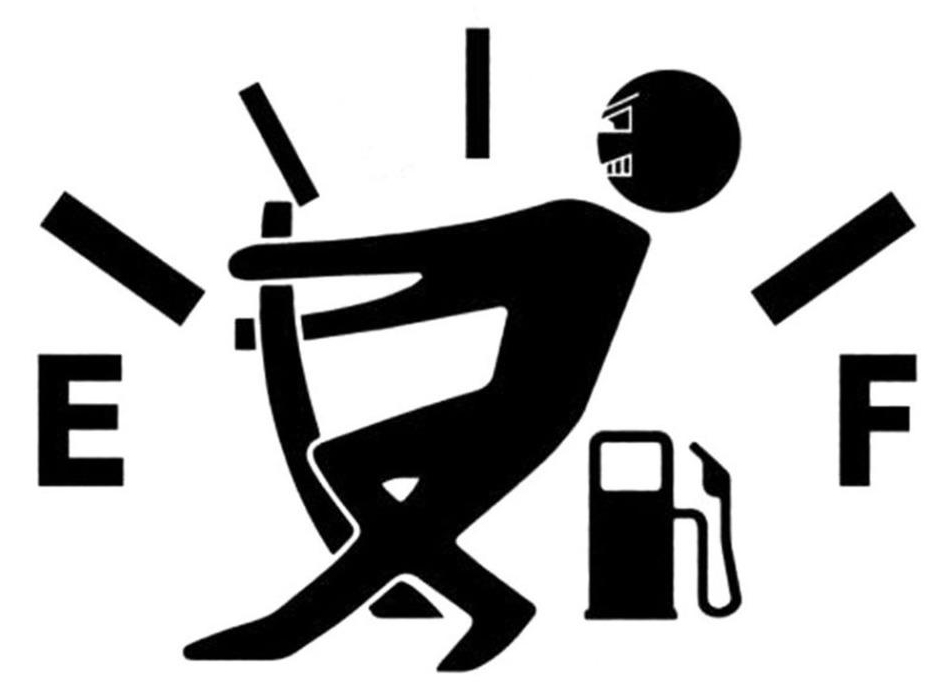
Very few of us would drive for long without a seatbelt, especially with the loud blaring noises most cars make to alert us of the fact that we’ve forgotten to take such an important precaution. But if you ask people how long they’ve driven accompanied by a warning light that tells them they are due for an oil change or a tire rotation or are low on fuel, you’d likely hear a different story.
The same tends to be true in the way we approach our work and personal lives. We readily give our attention, time and energy to the issues that demand our attention – urgent requests, ringing phones, things that are in our faces. But we are all too likely to ignore those subtle little warning signs that indicate we need general maintenance to stay healthy and vibrant enough to make it to our ultimate destinations.
Think about your own life for a moment. Chances are you’re very busy, with a lot on your plate and many things in the pipeline. You are likely juggling many balls – and not just at work. With telecommuting becoming more of the norm, separating your personal and professional life has likely become a bit more challenging, as the line has become more blurred than ever. You may not be spending as much time in your car, but your compulsion to jump on the computer to knock a few things out when you’d otherwise be having personal time has likely taken a huge leap – even more so if your work expands across different time zones. And when you do that, the minutes all too easily stretch into hours.
The tendency of most high achievers who find themselves shouldering an increased load is to double down on their efforts – to work harder, longer, faster. If that is a familiar pattern for you, you know that when you get locked and loaded on a target, you are very likely to dismiss (or completely overlook) the subtle indicators that you are overextending your capacity and putting yourself at risk.
Occasionally though, the stress and overwhelm come to a head and you can’t help but notice them. Just as a car whose oil has become very dirty or whose gas tank is running on fumes doesn’t quite operate as effectively, you too will begin to notice more and more visible signs that something has got to be done to get your system back in optimal working condition.
How does that show up for you?
Do your shoulders gradually creep closer to your ears? Does your breathing get more and more shallow? Do you find yourself clenching your fists? Gritting your teeth? Losing your temper more often than you’d like?
Perhaps it’s more of a gnawing awareness that something’s got to give. You might feel as though you’re not sure you can continue at this pace. You may have a feeling that something is missing, or out of kilter. You could find that the things that used to satisfy you just don’t move the needle anymore like everything is just blending together in a kind of gray mush that you are continually trudging through.
The good news is that this is a state you can definitely do something about.
It’s more a product of LACK of consciousness than anything. This means that when you intentionally make a conscious, deliberate decision that you are ready to do something different, you can – and you will.
This week, I want to share with you some tips that can help you regain your sanity and tend to those little warning signs that you may have been overlooking for a little too long.
Today, we’ll explore a common “success formula” that tends to get people into trouble. This success formula is one that is so ingrained into the fabric of our existence that you may not even be aware of it. It is the conditioning that leads us to believe that the harder we work, the more we do, the busier we are, the more successful/valuable/worthy we will be (pick the adjective that resonates most for you).
It is not without some merit. After all, it is true that most things worth working for do require some degree of effort, and that obstacles often require diligence and increased commitment and grit to overcome.
But this approach, when overdone, can lead to the very burnout that keeps you from operating at all.
While it is true that you need to practice the kind of resilience that will keep you in the game rather than forfeiting the race, the best race car drivers know that you have to make occasional pit stops to make it through the long haul. The best athletes know that their bodies need to rest in order to perform at their best. And the best leaders and executives understand that sometimes you need to slow down in order to speed up.
The assumption that underlies the “success formula” that turns against us is one that leads you to believe you don’t have time to slow down, to be intentional, to gain clarity on where it is you are going and what you need to do along the way. That assumption leads you to overlook the importance of reflecting on where you’ve been and how the journey is going, what’s working and what needs to change, and how you can shift your action in a way that aligns with your desired result. It leads you to keep driving even when your tank is empty, your oil is dirty and your tires are bald. It’ll drive you into a ditch (or worse).
The first step to keeping that kind of programming from derailing you is to become aware that it is in fact operating and to realize what the impact of that programming has been.
Human beings don’t change until the pain of staying the same is greater than the pain or discomfort of doing things differently. But we often don’t recognize that this pain is self-imposed – as a result of the kind of thinking that compels us to keep pushing when we need to take our foot off the gas. Instead, we attribute our exhaustion, frustration, disillusionment, overwhelm, etc. to our circumstances.
But what if it were overuse of the “success formula” itself that leads you to deal with stress in a way that actually makes things more stressful?
Do you believe you can’t afford to slow down?
Is it really true? If you were to insert an hour into your schedule to do something that tends to your well-being, or allows you to gain some clarity or to replenish your energy, would you really be worse off? Do you know others who somehow find a way to do slow down and take breaks every once in a while, or do the things they love – and still manage to perform well (maybe even better?)
When you believe you can’t slow down, you’ll take in information that confirms it and screen everything else out. So if all that comes to mind is what you’d have to lose, see what happens when you get curious about what you’d have to gain.
Just for a moment, think about who you could be if you no longer let that thought dictate your response. Would you be willing to entertain the idea that there may be some things you can do to interrupt that crazy compulsion that has a way of keeping you on a hamster wheel, running faster than ever but not really getting anywhere? Or pushing a big rock up a hill only to have it come rolling back down again and again?
All you need at this point is the curiosity to entertain the thought that perhaps that old “success formula” has some holes in it – and that if you are open and willing to find a better way, the path will reveal itself to you.
In the coming days, I’ll give you some more tips and tools that will help you find it.
If you’d like to more fully explore what your life and work could be like beyond the conditioning that may be holding you back, consider enrolling in the fall session of The Pinocchio Principle Unleashed: The Real Leader’s Guide to Accessing the Freedom & Flow of Your Unique Genius. This thirteen-week leadership development program is ideal for leaders and professionals experiencing high levels of stress, pressure and overwhelm who long to experience more passion, meaning and joy in their work and their lives and especially fitting for those who tend to take a lot on and want to minimize stress, pressure and overwhelm without sacrificing performance.
Public registration will open on September 1. Subscribers to DianeBolden.com are eligible to pre-register – email support@DianeBolden.com for more information.
How to Advance Your Career – Even with No Opportunity in Sight
With all things being equal, what differentiates those who rise to success (and continue to achieve it over an extended period) from those who stay where they are?
That was a question Mike Ettore, Executive Leadership Coach, author of Trust-Based Leadership, and founder of Fidelis Leadership Group, asked me on his podcast recently. The seven-minute clip below features my answer as well as Mike’s thoughts on the best way to advance. Click below to listen in.
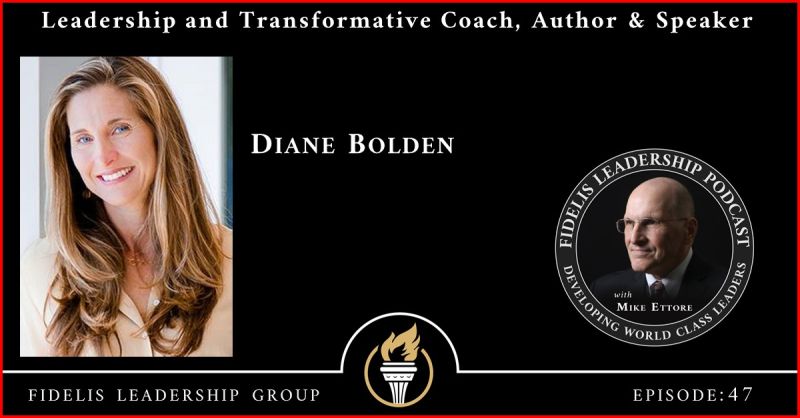
Here is a summary of the tips and take-a-ways:
- Take the time to build solid relationships. Seek people out, ask a lot of questions, and get advice. Listen deeply and learn as much as you can from them.
- Relate to people in a way that makes them feel valued and supported. Make it clear you have their best interests in mind. Be completely present. Give people your full attention.
- Make the success of others just as, if not more important than your own. Be humble and service oriented. Find ways to contribute – even the smallest gestures can go a long way.
- Be curious. Learn about what others believe are unmet needs – for both individuals and the organization as a whole. Gather information that allows you to identify emerging challenges and opportunities, and what can be done to address them.
- Create opportunities instead of waiting for them to emerge. Determine how you can utilize your own unique blend of talent, experience, passion and energy to address unmet needs as well as emerging challenges and opportunities. Show resourcefulness and ingenuity.
- Be patient and persevere. The connections and conversations you have with people will position you as someone who is a service-oriented team player that is serious about contributing to the success of the organization. When consistent and thoughtful, your initiative can put you at the top of a candidate list before a job opening is ever even publicized.
Listen to this podcast interview in its entirety here. Many thanks to Mike Ettore for including me among his esteemed guests.